

Idrissi Bank and the so-called Melilla Mounds (Hebbeln et al. 2009), Seco de los
Olivos (de la Torriente et al. 2018) and Cabliers Bank (Ocaña et al. 2017), usually on
lightly silted rocky substrates of the shelf edge and upper slope between 150 and
400 m depth.
Paramuricea macrospina is an endemic Mediterranean gorgonian found mainly
on rocky bottoms between 50 and 200 m depth and has recently been reported as one
of the most abundant species in shelf and shelf edge environments, mainly in
northwestern Mediterranean (Grinyó et al. 2016; Pica et al. 2018). In the Menorca
Channel (western Mediterranean), P. macrospina is the dominant gorgonian species
at 65–90 m depth, but it is also commonly found on the shelf-edge associated with
other gorgonians at 110–160 m depth (Grinyó et al. 2016). Recently, the species has
been found in the Seco de los Olivos around 120–130 m depth. This gorgonian has
been included in the IUCN Red List of Threatened Species (Aguilar et al. 2015).
Some small-sized gorgonians are also widespread along the shelf edge and upper
slope, being Swiftia pallida, Bebryce mollis and Villogorgia bebrycoides the most
frequent species. They can create a sort of “underbrush” together with sponges living
at the base of larger species, although they may form important monospecific
thickets in the upper bathyal zone, usually between 200 and 700 m (Aguilar and
Marín 2013). All these small gorgonians are well represented in several locations of
the Alboran Sea (Templado et al. 2004; de la Torriente et al. 2014).
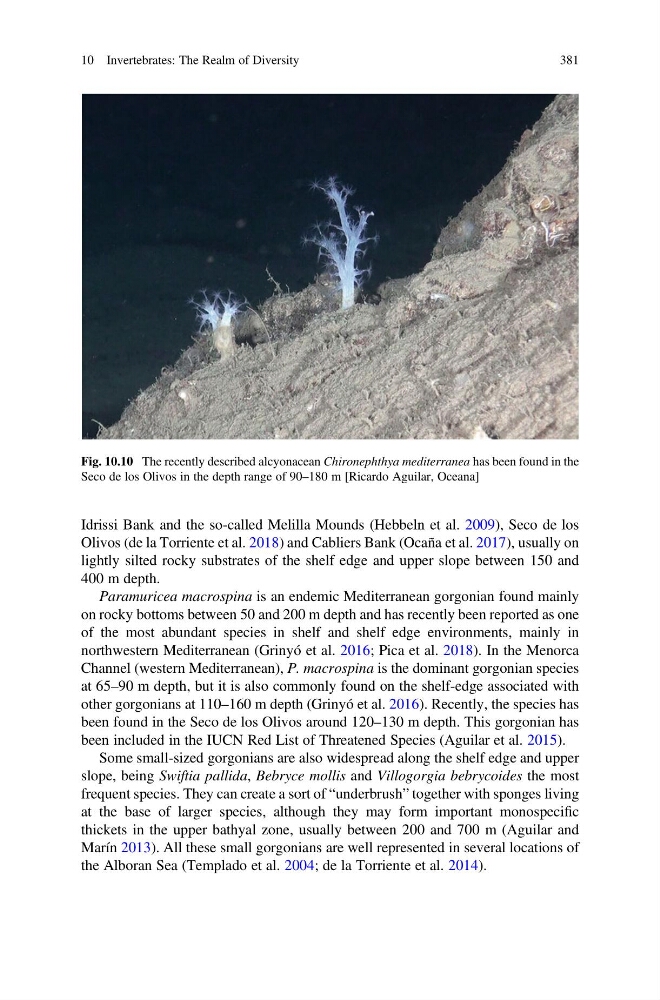
Fig. 10.10 The recently described alcyonacean Chironephthya mediterranea has been found in the
Seco de los Olivos in the depth range of 90–180 m [Ricardo Aguilar, Oceana]
10 Invertebrates: The Realm of Diversity
381
Olivos (de la Torriente et al. 2018) and Cabliers Bank (Ocaña et al. 2017), usually on
lightly silted rocky substrates of the shelf edge and upper slope between 150 and
400 m depth.
Paramuricea macrospina is an endemic Mediterranean gorgonian found mainly
on rocky bottoms between 50 and 200 m depth and has recently been reported as one
of the most abundant species in shelf and shelf edge environments, mainly in
northwestern Mediterranean (Grinyó et al. 2016; Pica et al. 2018). In the Menorca
Channel (western Mediterranean), P. macrospina is the dominant gorgonian species
at 65–90 m depth, but it is also commonly found on the shelf-edge associated with
other gorgonians at 110–160 m depth (Grinyó et al. 2016). Recently, the species has
been found in the Seco de los Olivos around 120–130 m depth. This gorgonian has
been included in the IUCN Red List of Threatened Species (Aguilar et al. 2015).
Some small-sized gorgonians are also widespread along the shelf edge and upper
slope, being Swiftia pallida, Bebryce mollis and Villogorgia bebrycoides the most
frequent species. They can create a sort of “underbrush” together with sponges living
at the base of larger species, although they may form important monospecific
thickets in the upper bathyal zone, usually between 200 and 700 m (Aguilar and
Marín 2013). All these small gorgonians are well represented in several locations of
the Alboran Sea (Templado et al. 2004; de la Torriente et al. 2014).
Fig. 10.10 The recently described alcyonacean Chironephthya mediterranea has been found in the
Seco de los Olivos in the depth range of 90–180 m [Ricardo Aguilar, Oceana]
10 Invertebrates: The Realm of Diversity
381