

bistellata of orange colour and several species of the genera Eurypon and Axinella.
Small encrusting sponges are pervasive on the rhodoliths, especially on the large
ones. The species Crambe tailliezi, considered rare in the Mediterranean, appears
usually in the rhodolith bottoms surrounding the island of Alboran. Anthozoans are
mainly represented by different octocorals (Alcyonium coralloides, Alcyonium sp.,
Paralcyonium spinulosum, Eunicella filiformis and Eunicella spp.) attached to
rhodoliths. Among the most frequent mobile animals are some echinoderms,
among which the brittle star Ophiactis balli, which occupies the crevices of the
rhodoliths, is one of the most abundant. Other common echinoderms in this habitat,
and usually rare, are the starfish Chaetaster longipes and Hacelia attenuata and the
sea urchin Genocidaris maculata. The most characteristic molluscs are epifaunal
bivalves such as Hiatella arctica, Gregariella semigranata and Modiolula
phaseolina; some polyplacophorans (chitons), among which Callochiton
septemvalvis takes the colour of the red algae; and the gastropod Bolma rugosa.
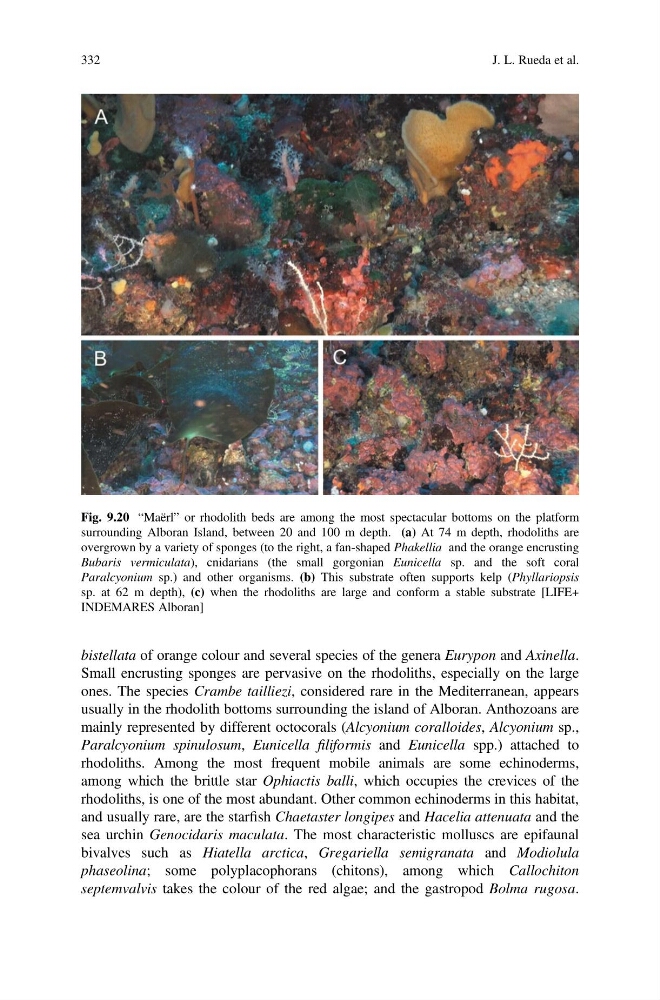
Fig. 9.20 “Maërl” or rhodolith beds are among the most spectacular bottoms on the platform
surrounding Alboran Island, between 20 and 100 m depth. (a) At 74 m depth, rhodoliths are
overgrown by a variety of sponges (to the right, a fan-shaped Phakellia and the orange encrusting
Bubaris vermiculata), cnidarians (the small gorgonian Eunicella sp. and the soft coral
Paralcyonium sp.) and other organisms. (b) This substrate often supports kelp (Phyllariopsis
sp. at 62 m depth), (c) when the rhodoliths are large and conform a stable substrate [LIFE+
INDEMARES Alboran]
332
J. L. Rueda et al.
Small encrusting sponges are pervasive on the rhodoliths, especially on the large
ones. The species Crambe tailliezi, considered rare in the Mediterranean, appears
usually in the rhodolith bottoms surrounding the island of Alboran. Anthozoans are
mainly represented by different octocorals (Alcyonium coralloides, Alcyonium sp.,
Paralcyonium spinulosum, Eunicella filiformis and Eunicella spp.) attached to
rhodoliths. Among the most frequent mobile animals are some echinoderms,
among which the brittle star Ophiactis balli, which occupies the crevices of the
rhodoliths, is one of the most abundant. Other common echinoderms in this habitat,
and usually rare, are the starfish Chaetaster longipes and Hacelia attenuata and the
sea urchin Genocidaris maculata. The most characteristic molluscs are epifaunal
bivalves such as Hiatella arctica, Gregariella semigranata and Modiolula
phaseolina; some polyplacophorans (chitons), among which Callochiton
septemvalvis takes the colour of the red algae; and the gastropod Bolma rugosa.
Fig. 9.20 “Maërl” or rhodolith beds are among the most spectacular bottoms on the platform
surrounding Alboran Island, between 20 and 100 m depth. (a) At 74 m depth, rhodoliths are
overgrown by a variety of sponges (to the right, a fan-shaped Phakellia and the orange encrusting
Bubaris vermiculata), cnidarians (the small gorgonian Eunicella sp. and the soft coral
Paralcyonium sp.) and other organisms. (b) This substrate often supports kelp (Phyllariopsis
sp. at 62 m depth), (c) when the rhodoliths are large and conform a stable substrate [LIFE+
INDEMARES Alboran]
332
J. L. Rueda et al.