

meadow is reported in the Acantilados de Maro-Cerro Gordo SAC, at the limit
between Granada and Málaga provinces, and the westernmost stands are found in the
SACs of Calahonda (Málaga), El Saladillo-Punta de Baños and Bahía de Estepona.
All those have been mapped in detail during the LIFE+ project for the conservation
of P. oceanica meadows in the Andalusian Mediterranean (LIFE09 NAT/E/000534)
starting in 2011 (Aranda and Otero 2014). The westernmost meadows around
Calahonda are patchy and are unique in their architecture, differing from most
Mediterranean meadows by their shallow occurrence (0–5 m), a phenology with
short leaves (29–45 cm in spring) and a sediment-filled rhizome stratum (García
Raso et al. 2010; Urra et al. 2013b). On the southern shore, Posidonia meadows are
reported around Beni Saf and Cap Blanc, west of Oran, Algeria (Khodja 2013), then
there is an isolated occurrence in the Chafarinas Islands (Guallart and Afán 2013),
but the species is missing in the large area under the influence of the mouth of the
Moulouya River and has not been reported further west along the Moroccan coast
even in apparently appropriate areas such as Al Hoceima National Park (Guallart and
Afán 2013).
Luque and Templado (2004) coordinated one of the most exhaustive bibliographic compilations on the composition and, in some cases, the structure of these
communities based on the information obtained by researchers from different
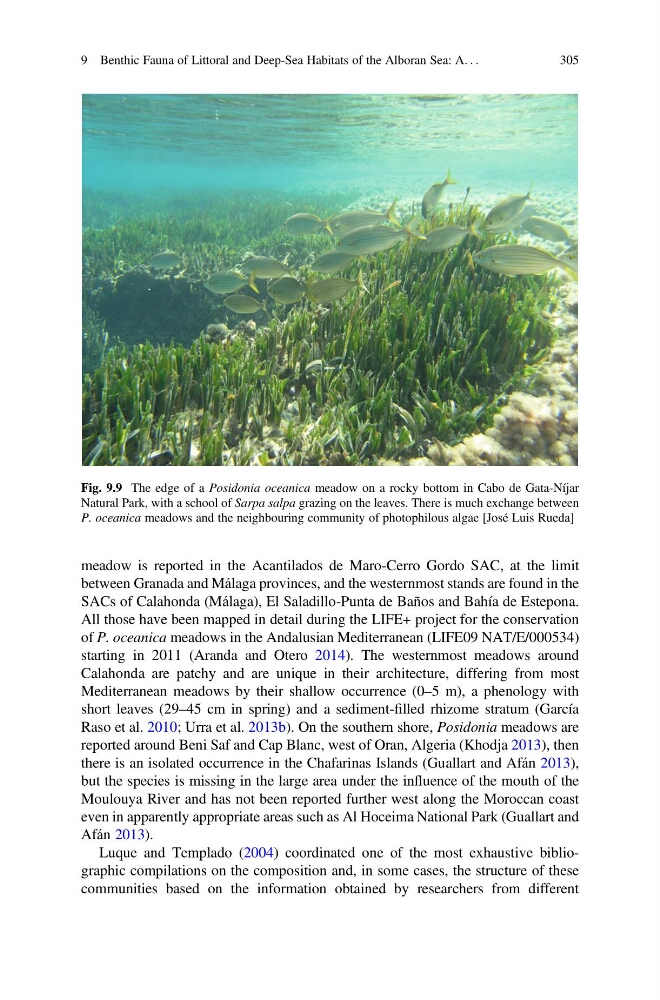
Fig. 9.9 The edge of a Posidonia oceanica meadow on a rocky bottom in Cabo de Gata-Níjar
Natural Park, with a school of Sarpa salpa grazing on the leaves. There is much exchange between
P. oceanica meadows and the neighbouring community of photophilous algae [José Luis Rueda]
9 Benthic Fauna of Littoral and Deep-Sea Habitats of the Alboran Sea: A. . .
305
between Granada and Málaga provinces, and the westernmost stands are found in the
SACs of Calahonda (Málaga), El Saladillo-Punta de Baños and Bahía de Estepona.
All those have been mapped in detail during the LIFE+ project for the conservation
of P. oceanica meadows in the Andalusian Mediterranean (LIFE09 NAT/E/000534)
starting in 2011 (Aranda and Otero 2014). The westernmost meadows around
Calahonda are patchy and are unique in their architecture, differing from most
Mediterranean meadows by their shallow occurrence (0–5 m), a phenology with
short leaves (29–45 cm in spring) and a sediment-filled rhizome stratum (García
Raso et al. 2010; Urra et al. 2013b). On the southern shore, Posidonia meadows are
reported around Beni Saf and Cap Blanc, west of Oran, Algeria (Khodja 2013), then
there is an isolated occurrence in the Chafarinas Islands (Guallart and Afán 2013),
but the species is missing in the large area under the influence of the mouth of the
Moulouya River and has not been reported further west along the Moroccan coast
even in apparently appropriate areas such as Al Hoceima National Park (Guallart and
Afán 2013).
Luque and Templado (2004) coordinated one of the most exhaustive bibliographic compilations on the composition and, in some cases, the structure of these
communities based on the information obtained by researchers from different
Fig. 9.9 The edge of a Posidonia oceanica meadow on a rocky bottom in Cabo de Gata-Níjar
Natural Park, with a school of Sarpa salpa grazing on the leaves. There is much exchange between
P. oceanica meadows and the neighbouring community of photophilous algae [José Luis Rueda]
9 Benthic Fauna of Littoral and Deep-Sea Habitats of the Alboran Sea: A. . .
305