

marine protected areas. The main driver for protection of intertidal sites remains in
the occurrence of species catalogued as endangered, such as P. ferruginea and
D. lebeche, whose presence triggers restrictions to any intervention affecting their
habitat. Threats and pressures are many because of the accessibility of this habitat
and include illegal harvesting as well as trampling and oil spills.
9.2.4 Supra- and Midlittoral Sedimentary Substrates
On the supralittoral part of sandy beaches, amphipods of the family Talitridae (such
as Talitrus saltator) are very characteristic intertidal crustaceans in the Alboran Sea
and elsewhere; these are known as “sea fleas” and remain buried during the day,
being more active at dusk and at night in search of organic detritus that constitute
their food. In the intertidal strip of sandy beaches, isopods of the genus Eurydice and
amphipods of the genera Haustorius, Bathyporeia, Urothoe and Leucothoe are
found; these species show a zonation in their distribution, but due to the small
tidal range and steep slope of the beaches, this zonation is not well defined in the
Alboran Sea and species broadly overlap.
The bivalve Donacilla cornea is usually found in the lowermost part of the
intertidal zone of coarse sand beaches. Intertidal areas with muddy sands are suitable
for the construction of galleries, which favours the presence of burrowing decapods
such as Upogebia pusilla and Gilvossius tyrrhenus as well as of amphipods belonging to the genera Corophium and Monocorophium.
In some areas, mainly in the Almería province and in the Chafarinas Islands, the
characteristic leaf-litter accumulations of Posidonia oceanica harbour a good number of species, mostly detritivores, such as the amphipods of the genus Orchestia,
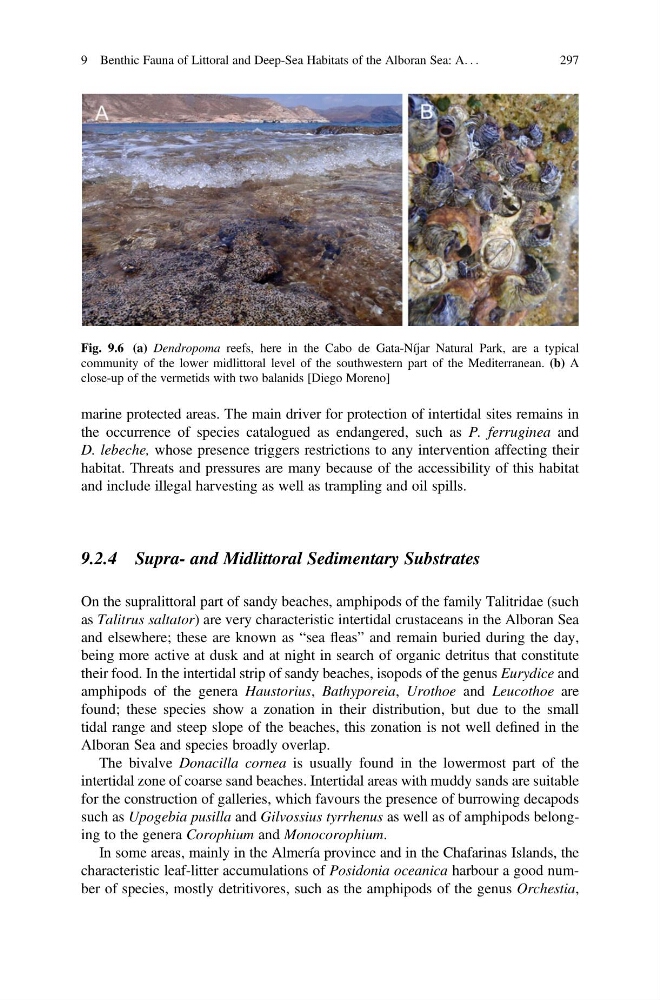
Fig. 9.6 (a) Dendropoma reefs, here in the Cabo de Gata-Níjar Natural Park, are a typical
community of the lower midlittoral level of the southwestern part of the Mediterranean. (b) A
close-up of the vermetids with two balanids [Diego Moreno]
9 Benthic Fauna of Littoral and Deep-Sea Habitats of the Alboran Sea: A. . .
297
the occurrence of species catalogued as endangered, such as P. ferruginea and
D. lebeche, whose presence triggers restrictions to any intervention affecting their
habitat. Threats and pressures are many because of the accessibility of this habitat
and include illegal harvesting as well as trampling and oil spills.
9.2.4 Supra- and Midlittoral Sedimentary Substrates
On the supralittoral part of sandy beaches, amphipods of the family Talitridae (such
as Talitrus saltator) are very characteristic intertidal crustaceans in the Alboran Sea
and elsewhere; these are known as “sea fleas” and remain buried during the day,
being more active at dusk and at night in search of organic detritus that constitute
their food. In the intertidal strip of sandy beaches, isopods of the genus Eurydice and
amphipods of the genera Haustorius, Bathyporeia, Urothoe and Leucothoe are
found; these species show a zonation in their distribution, but due to the small
tidal range and steep slope of the beaches, this zonation is not well defined in the
Alboran Sea and species broadly overlap.
The bivalve Donacilla cornea is usually found in the lowermost part of the
intertidal zone of coarse sand beaches. Intertidal areas with muddy sands are suitable
for the construction of galleries, which favours the presence of burrowing decapods
such as Upogebia pusilla and Gilvossius tyrrhenus as well as of amphipods belonging to the genera Corophium and Monocorophium.
In some areas, mainly in the Almería province and in the Chafarinas Islands, the
characteristic leaf-litter accumulations of Posidonia oceanica harbour a good number of species, mostly detritivores, such as the amphipods of the genus Orchestia,
Fig. 9.6 (a) Dendropoma reefs, here in the Cabo de Gata-Níjar Natural Park, are a typical
community of the lower midlittoral level of the southwestern part of the Mediterranean. (b) A
close-up of the vermetids with two balanids [Diego Moreno]
9 Benthic Fauna of Littoral and Deep-Sea Habitats of the Alboran Sea: A. . .
297