

marine angiosperm meadows and to define a quality standard for these projects.
There have been some attempts at restoration by transplanting plantlets of Posidonia
oceanica and Cymodocea nodosa, but success was limited and transplants did not
survive more than 2 years. The limited growth of Posidonia oceanica and its
substrate requirements probably constrain the possibilities of its use as primary
restoration species. Even so, transplantations using the more rapidly growing species
C. nodosa were also useless (Guillén and Otero 2015). The noticeable regression of
Zostera marina populations along the Andalusian coasts (Arroyo et al. 2015)
represents an important diversity loss in the Alboran Sea. Moreover, because these
populations supported a higher diversity of faunistic communities, as is found in
eelgrass beds in Europe (Rueda et al. 2009), their regression entails a detriment to
ecosystem services. Moreover, the persistent lack of recovery could be the result of a
change in the feedback mechanisms, which now keeps the degraded ecosystem in a
new stable state, hindering recovery (reviewed by Maxwell et al. 2016). Therefore,
although there are successful eelgrass restoration examples in several countries
where this practice has been used for decades, the time elapsed since the disappearance of the species also complicates its recovery (Moksnes et al. 2018). So, more
emphasis is needed on obtaining high-quality and more accurate information about
characterization of the habitat and, hence, the species requirements. Unfortunately,
this information is still deficient compared to terrestrial ecosystems. Moreover, not
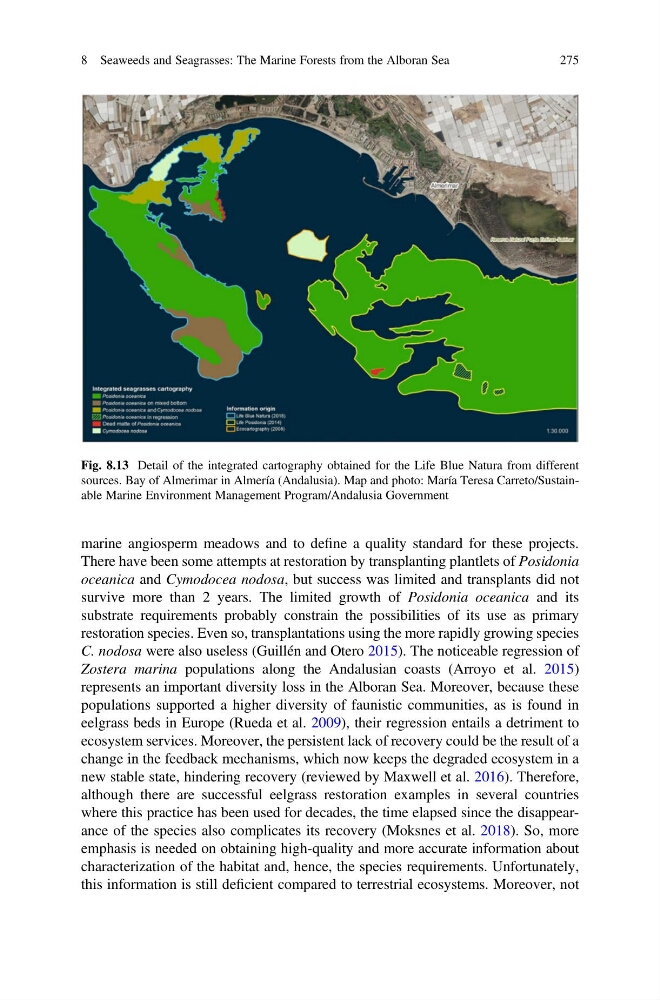
Fig. 8.13 Detail of the integrated cartography obtained for the Life Blue Natura from different
sources. Bay of Almerimar in Almería (Andalusia). Map and photo: María Teresa Carreto/Sustainable Marine Environment Management Program/Andalusia Government
8 Seaweeds and Seagrasses: The Marine Forests from the Alboran Sea
275
There have been some attempts at restoration by transplanting plantlets of Posidonia
oceanica and Cymodocea nodosa, but success was limited and transplants did not
survive more than 2 years. The limited growth of Posidonia oceanica and its
substrate requirements probably constrain the possibilities of its use as primary
restoration species. Even so, transplantations using the more rapidly growing species
C. nodosa were also useless (Guillén and Otero 2015). The noticeable regression of
Zostera marina populations along the Andalusian coasts (Arroyo et al. 2015)
represents an important diversity loss in the Alboran Sea. Moreover, because these
populations supported a higher diversity of faunistic communities, as is found in
eelgrass beds in Europe (Rueda et al. 2009), their regression entails a detriment to
ecosystem services. Moreover, the persistent lack of recovery could be the result of a
change in the feedback mechanisms, which now keeps the degraded ecosystem in a
new stable state, hindering recovery (reviewed by Maxwell et al. 2016). Therefore,
although there are successful eelgrass restoration examples in several countries
where this practice has been used for decades, the time elapsed since the disappearance of the species also complicates its recovery (Moksnes et al. 2018). So, more
emphasis is needed on obtaining high-quality and more accurate information about
characterization of the habitat and, hence, the species requirements. Unfortunately,
this information is still deficient compared to terrestrial ecosystems. Moreover, not
Fig. 8.13 Detail of the integrated cartography obtained for the Life Blue Natura from different
sources. Bay of Almerimar in Almería (Andalusia). Map and photo: María Teresa Carreto/Sustainable Marine Environment Management Program/Andalusia Government
8 Seaweeds and Seagrasses: The Marine Forests from the Alboran Sea
275