

the African coast at the western base of the Tres Forcas cape (Punta Negri) and its
populations fluctuate under the influence of the North-Atlantic Oscillation (BañaresEspaña et al. 2017; Melero-Jiménez et al. 2017). On the other hand, although
L. byssoides has an extensive distribution in the Mediterranean, it is rare in the
Alboran Sea except for good development on the western African coast. This species
is included in The Spanish and Andalusian List of Wild Species in Special Protection
Regime (Spanish Royal Decree 139/2011 and Andalusian Decree 23/2012), and it is
very sensitive to pollution and trampling. In shaded areas such as cracks or fissures
of rocks, sciaphilous species appear, such as Hildenbrandia rubra, Pterocladiella
capillacea, Gymnogongrus patens, diverse species of Peyssonnelia, Codium
adhaerens, Bryopsis muscosa, and Valonia utricularis (Fig. 8.6a).
In the eulittoral zone, there is frequent development of pools that can develop
algal communities of high richness and diversity, typical of the upper infralittoral.
The kind of communities that develop depends basically on the size and frequency of
water renewal in the pool. In those located at a higher level, with relatively extreme
conditions of salinity and temperature, masses of filamentous (Chaetomorpha aerea)
or tubular (Ulva spp.; Fig. 8.6b) green algae are frequent. In larger pools that remain
filled with water, the vegetation is much more diverse, extending the cover of the
infralittoral vegetation. Species such as Halopteris scoparia, Padina pavonica,
Dictyota dichotoma, Plocamium coccineum, Gelidium spp., and Ellisolandia
elongata may appear, sometimes with even larger species such as Cystoseira
compressa, C. tamariscifolia (Fig. 8.6c), Sargassum vulgare, Asparagopsis armata,
and A. taxiformis.
When the eulittoral communities are affected by various eutrophicating pollutants, there is a considerable decrease in their biodiversity. The more usual species are
replaced at first by more opportunistic and eutrophication-tolerant species such as
Bangia atropurpurea, Pyropia leucosticta, and Ulva spp. With extreme
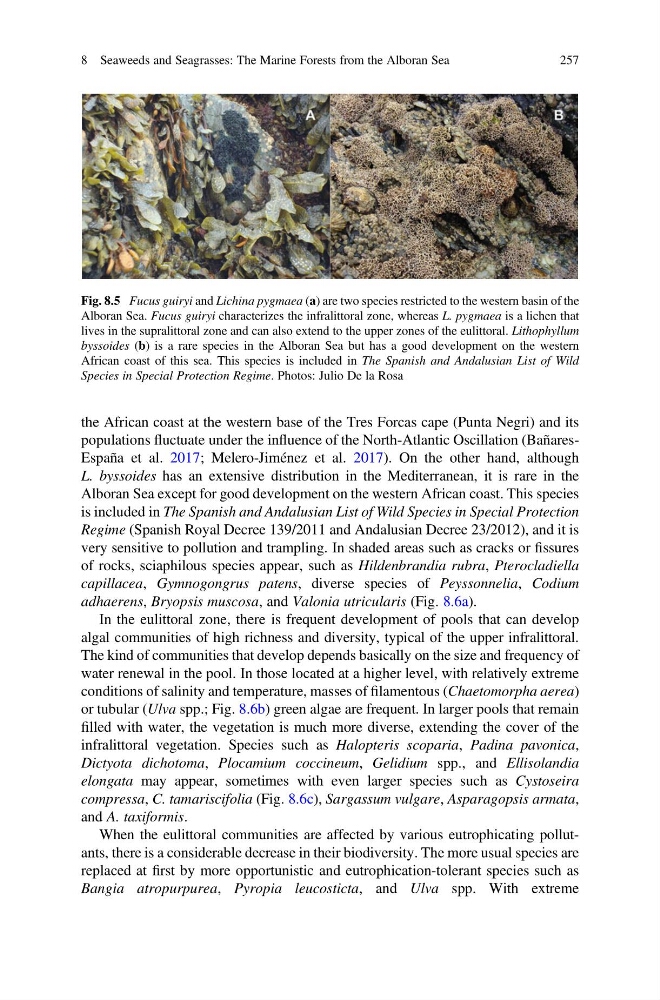
Fig. 8.5 Fucus guiryi and Lichina pygmaea (a) are two species restricted to the western basin of the
Alboran Sea. Fucus guiryi characterizes the infralittoral zone, whereas L. pygmaea is a lichen that
lives in the supralittoral zone and can also extend to the upper zones of the eulittoral. Lithophyllum
byssoides (b) is a rare species in the Alboran Sea but has a good development on the western
African coast of this sea. This species is included in The Spanish and Andalusian List of Wild
Species in Special Protection Regime. Photos: Julio De la Rosa
8 Seaweeds and Seagrasses: The Marine Forests from the Alboran Sea
257
populations fluctuate under the influence of the North-Atlantic Oscillation (BañaresEspaña et al. 2017; Melero-Jiménez et al. 2017). On the other hand, although
L. byssoides has an extensive distribution in the Mediterranean, it is rare in the
Alboran Sea except for good development on the western African coast. This species
is included in The Spanish and Andalusian List of Wild Species in Special Protection
Regime (Spanish Royal Decree 139/2011 and Andalusian Decree 23/2012), and it is
very sensitive to pollution and trampling. In shaded areas such as cracks or fissures
of rocks, sciaphilous species appear, such as Hildenbrandia rubra, Pterocladiella
capillacea, Gymnogongrus patens, diverse species of Peyssonnelia, Codium
adhaerens, Bryopsis muscosa, and Valonia utricularis (Fig. 8.6a).
In the eulittoral zone, there is frequent development of pools that can develop
algal communities of high richness and diversity, typical of the upper infralittoral.
The kind of communities that develop depends basically on the size and frequency of
water renewal in the pool. In those located at a higher level, with relatively extreme
conditions of salinity and temperature, masses of filamentous (Chaetomorpha aerea)
or tubular (Ulva spp.; Fig. 8.6b) green algae are frequent. In larger pools that remain
filled with water, the vegetation is much more diverse, extending the cover of the
infralittoral vegetation. Species such as Halopteris scoparia, Padina pavonica,
Dictyota dichotoma, Plocamium coccineum, Gelidium spp., and Ellisolandia
elongata may appear, sometimes with even larger species such as Cystoseira
compressa, C. tamariscifolia (Fig. 8.6c), Sargassum vulgare, Asparagopsis armata,
and A. taxiformis.
When the eulittoral communities are affected by various eutrophicating pollutants, there is a considerable decrease in their biodiversity. The more usual species are
replaced at first by more opportunistic and eutrophication-tolerant species such as
Bangia atropurpurea, Pyropia leucosticta, and Ulva spp. With extreme
Fig. 8.5 Fucus guiryi and Lichina pygmaea (a) are two species restricted to the western basin of the
Alboran Sea. Fucus guiryi characterizes the infralittoral zone, whereas L. pygmaea is a lichen that
lives in the supralittoral zone and can also extend to the upper zones of the eulittoral. Lithophyllum
byssoides (b) is a rare species in the Alboran Sea but has a good development on the western
African coast of this sea. This species is included in The Spanish and Andalusian List of Wild
Species in Special Protection Regime. Photos: Julio De la Rosa
8 Seaweeds and Seagrasses: The Marine Forests from the Alboran Sea
257