

warm-water species, some of which have survived multiple and drastic geological
events associated with strong thermal changes that caused the extinction of the most
of them. These surviving warm-water species, few in number, are considered
nowadays the pantropical elements of the flora of the Alboran Sea. These species (current accepted taxa Guiry and Guiry 2020) have disjunct distributions in
different warm and tropical water regions outside the Mediterranean. In the Alboran
Sea, some of these pantropical elements are the infralittoral green algae species of the
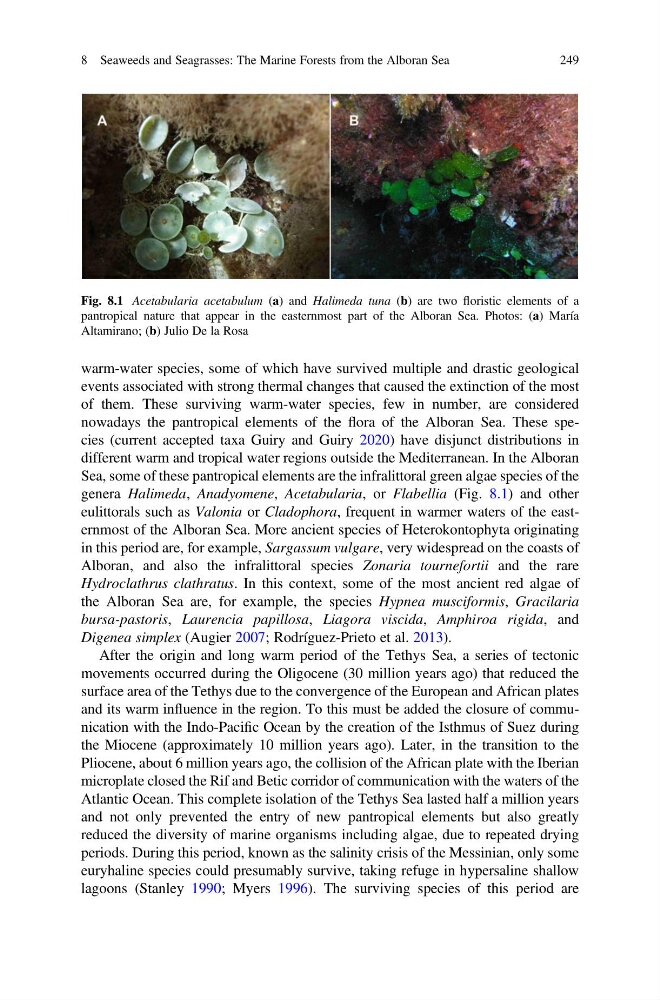
genera Halimeda, Anadyomene, Acetabularia, or Flabellia (Fig. 8.1) and other
eulittorals such as Valonia or Cladophora, frequent in warmer waters of the easternmost of the Alboran Sea. More ancient species of Heterokontophyta originating
in this period are, for example, Sargassum vulgare, very widespread on the coasts of
Alboran, and also the infralittoral species Zonaria tournefortii and the rare
Hydroclathrus clathratus. In this context, some of the most ancient red algae of
the Alboran Sea are, for example, the species Hypnea musciformis, Gracilaria
bursa-pastoris, Laurencia papillosa, Liagora viscida, Amphiroa rigida, and
Digenea simplex (Augier 2007; Rodríguez-Prieto et al. 2013).
After the origin and long warm period of the Tethys Sea, a series of tectonic
movements occurred during the Oligocene (30 million years ago) that reduced the
surface area of the Tethys due to the convergence of the European and African plates
and its warm influence in the region. To this must be added the closure of communication with the Indo-Pacific Ocean by the creation of the Isthmus of Suez during
the Miocene (approximately 10 million years ago). Later, in the transition to the
Pliocene, about 6 million years ago, the collision of the African plate with the Iberian
microplate closed the Rif and Betic corridor of communication with the waters of the
Atlantic Ocean. This complete isolation of the Tethys Sea lasted half a million years
and not only prevented the entry of new pantropical elements but also greatly
reduced the diversity of marine organisms including algae, due to repeated drying
periods. During this period, known as the salinity crisis of the Messinian, only some
euryhaline species could presumably survive, taking refuge in hypersaline shallow
lagoons (Stanley 1990; Myers 1996). The surviving species of this period are
Fig. 8.1 Acetabularia acetabulum (a) and Halimeda tuna (b) are two floristic elements of a
pantropical nature that appear in the easternmost part of the Alboran Sea. Photos: (a) María
Altamirano; (b) Julio De la Rosa
8 Seaweeds and Seagrasses: The Marine Forests from the Alboran Sea
249
events associated with strong thermal changes that caused the extinction of the most
of them. These surviving warm-water species, few in number, are considered
nowadays the pantropical elements of the flora of the Alboran Sea. These species (current accepted taxa Guiry and Guiry 2020) have disjunct distributions in
different warm and tropical water regions outside the Mediterranean. In the Alboran
Sea, some of these pantropical elements are the infralittoral green algae species of the
genera Halimeda, Anadyomene, Acetabularia, or Flabellia (Fig. 8.1) and other
eulittorals such as Valonia or Cladophora, frequent in warmer waters of the easternmost of the Alboran Sea. More ancient species of Heterokontophyta originating
in this period are, for example, Sargassum vulgare, very widespread on the coasts of
Alboran, and also the infralittoral species Zonaria tournefortii and the rare
Hydroclathrus clathratus. In this context, some of the most ancient red algae of
the Alboran Sea are, for example, the species Hypnea musciformis, Gracilaria
bursa-pastoris, Laurencia papillosa, Liagora viscida, Amphiroa rigida, and
Digenea simplex (Augier 2007; Rodríguez-Prieto et al. 2013).
After the origin and long warm period of the Tethys Sea, a series of tectonic
movements occurred during the Oligocene (30 million years ago) that reduced the
surface area of the Tethys due to the convergence of the European and African plates
and its warm influence in the region. To this must be added the closure of communication with the Indo-Pacific Ocean by the creation of the Isthmus of Suez during
the Miocene (approximately 10 million years ago). Later, in the transition to the
Pliocene, about 6 million years ago, the collision of the African plate with the Iberian
microplate closed the Rif and Betic corridor of communication with the waters of the
Atlantic Ocean. This complete isolation of the Tethys Sea lasted half a million years
and not only prevented the entry of new pantropical elements but also greatly
reduced the diversity of marine organisms including algae, due to repeated drying
periods. During this period, known as the salinity crisis of the Messinian, only some
euryhaline species could presumably survive, taking refuge in hypersaline shallow
lagoons (Stanley 1990; Myers 1996). The surviving species of this period are
Fig. 8.1 Acetabularia acetabulum (a) and Halimeda tuna (b) are two floristic elements of a
pantropical nature that appear in the easternmost part of the Alboran Sea. Photos: (a) María
Altamirano; (b) Julio De la Rosa
8 Seaweeds and Seagrasses: The Marine Forests from the Alboran Sea
249