

58
2 – Methods and techniques
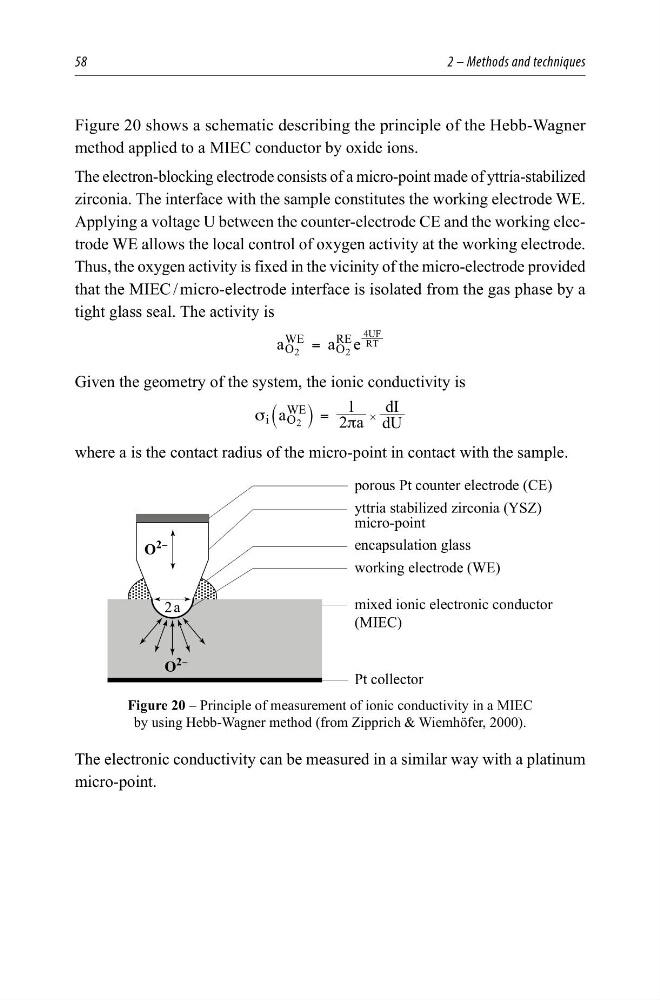
Figure 20 shows a schematic describing the principle of the Hebb-Wagner
method applied to a MIEC conductor by oxide ions.
The electron-blocking electrode consists of a micro-point made of yttria-stabilized
zirconia. The interface with the sample constitutes the working electrode WE.
Applying a voltage U between the counter-electrode CE and the working electrode WE allows the local control of oxygen activity at the working electrode.
Thus, the oxygen activity is fixed in the vicinity of the micro-electrode provided
that the MIEC / micro-electrode interface is isolated from the gas phase by a
tight glass seal. The activity is
a
a e
O
WE
O
RE RT
UF
2
2
4
=
Given the geometry of the system, the ionic conductivity is
a
2 a
1
dU
dI
i O
WE
2
σ
π
=
#
`
j
where a is the contact radius of the micro-point in contact with the sample.
SRURXV3WFRXQWHUHOHFWURGH&(
ZRUNLQJHOHFWURGH:(
PL[HGLRQLFHOHFWURQLFFRQGXFWRU
0,(&
3WFROOHFWRU
HQFDSVXODWLRQJODVV
\WWULDVWDELOL]HG]LUFRQLD<6=
PLFURSRLQW
2
<
2
<
D
Figure 20 – Principle of measurement of ionic conductivity in a MIEC
by using Hebb-Wagner method (from Zipprich & Wiemhöfer, 2000).
The electronic conductivity can be measured in a similar way with a platinum
micro-point.
2 – Methods and techniques
Figure 20 shows a schematic describing the principle of the Hebb-Wagner
method applied to a MIEC conductor by oxide ions.
The electron-blocking electrode consists of a micro-point made of yttria-stabilized
zirconia. The interface with the sample constitutes the working electrode WE.
Applying a voltage U between the counter-electrode CE and the working electrode WE allows the local control of oxygen activity at the working electrode.
Thus, the oxygen activity is fixed in the vicinity of the micro-electrode provided
that the MIEC / micro-electrode interface is isolated from the gas phase by a
tight glass seal. The activity is
a
a e
O
WE
O
RE RT
UF
2
2
4
=
Given the geometry of the system, the ionic conductivity is
a
2 a
1
dU
dI
i O
WE
2
σ
π
=
#
`
j
where a is the contact radius of the micro-point in contact with the sample.
SRURXV3WFRXQWHUHOHFWURGH&(
ZRUNLQJHOHFWURGH:(
PL[HGLRQLFHOHFWURQLFFRQGXFWRU
0,(&
3WFROOHFWRU
HQFDSVXODWLRQJODVV
\WWULDVWDELOL]HG]LUFRQLD<6=
PLFURSRLQW
2
<
2
<
D
Figure 20 – Principle of measurement of ionic conductivity in a MIEC
by using Hebb-Wagner method (from Zipprich & Wiemhöfer, 2000).
The electronic conductivity can be measured in a similar way with a platinum
micro-point.