

238
5 – Applications
YSZ: yttria-stabilized zirconia
GDC: gadolinium-doped ceria
LSGM: lanthanum strontium
gallium magnesium oxide
BICUVOX: bismuth copper
vanadium oxide
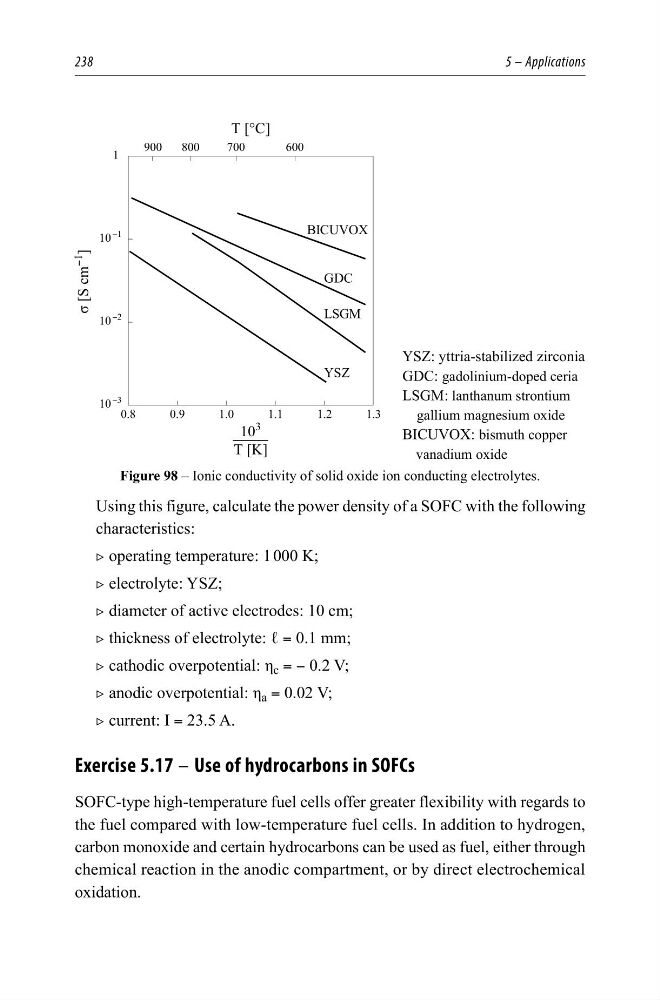
Figure 98 – Ionic conductivity of solid oxide ion conducting electrolytes.
Using this figure, calculate the power density of a SOFC with the following
characteristics:
2 operating temperature: 1 000 K;
2 electrolyte: YSZ;
2 diameter of active electrodes: 10 cm;
2 thickness of electrolyte: ℓ = 0.1 mm;
2 cathodic overpotential: η c = − 0.2 V;
2 anodic overpotential: η a = 0.02 V;
2 current: I = 23.5 A.
Exercise 5.17 – Use of hydrocarbons in SOFCs
SOFC-type high-temperature fuel cells offer greater flexibility with regards to
the fuel compared with low-temperature fuel cells. In addition to hydrogen,
carbon monoxide and certain hydrocarbons can be used as fuel, either through
chemical reaction in the anodic compartment, or by direct electrochemical
oxidation.
<
<
<
7>&@
%,&892;
*'&
<6=
/6*0
—
7>.@
ı>6FP
<
@
5 – Applications
YSZ: yttria-stabilized zirconia
GDC: gadolinium-doped ceria
LSGM: lanthanum strontium
gallium magnesium oxide
BICUVOX: bismuth copper
vanadium oxide
Figure 98 – Ionic conductivity of solid oxide ion conducting electrolytes.
Using this figure, calculate the power density of a SOFC with the following
characteristics:
2 operating temperature: 1 000 K;
2 electrolyte: YSZ;
2 diameter of active electrodes: 10 cm;
2 thickness of electrolyte: ℓ = 0.1 mm;
2 cathodic overpotential: η c = − 0.2 V;
2 anodic overpotential: η a = 0.02 V;
2 current: I = 23.5 A.
Exercise 5.17 – Use of hydrocarbons in SOFCs
SOFC-type high-temperature fuel cells offer greater flexibility with regards to
the fuel compared with low-temperature fuel cells. In addition to hydrogen,
carbon monoxide and certain hydrocarbons can be used as fuel, either through
chemical reaction in the anodic compartment, or by direct electrochemical
oxidation.
<
<
<
7>&@
%,&892;
*'&
<6=
/6*0
—
7>.@
ı>6FP
<
@