

et al. 2018) and the diversity of multiple trophic groups (Penone et al. 2019). Forest
management should also focus on promoting multiple ecosystem functions rather
than a small subset of functions at a very high level (e.g. maximum timber production) to ensure positive forest biodiversity-multifunctionality relationships (van der
Plas et al. 2016). This would offer a high potential for accounting a multitude of
stakeholder requirements, because trade-offs among different measures of forest
multifunctionality tend to be rare, as shown for European forests (van der Plas
et al. 2018; Baeten et al. 2019).
Next to the importance of ecological continuity for biodiversity, various forest
ecosystem functions and services are positively related to ecological continuity. For
example, large-diameter trees constitute about half of the mature forest biomass
worldwide (Lutz et al. 2018). Large-sized trees are also assumed to be those which
0.10
0.15
0.20
0.25
0.30
0.35
0.40
0.45
Diameter class (cm)
Microhabitat diversity
30−40
41−50
51−60
61−70
71−80
81−90 91−100
>100
l
l
l
l
l
l
l
l
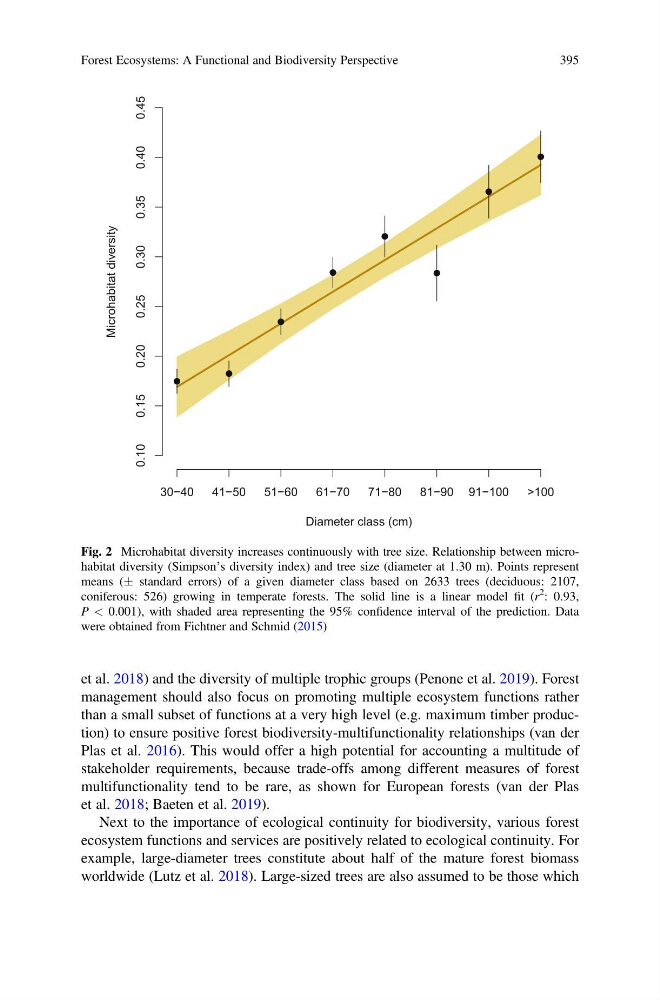
Fig. 2 Microhabitat diversity increases continuously with tree size. Relationship between microhabitat diversity (Simpson’s diversity index) and tree size (diameter at 1.30 m). Points represent
means (Æ standard errors) of a given diameter class based on 2633 trees (deciduous: 2107,
coniferous: 526) growing in temperate forests. The solid line is a linear model fit (r
2
: 0.93,
P < 0.001), with shaded area representing the 95% confidence interval of the prediction. Data
were obtained from Fichtner and Schmid (2015)
Forest Ecosystems: A Functional and Biodiversity Perspective
395
management should also focus on promoting multiple ecosystem functions rather
than a small subset of functions at a very high level (e.g. maximum timber production) to ensure positive forest biodiversity-multifunctionality relationships (van der
Plas et al. 2016). This would offer a high potential for accounting a multitude of
stakeholder requirements, because trade-offs among different measures of forest
multifunctionality tend to be rare, as shown for European forests (van der Plas
et al. 2018; Baeten et al. 2019).
Next to the importance of ecological continuity for biodiversity, various forest
ecosystem functions and services are positively related to ecological continuity. For
example, large-diameter trees constitute about half of the mature forest biomass
worldwide (Lutz et al. 2018). Large-sized trees are also assumed to be those which
0.10
0.15
0.20
0.25
0.30
0.35
0.40
0.45
Diameter class (cm)
Microhabitat diversity
30−40
41−50
51−60
61−70
71−80
81−90 91−100
>100
l
l
l
l
l
l
l
l
Fig. 2 Microhabitat diversity increases continuously with tree size. Relationship between microhabitat diversity (Simpson’s diversity index) and tree size (diameter at 1.30 m). Points represent
means (Æ standard errors) of a given diameter class based on 2633 trees (deciduous: 2107,
coniferous: 526) growing in temperate forests. The solid line is a linear model fit (r
2
: 0.93,
P < 0.001), with shaded area representing the 95% confidence interval of the prediction. Data
were obtained from Fichtner and Schmid (2015)
Forest Ecosystems: A Functional and Biodiversity Perspective
395