

Restoration of Mires
Draining of wetlands resulted in dramatic changes in the environmental conditions,
structure and assemblages of the vegetation. Well adopted and specialized plants,
mainly characteristic bryophytes of bogs, were dramatically harmed by the change of
the water regime, and they as well as the accompanying vascular plants are mostly on
the Red Lists of the countries.
Conversion of peatland to arable land often resulted in complete elimination of
the original vegetation.
For restoration of the original vegetation several treatments are used. In case of
existing remains of the natural vegetation, native species can disperse in the surrounding after restoration of the water regime. However, it should be done by a slow,
adjusted lifting of the water level, so that the remaining vegetation is not drowned.
The results show a great variety in the success (Andersen et al. 2017; Lemmer and
Graf 2016). Especially those Sphagnum spp. which are responsible for restoring the
former raised bog formation, could not be found, only those, which are living in
hollows and not on hummocks. This observation was also made by Frankard (2004)
in the Haute-Fagnes in Belgium.
In cases of a complete elimination of the vegetation the system of “seeding”
plants from other fens or mires is common. This procedure, for example, has been
applied in mires after peat mining in North-West Germany. After mining the peat,
the surface of the former elevated bog has been down-lifted. Slow up-lifting of the
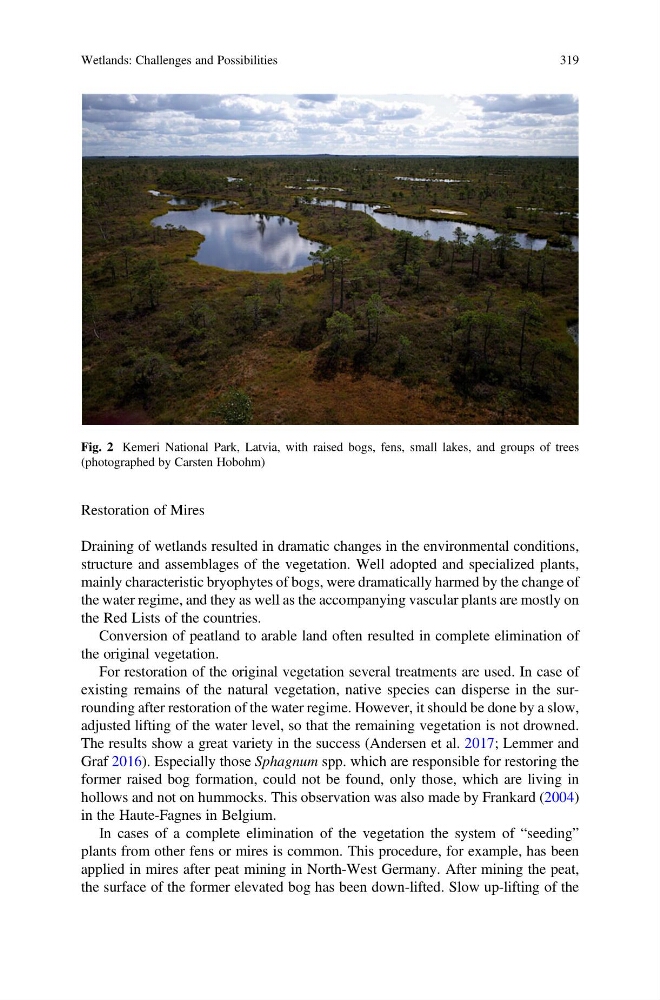
Fig. 2 Kemeri National Park, Latvia, with raised bogs, fens, small lakes, and groups of trees
(photographed by Carsten Hobohm)
Wetlands: Challenges and Possibilities
319
Draining of wetlands resulted in dramatic changes in the environmental conditions,
structure and assemblages of the vegetation. Well adopted and specialized plants,
mainly characteristic bryophytes of bogs, were dramatically harmed by the change of
the water regime, and they as well as the accompanying vascular plants are mostly on
the Red Lists of the countries.
Conversion of peatland to arable land often resulted in complete elimination of
the original vegetation.
For restoration of the original vegetation several treatments are used. In case of
existing remains of the natural vegetation, native species can disperse in the surrounding after restoration of the water regime. However, it should be done by a slow,
adjusted lifting of the water level, so that the remaining vegetation is not drowned.
The results show a great variety in the success (Andersen et al. 2017; Lemmer and
Graf 2016). Especially those Sphagnum spp. which are responsible for restoring the
former raised bog formation, could not be found, only those, which are living in
hollows and not on hummocks. This observation was also made by Frankard (2004)
in the Haute-Fagnes in Belgium.
In cases of a complete elimination of the vegetation the system of “seeding”
plants from other fens or mires is common. This procedure, for example, has been
applied in mires after peat mining in North-West Germany. After mining the peat,
the surface of the former elevated bog has been down-lifted. Slow up-lifting of the
Fig. 2 Kemeri National Park, Latvia, with raised bogs, fens, small lakes, and groups of trees
(photographed by Carsten Hobohm)
Wetlands: Challenges and Possibilities
319