

neighboring dunes, and the runoff of groundwater is limited by a clay layer under the
soil (Grundling 2014; Rapetti et al. 1986; Tomei 1982).
The most common way to restore the hydrology is to stop the irrigation of
wetlands by closing the ditches. This is very often done and is the “classic” way to
protect mires and fens, as well as swamps. However, this measure has to be done in
an appropriate way. It is recommended to lift the water level slowly, so that the
growth of the vegetation can follow the rising water level and will not be inundated.
Otherwise, the whole mire would be drowned, a large water body would be
established and the function of the vegetation as carbon accumulating system
would be interrupted for many years or decades.
As Siegel (1988) pointed out, various effects cumulate in the water system of
mires. The influx-efflux balance is not easy to detect, as precipitation of rainfall and
snow are underlined by groundwater flux. Due to the geomorphological situation
each mire has its individual water regime, which is closely linked to the biota in the
system. These are not only the visible plant species, but also microbiota, and in some
cases also animals, e.g. large herbivores such as elks, animals which build dikes like
beavers or animals which destroy dikes, like voles. Thus, the restoration of the water
system cannot follow a strict schedule in the sense “one fits all”, but has to be
adjusted very exactly with respect to the local conditions.
These two examples illustrate the specificity of the situation, in which any
protection or restoration must be embedded. In both cases the water level is crucial,
Choose the relevant type
Wet organic soil
Drained organic soil
Is productive use necessary?
Practice
paludiculture
Is the ecosystem pristine?
Conserve
Yes
Yes
Can a near-nature state
be restored?
Yes
Restore,
conserve
Is productive use necessary?
No
Yes
Is rewetting possible?
No
Yes
Rewett,
check
wet
agriculture/
paludiculture
Check
restoration
and
conservation
on
drained
and
dry
ground
No
Practice
paludiculture
No
No
Is rewetting possible?
No
Yes
Adapt
management
practices
of drained
peatlands
Rewett,
restore,
conserve
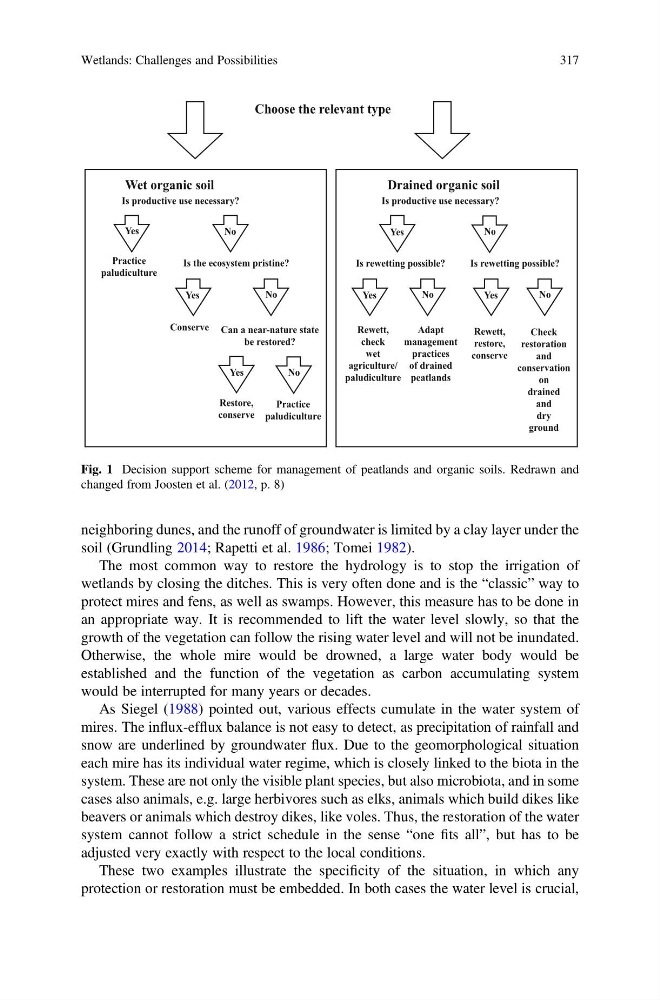
Fig. 1 Decision support scheme for management of peatlands and organic soils. Redrawn and
changed from Joosten et al. (2012, p. 8)
Wetlands: Challenges and Possibilities
317
soil (Grundling 2014; Rapetti et al. 1986; Tomei 1982).
The most common way to restore the hydrology is to stop the irrigation of
wetlands by closing the ditches. This is very often done and is the “classic” way to
protect mires and fens, as well as swamps. However, this measure has to be done in
an appropriate way. It is recommended to lift the water level slowly, so that the
growth of the vegetation can follow the rising water level and will not be inundated.
Otherwise, the whole mire would be drowned, a large water body would be
established and the function of the vegetation as carbon accumulating system
would be interrupted for many years or decades.
As Siegel (1988) pointed out, various effects cumulate in the water system of
mires. The influx-efflux balance is not easy to detect, as precipitation of rainfall and
snow are underlined by groundwater flux. Due to the geomorphological situation
each mire has its individual water regime, which is closely linked to the biota in the
system. These are not only the visible plant species, but also microbiota, and in some
cases also animals, e.g. large herbivores such as elks, animals which build dikes like
beavers or animals which destroy dikes, like voles. Thus, the restoration of the water
system cannot follow a strict schedule in the sense “one fits all”, but has to be
adjusted very exactly with respect to the local conditions.
These two examples illustrate the specificity of the situation, in which any
protection or restoration must be embedded. In both cases the water level is crucial,
Choose the relevant type
Wet organic soil
Drained organic soil
Is productive use necessary?
Practice
paludiculture
Is the ecosystem pristine?
Conserve
Yes
Yes
Can a near-nature state
be restored?
Yes
Restore,
conserve
Is productive use necessary?
No
Yes
Is rewetting possible?
No
Yes
Rewett,
check
wet
agriculture/
paludiculture
Check
restoration
and
conservation
on
drained
and
dry
ground
No
Practice
paludiculture
No
No
Is rewetting possible?
No
Yes
Adapt
management
practices
of drained
peatlands
Rewett,
restore,
conserve
Fig. 1 Decision support scheme for management of peatlands and organic soils. Redrawn and
changed from Joosten et al. (2012, p. 8)
Wetlands: Challenges and Possibilities
317