

The numbers enable a comparison of the meaning of habitat types and threats for
the existence and survival of endemic and threatened species in different continental
regions of the world, for example in the Americas, Africa, Europe, W and Central
Asia, SE Asia and Australia.
We used univariate and bivariate statistics for analyses (Zuur et al. 2007).
3 Threatened and Endemic Species
3.1 Distribution Patterns and Habitat Affinity
Table 3 represents numbers of the IUCN Red List (IUCN 2019c). They show that
forests in general harbour most critically endangered species on Earth, followed by
shrublands and wetlands. In forests and shrublands vascular plants harbour more
critically endangered species than vertebrates, in wetlands the situation is opposite.
Wetlands harbour the second largest amount of critically endangered vertebrate
species (fish species disregarded).
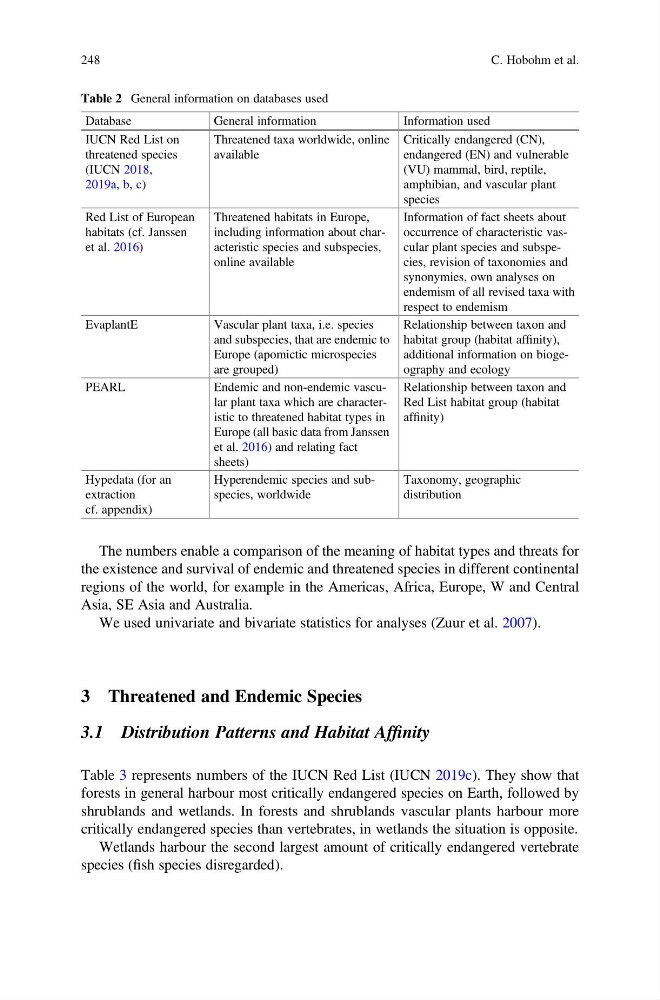
Table 2 General information on databases used
Database
General information
Information used
IUCN Red List on
threatened species
(IUCN 2018,
2019a, b, c)
Threatened taxa worldwide, online
available
Critically endangered (CN),
endangered (EN) and vulnerable
(VU) mammal, bird, reptile,
amphibian, and vascular plant
species
Red List of European
habitats (cf. Janssen
et al. 2016)
Threatened habitats in Europe,
including information about characteristic species and subspecies,
online available
Information of fact sheets about
occurrence of characteristic vascular plant species and subspecies, revision of taxonomies and
synonymies, own analyses on
endemism of all revised taxa with
respect to endemism
EvaplantE
Vascular plant taxa, i.e. species
and subspecies, that are endemic to
Europe (apomictic microspecies
are grouped)
Relationship between taxon and
habitat group (habitat affinity),
additional information on biogeography and ecology
PEARL
Endemic and non-endemic vascular plant taxa which are characteristic to threatened habitat types in
Europe (all basic data from Janssen
et al. 2016) and relating fact
sheets)
Relationship between taxon and
Red List habitat group (habitat
affinity)
Hypedata (for an
extraction
cf. appendix)
Hyperendemic species and subspecies, worldwide
Taxonomy, geographic
distribution
248
C. Hobohm et al.
the existence and survival of endemic and threatened species in different continental
regions of the world, for example in the Americas, Africa, Europe, W and Central
Asia, SE Asia and Australia.
We used univariate and bivariate statistics for analyses (Zuur et al. 2007).
3 Threatened and Endemic Species
3.1 Distribution Patterns and Habitat Affinity
Table 3 represents numbers of the IUCN Red List (IUCN 2019c). They show that
forests in general harbour most critically endangered species on Earth, followed by
shrublands and wetlands. In forests and shrublands vascular plants harbour more
critically endangered species than vertebrates, in wetlands the situation is opposite.
Wetlands harbour the second largest amount of critically endangered vertebrate
species (fish species disregarded).
Table 2 General information on databases used
Database
General information
Information used
IUCN Red List on
threatened species
(IUCN 2018,
2019a, b, c)
Threatened taxa worldwide, online
available
Critically endangered (CN),
endangered (EN) and vulnerable
(VU) mammal, bird, reptile,
amphibian, and vascular plant
species
Red List of European
habitats (cf. Janssen
et al. 2016)
Threatened habitats in Europe,
including information about characteristic species and subspecies,
online available
Information of fact sheets about
occurrence of characteristic vascular plant species and subspecies, revision of taxonomies and
synonymies, own analyses on
endemism of all revised taxa with
respect to endemism
EvaplantE
Vascular plant taxa, i.e. species
and subspecies, that are endemic to
Europe (apomictic microspecies
are grouped)
Relationship between taxon and
habitat group (habitat affinity),
additional information on biogeography and ecology
PEARL
Endemic and non-endemic vascular plant taxa which are characteristic to threatened habitat types in
Europe (all basic data from Janssen
et al. 2016) and relating fact
sheets)
Relationship between taxon and
Red List habitat group (habitat
affinity)
Hypedata (for an
extraction
cf. appendix)
Hyperendemic species and subspecies, worldwide
Taxonomy, geographic
distribution
248
C. Hobohm et al.