

66
J. Abe et al.
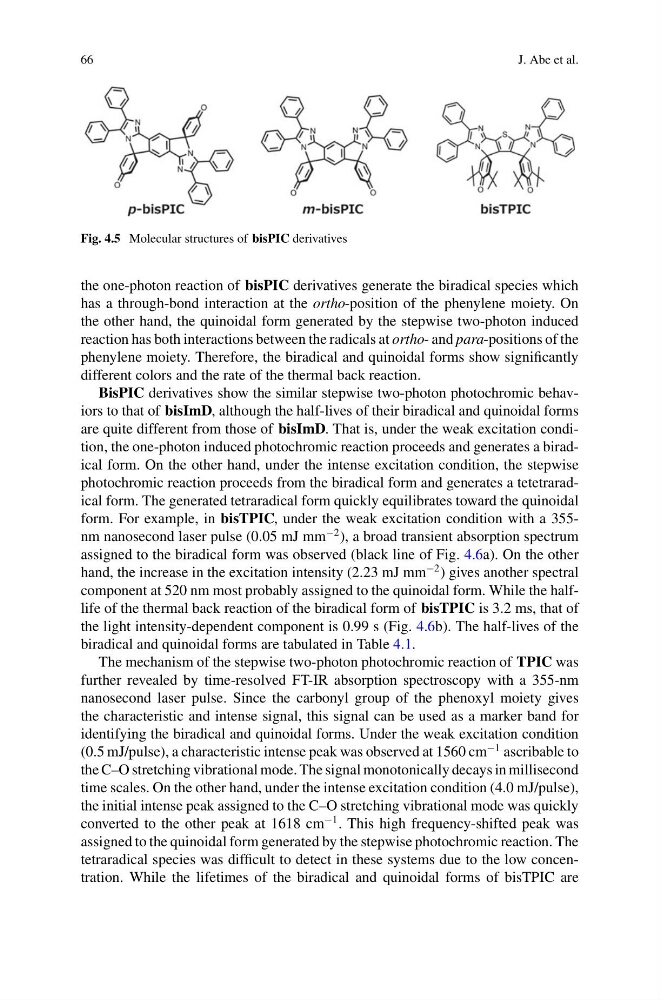
Fig. 4.5 Molecular structures of bisPIC derivatives
the one-photon reaction of bisPIC derivatives generate the biradical species which
has a through-bond interaction at the ortho-position of the phenylene moiety. On
the other hand, the quinoidal form generated by the stepwise two-photon induced
reaction has both interactions between the radicals at ortho- and para-positions of the
phenylene moiety. Therefore, the biradical and quinoidal forms show significantly
different colors and the rate of the thermal back reaction.
BisPIC derivatives show the similar stepwise two-photon photochromic behaviors to that of bisImD, although the half-lives of their biradical and quinoidal forms
are quite different from those of bisImD. That is, under the weak excitation condition, the one-photon induced photochromic reaction proceeds and generates a biradical form. On the other hand, under the intense excitation condition, the stepwise
photochromic reaction proceeds from the biradical form and generates a tetetraradical form. The generated tetraradical form quickly equilibrates toward the quinoidal
form. For example, in bisTPIC, under the weak excitation condition with a 355nm nanosecond laser pulse (0.05 mJ mm
−2 ), a broad transient absorption spectrum
assigned to the biradical form was observed (black line of Fig. 4.6a). On the other
hand, the increase in the excitation intensity (2.23 mJ mm
−2 ) gives another spectral
component at 520 nm most probably assigned to the quinoidal form. While the halflife of the thermal back reaction of the biradical form of bisTPIC is 3.2 ms, that of
the light intensity-dependent component is 0.99 s (Fig. 4.6b). The half-lives of the
biradical and quinoidal forms are tabulated in Table 4.1.
The mechanism of the stepwise two-photon photochromic reaction of TPIC was
further revealed by time-resolved FT-IR absorption spectroscopy with a 355-nm
nanosecond laser pulse. Since the carbonyl group of the phenoxyl moiety gives
the characteristic and intense signal, this signal can be used as a marker band for
identifying the biradical and quinoidal forms. Under the weak excitation condition
(0.5 mJ/pulse), a characteristic intense peak was observed at 1560 cm
−1 ascribable to
the C–O stretching vibrational mode. The signal monotonically decays in millisecond
time scales. On the other hand, under the intense excitation condition (4.0 mJ/pulse),
the initial intense peak assigned to the C–O stretching vibrational mode was quickly
converted to the other peak at 1618 cm
−1 . This high frequency-shifted peak was
assigned to the quinoidal form generated by the stepwise photochromic reaction. The
tetraradical species was difficult to detect in these systems due to the low concentration. While the lifetimes of the biradical and quinoidal forms of bisTPIC are
J. Abe et al.
Fig. 4.5 Molecular structures of bisPIC derivatives
the one-photon reaction of bisPIC derivatives generate the biradical species which
has a through-bond interaction at the ortho-position of the phenylene moiety. On
the other hand, the quinoidal form generated by the stepwise two-photon induced
reaction has both interactions between the radicals at ortho- and para-positions of the
phenylene moiety. Therefore, the biradical and quinoidal forms show significantly
different colors and the rate of the thermal back reaction.
BisPIC derivatives show the similar stepwise two-photon photochromic behaviors to that of bisImD, although the half-lives of their biradical and quinoidal forms
are quite different from those of bisImD. That is, under the weak excitation condition, the one-photon induced photochromic reaction proceeds and generates a biradical form. On the other hand, under the intense excitation condition, the stepwise
photochromic reaction proceeds from the biradical form and generates a tetetraradical form. The generated tetraradical form quickly equilibrates toward the quinoidal
form. For example, in bisTPIC, under the weak excitation condition with a 355nm nanosecond laser pulse (0.05 mJ mm
−2 ), a broad transient absorption spectrum
assigned to the biradical form was observed (black line of Fig. 4.6a). On the other
hand, the increase in the excitation intensity (2.23 mJ mm
−2 ) gives another spectral
component at 520 nm most probably assigned to the quinoidal form. While the halflife of the thermal back reaction of the biradical form of bisTPIC is 3.2 ms, that of
the light intensity-dependent component is 0.99 s (Fig. 4.6b). The half-lives of the
biradical and quinoidal forms are tabulated in Table 4.1.
The mechanism of the stepwise two-photon photochromic reaction of TPIC was
further revealed by time-resolved FT-IR absorption spectroscopy with a 355-nm
nanosecond laser pulse. Since the carbonyl group of the phenoxyl moiety gives
the characteristic and intense signal, this signal can be used as a marker band for
identifying the biradical and quinoidal forms. Under the weak excitation condition
(0.5 mJ/pulse), a characteristic intense peak was observed at 1560 cm
−1 ascribable to
the C–O stretching vibrational mode. The signal monotonically decays in millisecond
time scales. On the other hand, under the intense excitation condition (4.0 mJ/pulse),
the initial intense peak assigned to the C–O stretching vibrational mode was quickly
converted to the other peak at 1618 cm
−1 . This high frequency-shifted peak was
assigned to the quinoidal form generated by the stepwise photochromic reaction. The
tetraradical species was difficult to detect in these systems due to the low concentration. While the lifetimes of the biradical and quinoidal forms of bisTPIC are