

484
T. Ube and T. Ikeda
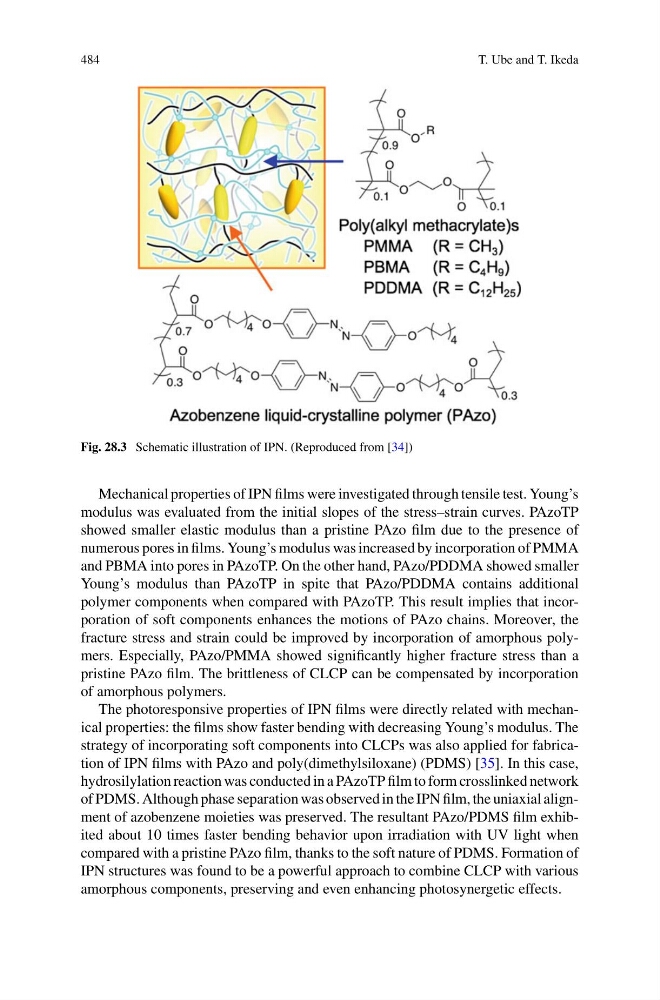
Fig. 28.3 Schematic illustration of IPN. (Reproduced from [34])
Mechanical properties of IPN films were investigated through tensile test. Young’s
modulus was evaluated from the initial slopes of the stress–strain curves. PAzoTP
showed smaller elastic modulus than a pristine PAzo film due to the presence of
numerous pores in films. Young’s modulus was increased by incorporation of PMMA
and PBMA into pores in PAzoTP. On the other hand, PAzo/PDDMA showed smaller
Young’s modulus than PAzoTP in spite that PAzo/PDDMA contains additional
polymer components when compared with PAzoTP. This result implies that incorporation of soft components enhances the motions of PAzo chains. Moreover, the
fracture stress and strain could be improved by incorporation of amorphous polymers. Especially, PAzo/PMMA showed significantly higher fracture stress than a
pristine PAzo film. The brittleness of CLCP can be compensated by incorporation
of amorphous polymers.
The photoresponsive properties of IPN films were directly related with mechanical properties: the films show faster bending with decreasing Young’s modulus. The
strategy of incorporating soft components into CLCPs was also applied for fabrication of IPN films with PAzo and poly(dimethylsiloxane) (PDMS) [35]. In this case,
hydrosilylation reaction was conducted in a PAzoTP film to form crosslinked network
of PDMS. Although phase separation was observed in the IPN film, the uniaxial alignment of azobenzene moieties was preserved. The resultant PAzo/PDMS film exhibited about 10 times faster bending behavior upon irradiation with UV light when
compared with a pristine PAzo film, thanks to the soft nature of PDMS. Formation of
IPN structures was found to be a powerful approach to combine CLCP with various
amorphous components, preserving and even enhancing photosynergetic effects.
T. Ube and T. Ikeda
Fig. 28.3 Schematic illustration of IPN. (Reproduced from [34])
Mechanical properties of IPN films were investigated through tensile test. Young’s
modulus was evaluated from the initial slopes of the stress–strain curves. PAzoTP
showed smaller elastic modulus than a pristine PAzo film due to the presence of
numerous pores in films. Young’s modulus was increased by incorporation of PMMA
and PBMA into pores in PAzoTP. On the other hand, PAzo/PDDMA showed smaller
Young’s modulus than PAzoTP in spite that PAzo/PDDMA contains additional
polymer components when compared with PAzoTP. This result implies that incorporation of soft components enhances the motions of PAzo chains. Moreover, the
fracture stress and strain could be improved by incorporation of amorphous polymers. Especially, PAzo/PMMA showed significantly higher fracture stress than a
pristine PAzo film. The brittleness of CLCP can be compensated by incorporation
of amorphous polymers.
The photoresponsive properties of IPN films were directly related with mechanical properties: the films show faster bending with decreasing Young’s modulus. The
strategy of incorporating soft components into CLCPs was also applied for fabrication of IPN films with PAzo and poly(dimethylsiloxane) (PDMS) [35]. In this case,
hydrosilylation reaction was conducted in a PAzoTP film to form crosslinked network
of PDMS. Although phase separation was observed in the IPN film, the uniaxial alignment of azobenzene moieties was preserved. The resultant PAzo/PDMS film exhibited about 10 times faster bending behavior upon irradiation with UV light when
compared with a pristine PAzo film, thanks to the soft nature of PDMS. Formation of
IPN structures was found to be a powerful approach to combine CLCP with various
amorphous components, preserving and even enhancing photosynergetic effects.