

EIA.gov
(a)
(b)
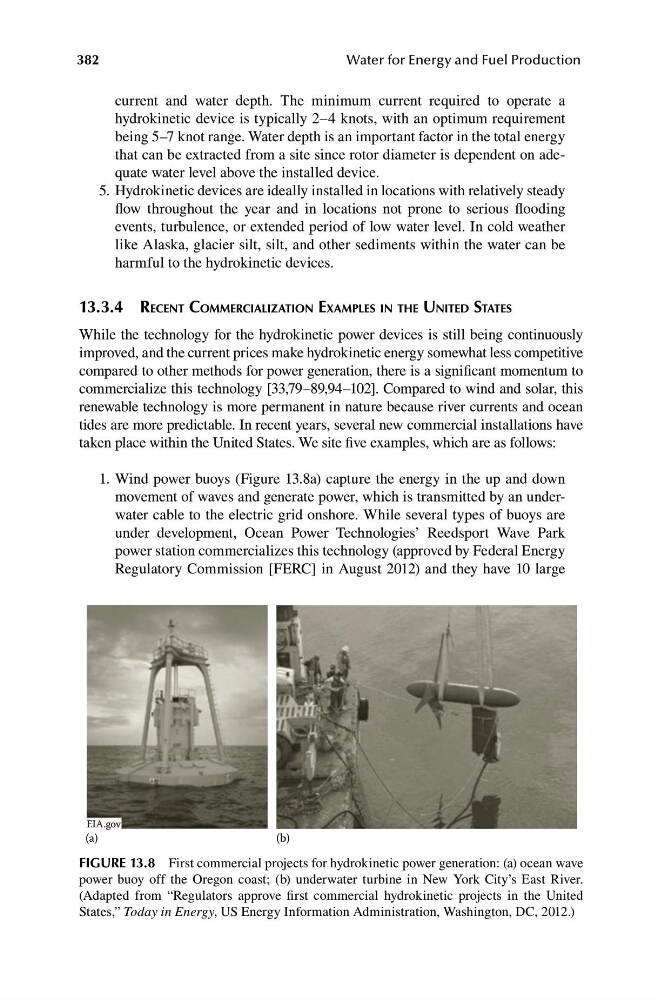
FiGUre 13.8 First commercial projects for hydrokinetic power generation: (a) ocean wave
power buoy off the Oregon coast; (b) underwater turbine in New York City’s East River.
(Adapted from “Regulators approve first commercial hydrokinetic projects in the United
States,” Today in Energy, US Energy Information Administration, Washington, DC, 2012.)
382
Water for Energy and Fuel Production
current and water depth. The minimum current required to operate a
hydrokinetic device is typically 2–4 knots, with an optimum requirement
being 5–7 knot range. Water depth is an important factor in the total energy
that can be extracted from a site since rotor diameter is dependent on adequate water level above the installed device.
5. Hydrokinetic devices are ideally installed in locations with relatively steady
flow throughout the year and in locations not prone to serious flooding
events, turbulence, or extended period of low water level. In cold weather
like Alaska, glacier silt, silt, and other sediments within the water can be
harmful to the hydrokinetic devices.
13.3.4 reCenT CommerCiAlizATion exAmPleS in The uniTed STATeS
While the technology for the hydrokinetic power devices is still being continuously
improved, and the current prices make hydrokinetic energy somewhat less competitive
compared to other methods for power generation, there is a significant momentum to
commercialize this technology [33,79–89,94–102]. Compared to wind and solar, this
renewable technology is more permanent in nature because river currents and ocean
tides are more predictable. In recent years, several new commercial installations have
taken place within the United States. We site five examples, which are as follows:
1. Wind power buoys (Figure 13.8a) capture the energy in the up and down
movement of waves and generate power, which is transmitted by an underwater cable to the electric grid onshore. While several types of buoys are
under development, Ocean Power Technologies’ Reedsport Wave Park
power station commercializes this technology (approved by Federal Energy
Regulatory Commission [FERC] in August 2012) and they have 10 large
(a)
(b)
FiGUre 13.8 First commercial projects for hydrokinetic power generation: (a) ocean wave
power buoy off the Oregon coast; (b) underwater turbine in New York City’s East River.
(Adapted from “Regulators approve first commercial hydrokinetic projects in the United
States,” Today in Energy, US Energy Information Administration, Washington, DC, 2012.)
382
Water for Energy and Fuel Production
current and water depth. The minimum current required to operate a
hydrokinetic device is typically 2–4 knots, with an optimum requirement
being 5–7 knot range. Water depth is an important factor in the total energy
that can be extracted from a site since rotor diameter is dependent on adequate water level above the installed device.
5. Hydrokinetic devices are ideally installed in locations with relatively steady
flow throughout the year and in locations not prone to serious flooding
events, turbulence, or extended period of low water level. In cold weather
like Alaska, glacier silt, silt, and other sediments within the water can be
harmful to the hydrokinetic devices.
13.3.4 reCenT CommerCiAlizATion exAmPleS in The uniTed STATeS
While the technology for the hydrokinetic power devices is still being continuously
improved, and the current prices make hydrokinetic energy somewhat less competitive
compared to other methods for power generation, there is a significant momentum to
commercialize this technology [33,79–89,94–102]. Compared to wind and solar, this
renewable technology is more permanent in nature because river currents and ocean
tides are more predictable. In recent years, several new commercial installations have
taken place within the United States. We site five examples, which are as follows:
1. Wind power buoys (Figure 13.8a) capture the energy in the up and down
movement of waves and generate power, which is transmitted by an underwater cable to the electric grid onshore. While several types of buoys are
under development, Ocean Power Technologies’ Reedsport Wave Park
power station commercializes this technology (approved by Federal Energy
Regulatory Commission [FERC] in August 2012) and they have 10 large