

380
Water for Energy and Fuel Production
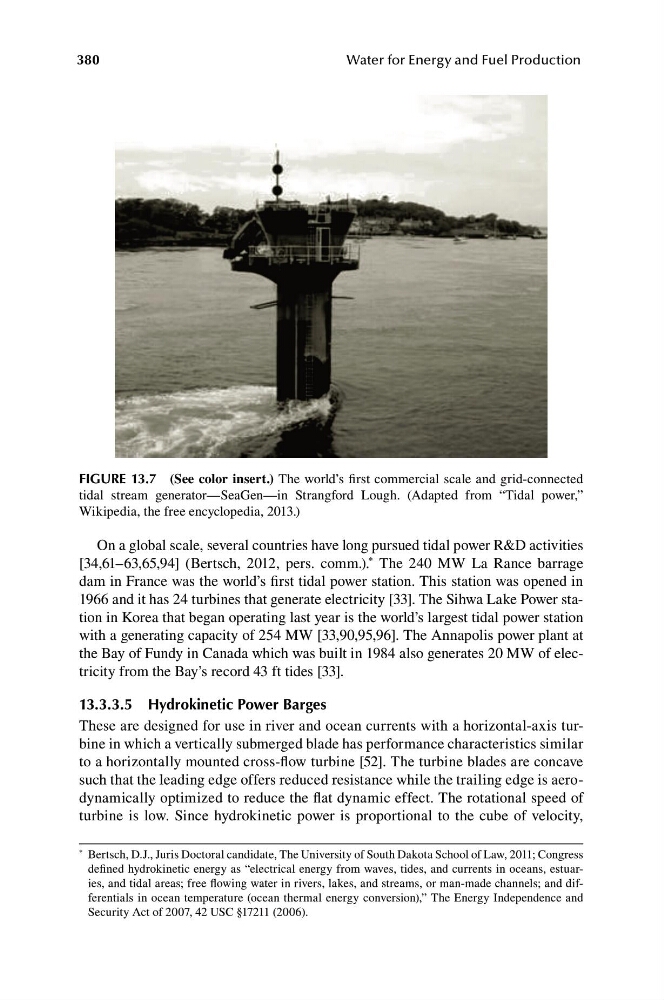
FiGUre 13.7 (See color insert.) The world’s first commercial scale and grid-connected
tidal stream generator—SeaGen—in Strangford Lough. (Adapted from “Tidal power,”
Wikipedia, the free encyclopedia, 2013.)
On a global scale, several countries have long pursued tidal power R&D activities
[34,61–63,65,94] (Bertsch, 2012, pers. comm.). * The 240 MW La Rance barrage
dam in France was the world’s first tidal power station. This station was opened in
1966 and it has 24 turbines that generate electricity [33]. The Sihwa Lake Power station in Korea that began operating last year is the world’s largest tidal power station
with a generating capacity of 254 MW [33,90,95,96]. The Annapolis power plant at
the Bay of Fundy in Canada which was built in 1984 also generates 20 MW of electricity from the Bay’s record 43 ft tides [33].
13.3.3.5 hydrokinetic Power Barges
These are designed for use in river and ocean currents with a horizontal-axis turbine in which a vertically submerged blade has performance characteristics similar
to a horizontally mounted cross-flow turbine [52]. The turbine blades are concave
such that the leading edge offers reduced resistance while the trailing edge is aerodynamically optimized to reduce the flat dynamic effect. The rotational speed of
turbine is low. Since hydrokinetic power is proportional to the cube of velocity,
* Bertsch, D.J., Juris Doctoral candidate, The University of South Dakota School of Law, 2011; Congress
defined hydrokinetic energy as “electrical energy from waves, tides, and currents in oceans, estuaries, and tidal areas; free flowing water in rivers, lakes, and streams, or man-made channels; and differentials in ocean temperature (ocean thermal energy conversion),” The Energy Independence and
Security Act of 2007, 42 USC §17211 (2006).
Water for Energy and Fuel Production
FiGUre 13.7 (See color insert.) The world’s first commercial scale and grid-connected
tidal stream generator—SeaGen—in Strangford Lough. (Adapted from “Tidal power,”
Wikipedia, the free encyclopedia, 2013.)
On a global scale, several countries have long pursued tidal power R&D activities
[34,61–63,65,94] (Bertsch, 2012, pers. comm.). * The 240 MW La Rance barrage
dam in France was the world’s first tidal power station. This station was opened in
1966 and it has 24 turbines that generate electricity [33]. The Sihwa Lake Power station in Korea that began operating last year is the world’s largest tidal power station
with a generating capacity of 254 MW [33,90,95,96]. The Annapolis power plant at
the Bay of Fundy in Canada which was built in 1984 also generates 20 MW of electricity from the Bay’s record 43 ft tides [33].
13.3.3.5 hydrokinetic Power Barges
These are designed for use in river and ocean currents with a horizontal-axis turbine in which a vertically submerged blade has performance characteristics similar
to a horizontally mounted cross-flow turbine [52]. The turbine blades are concave
such that the leading edge offers reduced resistance while the trailing edge is aerodynamically optimized to reduce the flat dynamic effect. The rotational speed of
turbine is low. Since hydrokinetic power is proportional to the cube of velocity,
* Bertsch, D.J., Juris Doctoral candidate, The University of South Dakota School of Law, 2011; Congress
defined hydrokinetic energy as “electrical energy from waves, tides, and currents in oceans, estuaries, and tidal areas; free flowing water in rivers, lakes, and streams, or man-made channels; and differentials in ocean temperature (ocean thermal energy conversion),” The Energy Independence and
Security Act of 2007, 42 USC §17211 (2006).