

378
Water for Energy and Fuel Production
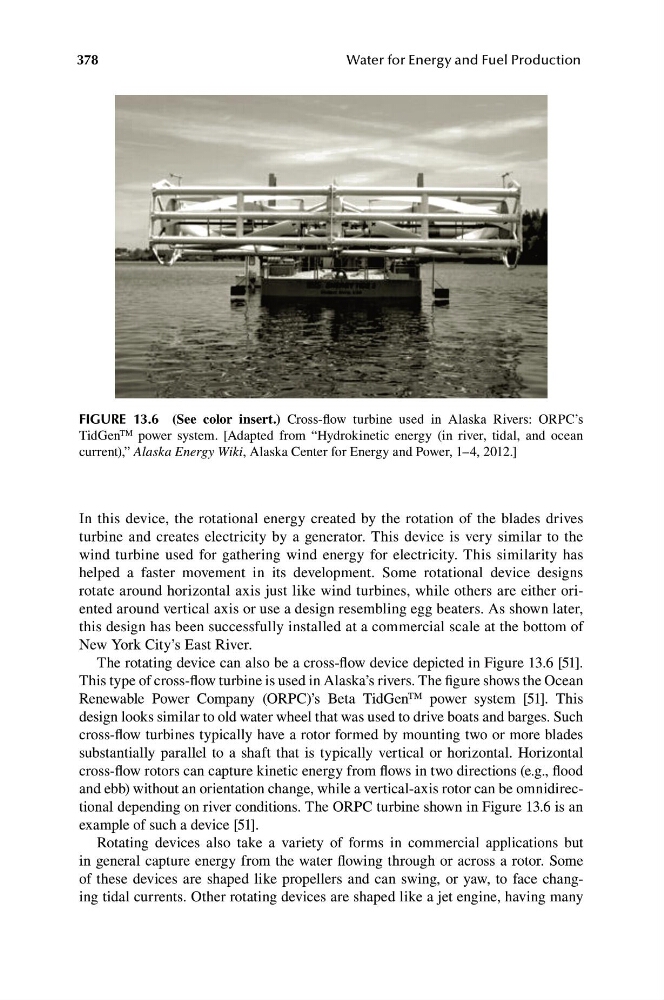
FiGUre 13.6 (See color insert.) Cross-flow turbine used in Alaska Rivers: ORPC’s
TidGen TM power system. [Adapted from “Hydrokinetic energy (in river, tidal, and ocean
c urrent),” Alaska Energy Wiki, Alaska Center for Energy and Power, 1–4, 2012.]
In this device, the rotational energy created by the rotation of the blades drives
turbine and creates electricity by a generator. This device is very similar to the
wind turbine used for gathering wind energy for electricity. This similarity has
helped a faster movement in its development. Some rotational device designs
rotate around horizontal axis just like wind turbines, while others are either oriented around vertical axis or use a design resembling egg beaters. As shown later,
this design has been successfully installed at a commercial scale at the bottom of
New York City’s East River.
The rotating device can also be a cross-flow device depicted in Figure 13.6 [51].
This type of cross-flow turbine is used in Alaska’s rivers. The figure shows the Ocean
Renewable Power Company (ORPC)’s Beta TidGen TM power system [51]. This
design looks similar to old water wheel that was used to drive boats and barges. Such
cross-flow turbines typically have a rotor formed by mounting two or more blades
substantially parallel to a shaft that is typically vertical or horizontal. Horizontal
cross-flow rotors can capture kinetic energy from flows in two directions (e.g., flood
and ebb) without an orientation change, while a vertical-axis rotor can be omnidirectional depending on river conditions. The ORPC turbine shown in Figure 13.6 is an
example of such a device [51].
Rotating devices also take a variety of forms in commercial applications but
in general capture energy from the water flowing through or across a rotor. Some
of these devices are shaped like propellers and can swing, or yaw, to face changing tidal currents. Other rotating devices are shaped like a jet engine, having many