

344
Water for Energy and Fuel Production
H 2 O
Liquid CO 2
Borehole
CO 2 emulsifier
Gas
hydrate-bearing
formation
Inflatable packer
Inflatable packer
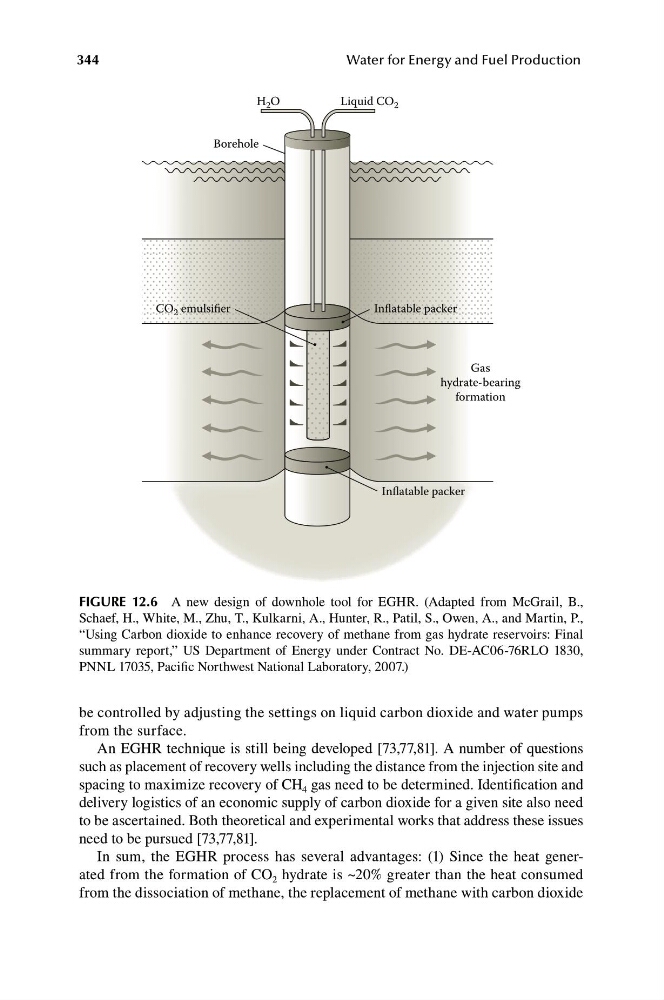
FiGUre 12.6 A new design of downhole tool for EGHR. (Adapted from McGrail, B.,
Schaef, H., White, M., Zhu, T., Kulkarni, A., Hunter, R., Patil, S., Owen, A., and Martin, P.,
“Using Carbon dioxide to enhance recovery of methane from gas hydrate reservoirs: Final
summary report,” US Department of Energy under Contract No. DE-AC06-76RLO 1830,
PNNL 17035, Pacific Northwest National Laboratory, 2007.)
be controlled by adjusting the settings on liquid carbon dioxide and water pumps
from the surface.
An EGHR technique is still being developed [73,77,81]. A number of questions
such as placement of recovery wells including the distance from the injection site and
spacing to maximize recovery of CH 4 gas need to be determined. Identification and
delivery logistics of an economic supply of carbon dioxide for a given site also need
to be ascertained. Both theoretical and experimental works that address these issues
need to be pursued [73,77,81].
In sum, the EGHR process has several advantages: (1) Since the heat generated from the formation of CO 2 hydrate is ~20% greater than the heat consumed
from the dissociation of methane, the replacement of methane with carbon dioxide
Water for Energy and Fuel Production
H 2 O
Liquid CO 2
Borehole
CO 2 emulsifier
Gas
hydrate-bearing
formation
Inflatable packer
Inflatable packer
FiGUre 12.6 A new design of downhole tool for EGHR. (Adapted from McGrail, B.,
Schaef, H., White, M., Zhu, T., Kulkarni, A., Hunter, R., Patil, S., Owen, A., and Martin, P.,
“Using Carbon dioxide to enhance recovery of methane from gas hydrate reservoirs: Final
summary report,” US Department of Energy under Contract No. DE-AC06-76RLO 1830,
PNNL 17035, Pacific Northwest National Laboratory, 2007.)
be controlled by adjusting the settings on liquid carbon dioxide and water pumps
from the surface.
An EGHR technique is still being developed [73,77,81]. A number of questions
such as placement of recovery wells including the distance from the injection site and
spacing to maximize recovery of CH 4 gas need to be determined. Identification and
delivery logistics of an economic supply of carbon dioxide for a given site also need
to be ascertained. Both theoretical and experimental works that address these issues
need to be pursued [73,77,81].
In sum, the EGHR process has several advantages: (1) Since the heat generated from the formation of CO 2 hydrate is ~20% greater than the heat consumed
from the dissociation of methane, the replacement of methane with carbon dioxide