

330
Water for Energy and Fuel Production
Water-molecule “cage”
Gas molecule
(e.g., methane)
Structure I
Structure II
Structure H
1
8
2
5 12
5 12 6 4
5
12 6
8
4
3 5
6 6
3
5
12 6
2
6
16
2
3
Methane, ethane,
carbon dioxide, etc.
Propane, iso-butane,
natural gas, etc.
Methane + neohexane,
methane + cycloheptane, etc.
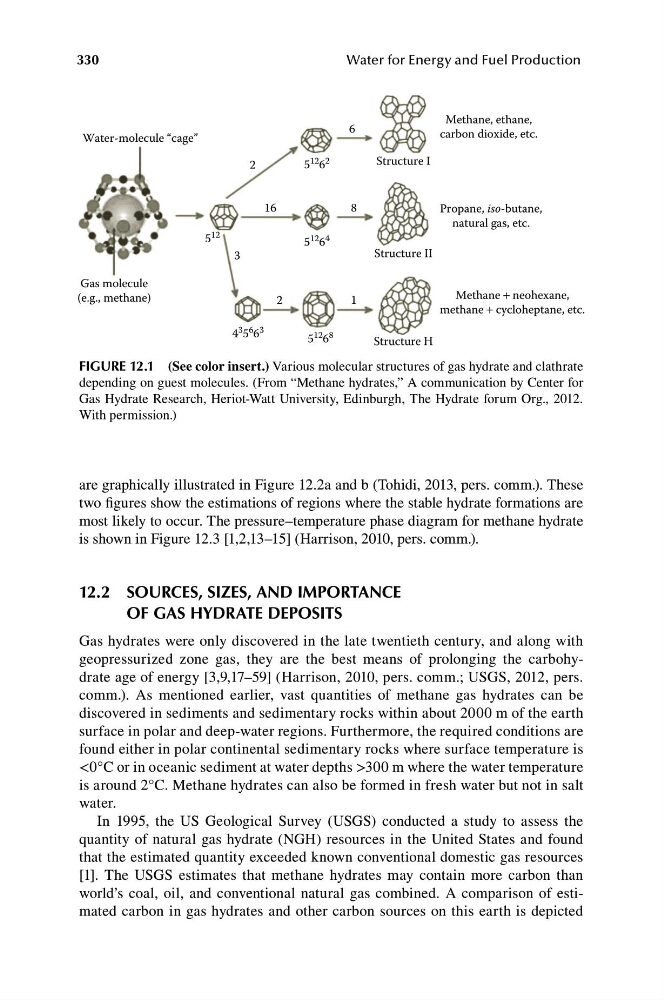
FiGUre 12.1 (See color insert.) Various molecular structures of gas hydrate and clathrate
depending on guest molecules. (From “Methane hydrates,” A communication by Center for
Gas Hydrate Research, Heriot-Watt University, Edinburgh, The Hydrate forum Org., 2012.
With permission.)
are graphically illustrated in Figure 12.2a and b (Tohidi, 2013, pers. comm.). These
two figures show the estimations of regions where the stable hydrate formations are
most likely to occur. The pressure–temperature phase diagram for methane hydrate
is shown in Figure 12.3 [1,2,13–15] (Harrison, 2010, pers. comm.).
12.2 sOUrCes, siZes, and imPOrtanCe
OF Gas hydrate dePOsits
Gas hydrates were only discovered in the late twentieth century, and along with
geopressurized zone gas, they are the best means of prolonging the carbohydrate age of energy [3,9,17–59] (Harrison, 2010, pers. comm.; USGS, 2012, pers.
comm.). As mentioned earlier, vast quantities of methane gas hydrates can be
discovered in sediments and sedimentary rocks within about 2000 m of the earth
surface in polar and deep-water regions. Furthermore, the required conditions are
found either in polar continental sedimentary rocks where surface temperature is
<0°C or in oceanic sediment at water depths >300 m where the water temperature
is around 2°C. Methane hydrates can also be formed in fresh water but not in salt
water.
In 1995, the US Geological Survey (USGS) conducted a study to assess the
quantity of natural gas hydrate (NGH) resources in the United States and found
that the estimated quantity exceeded known conventional domestic gas resources
[1]. The USGS estimates that methane hydrates may contain more carbon than
world’s coal, oil, and conventional natural gas combined. A comparison of estimated carbon in gas hydrates and other carbon sources on this earth is depicted