

RASH pretreatment
Pressure gauge Thermometer
Pressure
gauge
Organosolv pretreament
Water
Thermometer
temperature
controller
Pressure gauge
Thermometer
Water, wood
ground, and
organic
solvent
Reactor
Steam transfer line
Steam
vent
Water
Water
Wood
ground
Condensate
RASH reactor
Steam
generator
Water
Water
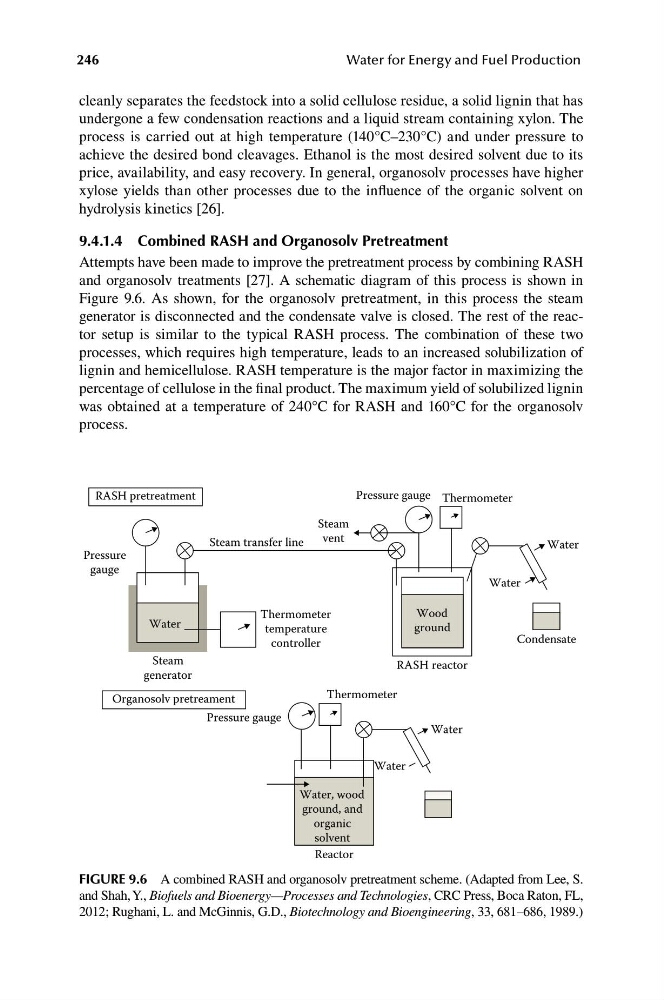
FiGUre 9.6 A combined RASH and organosolv pretreatment scheme. (Adapted from Lee, S.
and Shah, Y., Biofuels and Bioenergy—Processes and Technologies, CRC Press, Boca Raton, FL,
2012; Rughani, L. and McGinnis, G.D., Biotechnology and Bioengineering, 33, 681–686, 1989.)
246
Water for Energy and Fuel Production
cleanly separates the feedstock into a solid cellulose residue, a solid lignin that has
undergone a few condensation reactions and a liquid stream containing xylon. The
process is carried out at high temperature (140°C–230°C) and under pressure to
achieve the desired bond cleavages. Ethanol is the most desired solvent due to its
price, availability, and easy recovery. In general, organosolv processes have higher
xylose yields than other processes due to the influence of the organic solvent on
hydrolysis kinetics [26].
9.4.1.4 Combined rash and Organosolv Pretreatment
Attempts have been made to improve the pretreatment process by combining RASH
and organosolv treatments [27]. A schematic diagram of this process is shown in
Figure 9.6. As shown, for the organosolv pretreatment, in this process the steam
generator is disconnected and the condensate valve is closed. The rest of the reactor setup is similar to the typical RASH process. The combination of these two
processes, which requires high temperature, leads to an increased solubilization of
lignin and hemicellulose. RASH temperature is the major factor in maximizing the
percentage of cellulose in the final product. The maximum yield of solubilized lignin
was obtained at a temperature of 240°C for RASH and 160°C for the organosolv
process.
Pressure gauge Thermometer
Pressure
gauge
Organosolv pretreament
Water
Thermometer
temperature
controller
Pressure gauge
Thermometer
Water, wood
ground, and
organic
solvent
Reactor
Steam transfer line
Steam
vent
Water
Water
Wood
ground
Condensate
RASH reactor
Steam
generator
Water
Water
FiGUre 9.6 A combined RASH and organosolv pretreatment scheme. (Adapted from Lee, S.
and Shah, Y., Biofuels and Bioenergy—Processes and Technologies, CRC Press, Boca Raton, FL,
2012; Rughani, L. and McGinnis, G.D., Biotechnology and Bioengineering, 33, 681–686, 1989.)
246
Water for Energy and Fuel Production
cleanly separates the feedstock into a solid cellulose residue, a solid lignin that has
undergone a few condensation reactions and a liquid stream containing xylon. The
process is carried out at high temperature (140°C–230°C) and under pressure to
achieve the desired bond cleavages. Ethanol is the most desired solvent due to its
price, availability, and easy recovery. In general, organosolv processes have higher
xylose yields than other processes due to the influence of the organic solvent on
hydrolysis kinetics [26].
9.4.1.4 Combined rash and Organosolv Pretreatment
Attempts have been made to improve the pretreatment process by combining RASH
and organosolv treatments [27]. A schematic diagram of this process is shown in
Figure 9.6. As shown, for the organosolv pretreatment, in this process the steam
generator is disconnected and the condensate valve is closed. The rest of the reactor setup is similar to the typical RASH process. The combination of these two
processes, which requires high temperature, leads to an increased solubilization of
lignin and hemicellulose. RASH temperature is the major factor in maximizing the
percentage of cellulose in the final product. The maximum yield of solubilized lignin
was obtained at a temperature of 240°C for RASH and 160°C for the organosolv
process.