

238
Water for Energy and Fuel Production
Hull
Bran
Embryo (germ)
Plumule
Scutellum
Radicle
Tip cap
Endosperm
Floury endosperm
Horny endosperm
Seed coat
Tube cells
Cross cells
Mesocarp
Epidermis
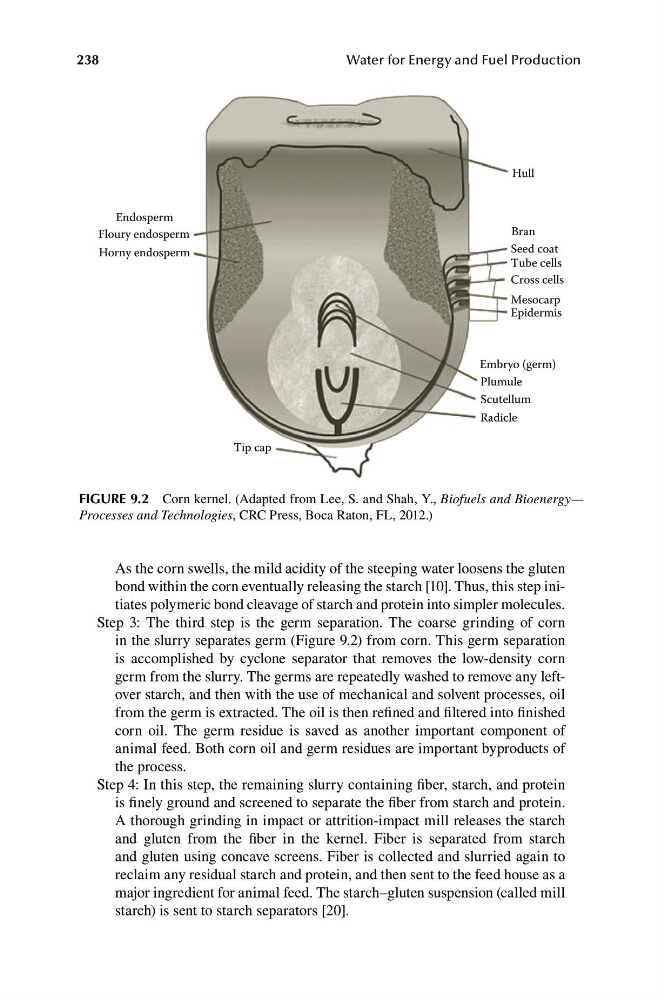
FiGUre 9.2 Corn kernel. (Adapted from Lee, S. and Shah, Y., Biofuels and Bioenergy—
Processes and Technologies, CRC Press, Boca Raton, FL, 2012.)
As the corn swells, the mild acidity of the steeping water loosens the gluten
bond within the corn eventually releasing the starch [10]. Thus, this step initiates polymeric bond cleavage of starch and protein into simpler molecules.
Step 3: The third step is the germ separation. The coarse grinding of corn
in the slurry separates germ (Figure 9.2) from corn. This germ separation
is accomplished by cyclone separator that removes the low-density corn
germ from the slurry. The germs are repeatedly washed to remove any leftover starch, and then with the use of mechanical and solvent processes, oil
from the germ is extracted. The oil is then refined and filtered into finished
corn oil. The germ residue is saved as another important component of
animal feed. Both corn oil and germ residues are important byproducts of
the process.
Step 4: In this step, the remaining slurry containing fiber, starch, and protein
is finely ground and screened to separate the fiber from starch and protein.
A thorough grinding in impact or attrition-impact mill releases the starch
and gluten from the fiber in the kernel. Fiber is separated from starch
and gluten using concave screens. Fiber is collected and slurried again to
reclaim any residual starch and protein, and then sent to the feed house as a
major ingredient for animal feed. The starch–gluten suspension (called mill
starch) is sent to starch separators [20].
Water for Energy and Fuel Production
Hull
Bran
Embryo (germ)
Plumule
Scutellum
Radicle
Tip cap
Endosperm
Floury endosperm
Horny endosperm
Seed coat
Tube cells
Cross cells
Mesocarp
Epidermis
FiGUre 9.2 Corn kernel. (Adapted from Lee, S. and Shah, Y., Biofuels and Bioenergy—
Processes and Technologies, CRC Press, Boca Raton, FL, 2012.)
As the corn swells, the mild acidity of the steeping water loosens the gluten
bond within the corn eventually releasing the starch [10]. Thus, this step initiates polymeric bond cleavage of starch and protein into simpler molecules.
Step 3: The third step is the germ separation. The coarse grinding of corn
in the slurry separates germ (Figure 9.2) from corn. This germ separation
is accomplished by cyclone separator that removes the low-density corn
germ from the slurry. The germs are repeatedly washed to remove any leftover starch, and then with the use of mechanical and solvent processes, oil
from the germ is extracted. The oil is then refined and filtered into finished
corn oil. The germ residue is saved as another important component of
animal feed. Both corn oil and germ residues are important byproducts of
the process.
Step 4: In this step, the remaining slurry containing fiber, starch, and protein
is finely ground and screened to separate the fiber from starch and protein.
A thorough grinding in impact or attrition-impact mill releases the starch
and gluten from the fiber in the kernel. Fiber is separated from starch
and gluten using concave screens. Fiber is collected and slurried again to
reclaim any residual starch and protein, and then sent to the feed house as a
major ingredient for animal feed. The starch–gluten suspension (called mill
starch) is sent to starch separators [20].