

200
Water for Energy and Fuel Production
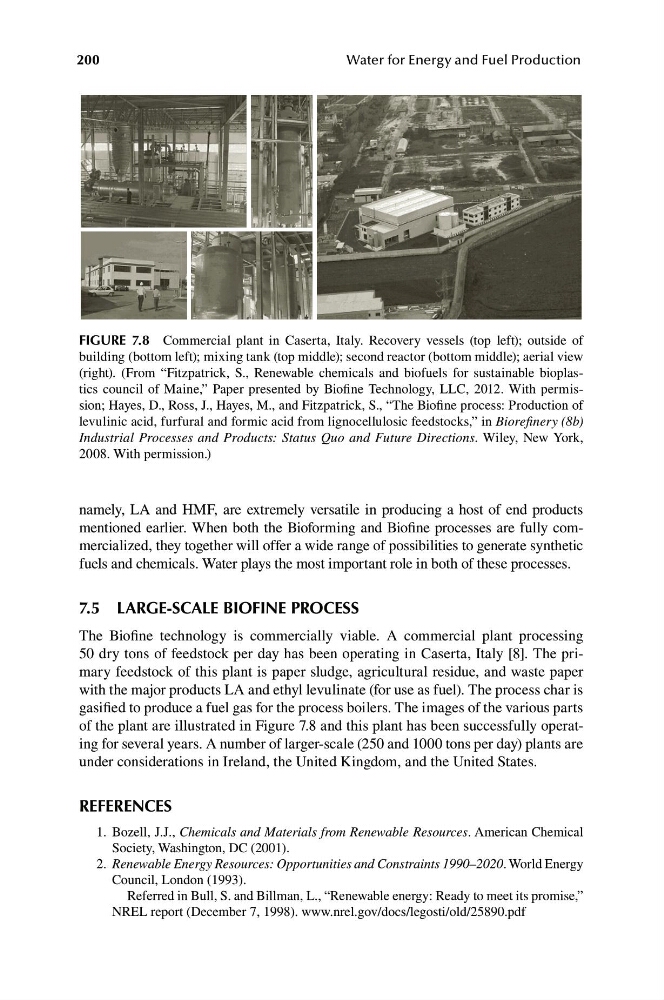
FiGUre 7.8 Commercial plant in Caserta, Italy. Recovery vessels (top left); outside of
building (bottom left); mixing tank (top middle); second reactor (bottom middle); aerial view
(right). (From “Fitzpatrick, S., Renewable chemicals and biofuels for sustainable bioplastics council of Maine,” Paper presented by Biofine Technology, LLC, 2012. With permission; Hayes, D., Ross, J., Hayes, M., and Fitzpatrick, S., “The Biofine process: Production of
levulinic acid, furfural and formic acid from lignocellulosic feedstocks,” in Biorefinery (8b)
Industrial Processes and Products: Status Quo and Future Directions. Wiley, New York,
2008. With permission.)
namely, LA and HMF, are extremely versatile in producing a host of end products
mentioned earlier. When both the Bioforming and Biofine processes are fully commercialized, they together will offer a wide range of possibilities to generate synthetic
fuels and chemicals. Water plays the most important role in both of these processes.
7.5 larGe-sCale BiOFine PrOCess
The Biofine technology is commercially viable. A commercial plant processing
50 dry tons of feedstock per day has been operating in Caserta, Italy [8]. The primary feedstock of this plant is paper sludge, agricultural residue, and waste paper
with the major products LA and ethyl levulinate (for use as fuel). The process char is
gasified to produce a fuel gas for the process boilers. The images of the various parts
of the plant are illustrated in Figure 7.8 and this plant has been successfully operating for several years. A number of larger-scale (250 and 1000 tons per day) plants are
under considerations in Ireland, the United Kingdom, and the United States.
reFerenCes
1. Bozell, J.J., Chemicals and Materials from Renewable Resources. American Chemical
Society, Washington, DC (2001).
2. Renewable Energy Resources: Opportunities and Constraints 1990–2020. World Energy
Council, London (1993).
Referred in Bull, S. and Billman, L., “Renewable energy: Ready to meet its promise,”
NREL report (December 7, 1998). www.nrel.gov/docs/legosti/old/25890.pdf
Water for Energy and Fuel Production
FiGUre 7.8 Commercial plant in Caserta, Italy. Recovery vessels (top left); outside of
building (bottom left); mixing tank (top middle); second reactor (bottom middle); aerial view
(right). (From “Fitzpatrick, S., Renewable chemicals and biofuels for sustainable bioplastics council of Maine,” Paper presented by Biofine Technology, LLC, 2012. With permission; Hayes, D., Ross, J., Hayes, M., and Fitzpatrick, S., “The Biofine process: Production of
levulinic acid, furfural and formic acid from lignocellulosic feedstocks,” in Biorefinery (8b)
Industrial Processes and Products: Status Quo and Future Directions. Wiley, New York,
2008. With permission.)
namely, LA and HMF, are extremely versatile in producing a host of end products
mentioned earlier. When both the Bioforming and Biofine processes are fully commercialized, they together will offer a wide range of possibilities to generate synthetic
fuels and chemicals. Water plays the most important role in both of these processes.
7.5 larGe-sCale BiOFine PrOCess
The Biofine technology is commercially viable. A commercial plant processing
50 dry tons of feedstock per day has been operating in Caserta, Italy [8]. The primary feedstock of this plant is paper sludge, agricultural residue, and waste paper
with the major products LA and ethyl levulinate (for use as fuel). The process char is
gasified to produce a fuel gas for the process boilers. The images of the various parts
of the plant are illustrated in Figure 7.8 and this plant has been successfully operating for several years. A number of larger-scale (250 and 1000 tons per day) plants are
under considerations in Ireland, the United Kingdom, and the United States.
reFerenCes
1. Bozell, J.J., Chemicals and Materials from Renewable Resources. American Chemical
Society, Washington, DC (2001).
2. Renewable Energy Resources: Opportunities and Constraints 1990–2020. World Energy
Council, London (1993).
Referred in Bull, S. and Billman, L., “Renewable energy: Ready to meet its promise,”
NREL report (December 7, 1998). www.nrel.gov/docs/legosti/old/25890.pdf