

198
Water for Energy and Fuel Production
Biomass
1000 kg
1. Feedstock
optimization
2. Acid
hydrolysis
3. Esterification
4. Pyrolysis
6. Biochar
5. Upgrading of
pyrolysis bio-oil
Bio-oil
Sustainable
ethanol
Ethyl
levulinate
Upgraded
bio-oil
Diesel miscible biofuels
Levulinic
acid
250 kg
Formic
acid
100 kg
Furfural
150 kg
Solid
residues
500 kg
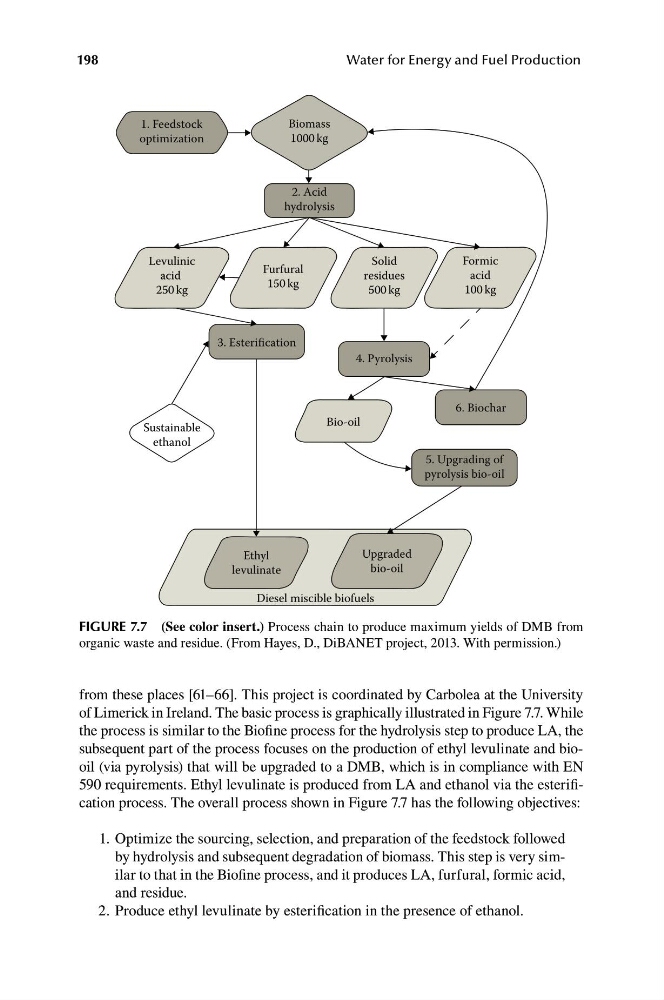
FiGUre 7.7 (See color insert.) Process chain to produce maximum yields of DMB from
organic waste and residue. (From Hayes, D., DiBANET project, 2013. With permission.)
from these places [61–66]. This project is coordinated by Carbolea at the University
of Limerick in Ireland. The basic process is graphically illustrated in Figure 7.7. While
the process is similar to the Biofine process for the hydrolysis step to produce LA, the
subsequent part of the process focuses on the production of ethyl levulinate and biooil (via pyrolysis) that will be upgraded to a DMB, which is in compliance with EN
590 requirements. Ethyl levulinate is produced from LA and ethanol via the esterification process. The overall process shown in Figure 7.7 has the following objectives:
1. Optimize the sourcing, selection, and preparation of the feedstock followed
by hydrolysis and subsequent degradation of biomass. This step is very similar to that in the Biofine process, and it produces LA, furfural, formic acid,
and residue.
2. Produce ethyl levulinate by esterification in the presence of ethanol.
Water for Energy and Fuel Production
Biomass
1000 kg
1. Feedstock
optimization
2. Acid
hydrolysis
3. Esterification
4. Pyrolysis
6. Biochar
5. Upgrading of
pyrolysis bio-oil
Bio-oil
Sustainable
ethanol
Ethyl
levulinate
Upgraded
bio-oil
Diesel miscible biofuels
Levulinic
acid
250 kg
Formic
acid
100 kg
Furfural
150 kg
Solid
residues
500 kg
FiGUre 7.7 (See color insert.) Process chain to produce maximum yields of DMB from
organic waste and residue. (From Hayes, D., DiBANET project, 2013. With permission.)
from these places [61–66]. This project is coordinated by Carbolea at the University
of Limerick in Ireland. The basic process is graphically illustrated in Figure 7.7. While
the process is similar to the Biofine process for the hydrolysis step to produce LA, the
subsequent part of the process focuses on the production of ethyl levulinate and biooil (via pyrolysis) that will be upgraded to a DMB, which is in compliance with EN
590 requirements. Ethyl levulinate is produced from LA and ethanol via the esterification process. The overall process shown in Figure 7.7 has the following objectives:
1. Optimize the sourcing, selection, and preparation of the feedstock followed
by hydrolysis and subsequent degradation of biomass. This step is very similar to that in the Biofine process, and it produces LA, furfural, formic acid,
and residue.
2. Produce ethyl levulinate by esterification in the presence of ethanol.