

O
O
HO
OH
Succinic acid
O
HO
OH
3-Hydroxypropionic acid
O
O
NH 2
HO
OH
Glutamic acid
O
O
NH 2
HO
OH
Aspartic acid
HO
OH
OH
Glycerol
HO
O
O
4-Hydroxybutyrolactone
O
O
HO
OH
Itaconic acid
O
O
OH
Levulinic acid
O
O
O
OH
HO
2,5-Furandicarboxylic acid
OH
OH OH
OH
OH
Xylitol
OH
OH OH OH
OH OH
Sorbitol
OH
O
OH
HO
OH
O
OH
OH
Glucaric acid
194
Water for Energy and Fuel Production
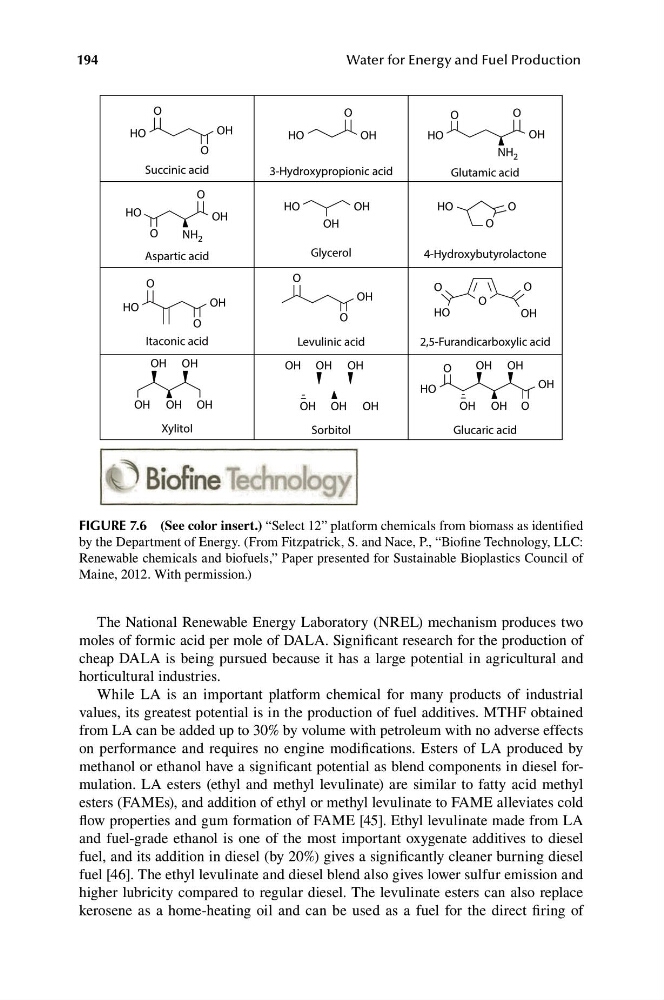
FiGUre 7.6 (See color insert.) “Select 12” platform chemicals from biomass as identified
by the Department of Energy. (From Fitzpatrick, S. and Nace, P., “Biofine Technology, LLC:
Renewable chemicals and biofuels,” Paper presented for Sustainable Bioplastics Council of
Maine, 2012. With permission.)
The National Renewable Energy Laboratory (NREL) mechanism produces two
moles of formic acid per mole of DALA. Significant research for the production of
cheap DALA is being pursued because it has a large potential in agricultural and
horticultural industries.
While LA is an important platform chemical for many products of industrial
values, its greatest potential is in the production of fuel additives. MTHF obtained
from LA can be added up to 30% by volume with petroleum with no adverse effects
on performance and requires no engine modifications. Esters of LA produced by
methanol or ethanol have a significant potential as blend components in diesel formulation. LA esters (ethyl and methyl levulinate) are similar to fatty acid methyl
esters (FAMEs), and addition of ethyl or methyl levulinate to FAME alleviates cold
flow properties and gum formation of FAME [45]. Ethyl levulinate made from LA
and fuel-grade ethanol is one of the most important oxygenate additives to diesel
fuel, and its addition in diesel (by 20%) gives a significantly cleaner burning diesel
fuel [46]. The ethyl levulinate and diesel blend also gives lower sulfur emission and
higher lubricity compared to regular diesel. The levulinate esters can also replace
kerosene as a home-heating oil and can be used as a fuel for the direct firing of
O
HO
OH
Succinic acid
O
HO
OH
3-Hydroxypropionic acid
O
O
NH 2
HO
OH
Glutamic acid
O
O
NH 2
HO
OH
Aspartic acid
HO
OH
OH
Glycerol
HO
O
O
4-Hydroxybutyrolactone
O
O
HO
OH
Itaconic acid
O
O
OH
Levulinic acid
O
O
O
OH
HO
2,5-Furandicarboxylic acid
OH
OH OH
OH
OH
Xylitol
OH
OH OH OH
OH OH
Sorbitol
OH
O
OH
HO
OH
O
OH
OH
Glucaric acid
194
Water for Energy and Fuel Production
FiGUre 7.6 (See color insert.) “Select 12” platform chemicals from biomass as identified
by the Department of Energy. (From Fitzpatrick, S. and Nace, P., “Biofine Technology, LLC:
Renewable chemicals and biofuels,” Paper presented for Sustainable Bioplastics Council of
Maine, 2012. With permission.)
The National Renewable Energy Laboratory (NREL) mechanism produces two
moles of formic acid per mole of DALA. Significant research for the production of
cheap DALA is being pursued because it has a large potential in agricultural and
horticultural industries.
While LA is an important platform chemical for many products of industrial
values, its greatest potential is in the production of fuel additives. MTHF obtained
from LA can be added up to 30% by volume with petroleum with no adverse effects
on performance and requires no engine modifications. Esters of LA produced by
methanol or ethanol have a significant potential as blend components in diesel formulation. LA esters (ethyl and methyl levulinate) are similar to fatty acid methyl
esters (FAMEs), and addition of ethyl or methyl levulinate to FAME alleviates cold
flow properties and gum formation of FAME [45]. Ethyl levulinate made from LA
and fuel-grade ethanol is one of the most important oxygenate additives to diesel
fuel, and its addition in diesel (by 20%) gives a significantly cleaner burning diesel
fuel [46]. The ethyl levulinate and diesel blend also gives lower sulfur emission and
higher lubricity compared to regular diesel. The levulinate esters can also replace
kerosene as a home-heating oil and can be used as a fuel for the direct firing of