

Feedstocks
“biomass”
Crops
Agricultural
residues
Cellulosic
sludges
Waste
paper
Wood
Starch
Molasses
The
Biofine
process
Levulinic
acid
Formic
acid
Downstream
conversion
Furfural
Ligneous
char
Products
Specialty
chemicals
Commodity
chemicals
Herbicides
Pesticides
Heating oil
Transportation
fuels
Biofine Hydrolysis Process and Derivative Product Upgrading Technologies 185
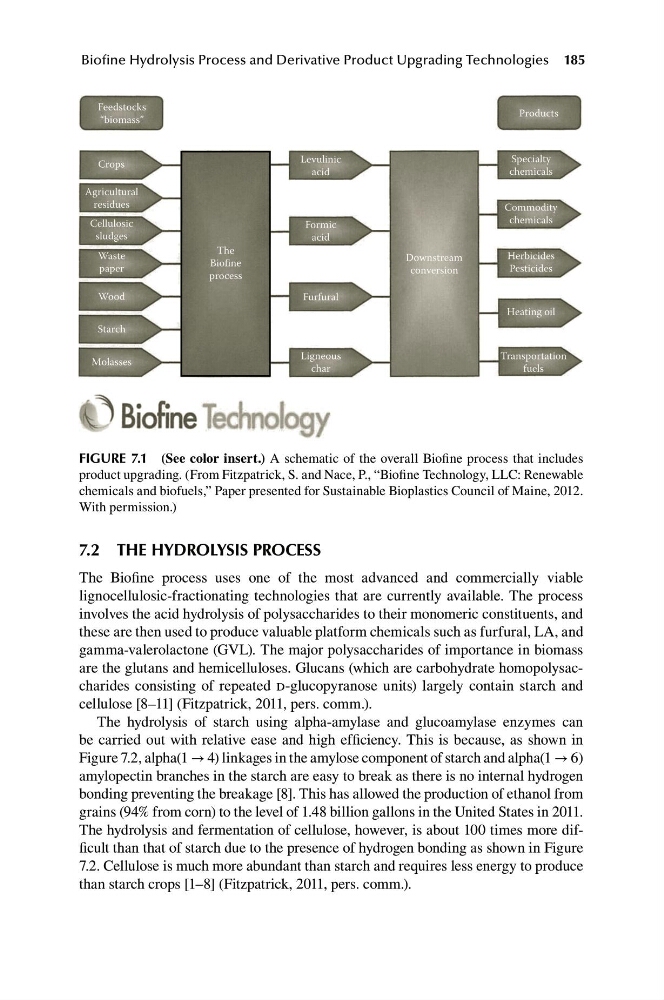
FiGUre 7.1 (See color insert.) A schematic of the overall Biofine process that includes
product upgrading. (From Fitzpatrick, S. and Nace, P., “Biofine Technology, LLC: Renewable
chemicals and biofuels,” Paper presented for Sustainable Bioplastics Council of Maine, 2012.
With permission.)
7.2 the hydrOlysis PrOCess
The Biofine process uses one of the most advanced and commercially viable
lignocellulosic-fractionating technologies that are currently available. The process
involves the acid hydrolysis of polysaccharides to their monomeric constituents, and
these are then used to produce valuable platform chemicals such as furfural, LA, and
gamma-valerolactone (GVL). The major polysaccharides of importance in biomass
are the glutans and hemicelluloses. Glucans (which are carbohydrate homopolysaccharides consisting of repeated d-glucopyranose units) largely contain starch and
cellulose [8–11] (Fitzpatrick, 2011, pers. comm.).
The hydrolysis of starch using alpha-amylase and glucoamylase enzymes can
be carried out with relative ease and high efficiency. This is because, as shown in
Figure 7.2, alpha(1 → 4) linkages in the amylose component of starch and alpha(1 → 6)
amylopectin branches in the starch are easy to break as there is no internal hydrogen
bonding preventing the breakage [8]. This has allowed the production of ethanol from
grains (94% from corn) to the level of 1.48 billion gallons in the United States in 2011.
The hydrolysis and fermentation of cellulose, however, is about 100 times more difficult than that of starch due to the presence of hydrogen bonding as shown in Figure
7.2. Cellulose is much more abundant than starch and requires less energy to produce
than starch crops [1–8] (Fitzpatrick, 2011, pers. comm.).
“biomass”
Crops
Agricultural
residues
Cellulosic
sludges
Waste
paper
Wood
Starch
Molasses
The
Biofine
process
Levulinic
acid
Formic
acid
Downstream
conversion
Furfural
Ligneous
char
Products
Specialty
chemicals
Commodity
chemicals
Herbicides
Pesticides
Heating oil
Transportation
fuels
Biofine Hydrolysis Process and Derivative Product Upgrading Technologies 185
FiGUre 7.1 (See color insert.) A schematic of the overall Biofine process that includes
product upgrading. (From Fitzpatrick, S. and Nace, P., “Biofine Technology, LLC: Renewable
chemicals and biofuels,” Paper presented for Sustainable Bioplastics Council of Maine, 2012.
With permission.)
7.2 the hydrOlysis PrOCess
The Biofine process uses one of the most advanced and commercially viable
lignocellulosic-fractionating technologies that are currently available. The process
involves the acid hydrolysis of polysaccharides to their monomeric constituents, and
these are then used to produce valuable platform chemicals such as furfural, LA, and
gamma-valerolactone (GVL). The major polysaccharides of importance in biomass
are the glutans and hemicelluloses. Glucans (which are carbohydrate homopolysaccharides consisting of repeated d-glucopyranose units) largely contain starch and
cellulose [8–11] (Fitzpatrick, 2011, pers. comm.).
The hydrolysis of starch using alpha-amylase and glucoamylase enzymes can
be carried out with relative ease and high efficiency. This is because, as shown in
Figure 7.2, alpha(1 → 4) linkages in the amylose component of starch and alpha(1 → 6)
amylopectin branches in the starch are easy to break as there is no internal hydrogen
bonding preventing the breakage [8]. This has allowed the production of ethanol from
grains (94% from corn) to the level of 1.48 billion gallons in the United States in 2011.
The hydrolysis and fermentation of cellulose, however, is about 100 times more difficult than that of starch due to the presence of hydrogen bonding as shown in Figure
7.2. Cellulose is much more abundant than starch and requires less energy to produce
than starch crops [1–8] (Fitzpatrick, 2011, pers. comm.).