

169
Aqueous-Phase Reforming and BioForming Process
Separator
(T ∼ 300 K)
Ultra-shift zone
(T ∼ 510 K)
Reforming
reactor
(T ∼ 500 K)
Hydrogenation
reactor
(T ∼ 370 K)
Used if producing
alkanes with external
source of H 2
Used if processing
sugars at high
concentrations
Metal/acidic support
for producing alkanes
Used if low levels
of CO are needed
H 2 O
H 2 , CO 2 , and alkanes
Metal/nonacidic support
for producing H 2
Liquid feed
H 2 co-feed
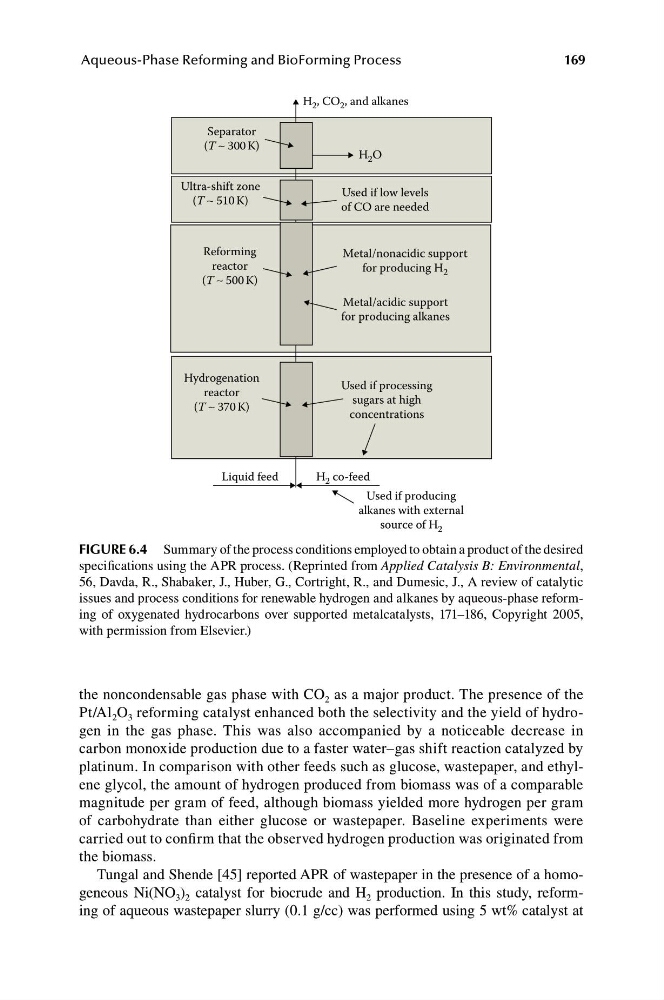
FiGUre 6.4 Summary of the process conditions employed to obtain a product of the desired
specifications using the APR process. (Reprinted from Applied Catalysis B: Environmental,
56, Davda, R., Shabaker, J., Huber, G., Cortright, R., and Dumesic, J., A review of catalytic
issues and process conditions for renewable hydrogen and alkanes by aqueous-phase reforming of oxygenated hydrocarbons over supported metalcatalysts, 171–186, Copyright 2005,
with permission from Elsevier.)
the noncondensable gas phase with CO 2 as a major product. The presence of the
Pt/Al 2 O 3 reforming catalyst enhanced both the selectivity and the yield of hydrogen in the gas phase. This was also accompanied by a noticeable decrease in
carbon monoxide production due to a faster water–gas shift reaction catalyzed by
platinum. In comparison with other feeds such as glucose, wastepaper, and ethylene glycol, the amount of hydrogen produced from biomass was of a comparable
magnitude per gram of feed, although biomass yielded more hydrogen per gram
of carbohydrate than either glucose or wastepaper. Baseline experiments were
carried out to confirm that the observed hydrogen production was originated from
the biomass.
Tungal and Shende [45] reported APR of wastepaper in the presence of a homogeneous Ni(NO 3 ) 2 catalyst for biocrude and H 2 production. In this study, reforming of aqueous wastepaper slurry (0.1 g/cc) was performed using 5 wt% catalyst at
Aqueous-Phase Reforming and BioForming Process
Separator
(T ∼ 300 K)
Ultra-shift zone
(T ∼ 510 K)
Reforming
reactor
(T ∼ 500 K)
Hydrogenation
reactor
(T ∼ 370 K)
Used if producing
alkanes with external
source of H 2
Used if processing
sugars at high
concentrations
Metal/acidic support
for producing alkanes
Used if low levels
of CO are needed
H 2 O
H 2 , CO 2 , and alkanes
Metal/nonacidic support
for producing H 2
Liquid feed
H 2 co-feed
FiGUre 6.4 Summary of the process conditions employed to obtain a product of the desired
specifications using the APR process. (Reprinted from Applied Catalysis B: Environmental,
56, Davda, R., Shabaker, J., Huber, G., Cortright, R., and Dumesic, J., A review of catalytic
issues and process conditions for renewable hydrogen and alkanes by aqueous-phase reforming of oxygenated hydrocarbons over supported metalcatalysts, 171–186, Copyright 2005,
with permission from Elsevier.)
the noncondensable gas phase with CO 2 as a major product. The presence of the
Pt/Al 2 O 3 reforming catalyst enhanced both the selectivity and the yield of hydrogen in the gas phase. This was also accompanied by a noticeable decrease in
carbon monoxide production due to a faster water–gas shift reaction catalyzed by
platinum. In comparison with other feeds such as glucose, wastepaper, and ethylene glycol, the amount of hydrogen produced from biomass was of a comparable
magnitude per gram of feed, although biomass yielded more hydrogen per gram
of carbohydrate than either glucose or wastepaper. Baseline experiments were
carried out to confirm that the observed hydrogen production was originated from
the biomass.
Tungal and Shende [45] reported APR of wastepaper in the presence of a homogeneous Ni(NO 3 ) 2 catalyst for biocrude and H 2 production. In this study, reforming of aqueous wastepaper slurry (0.1 g/cc) was performed using 5 wt% catalyst at