

80
5 Cells in Motion
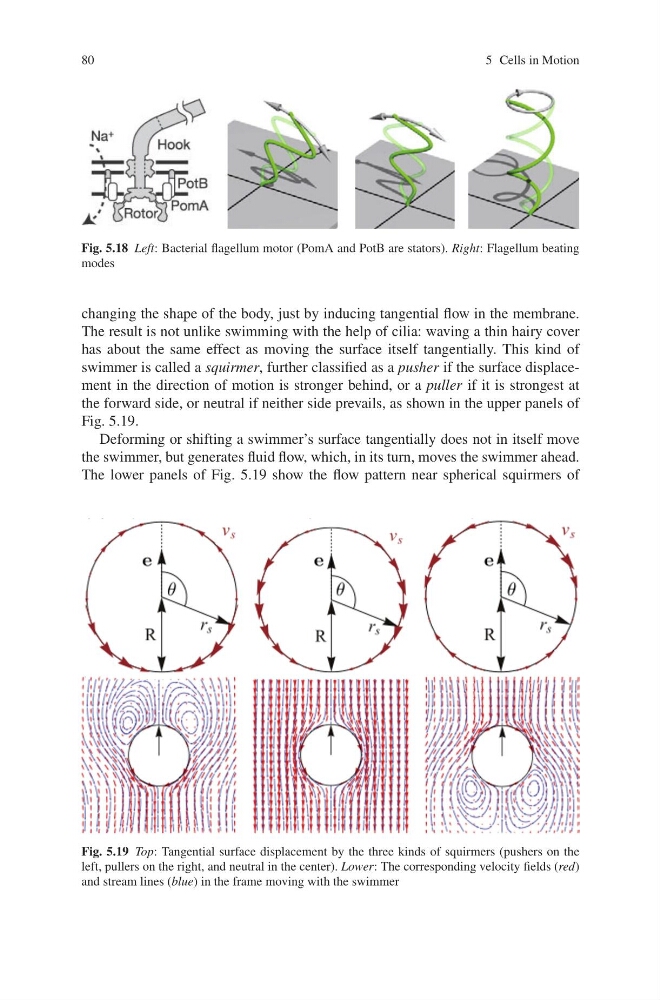
Fig. 5.18 Left: Bacterial flagellum motor (PomA and PotB are stators). Right: Flagellum beating
modes
changing the shape of the body, just by inducing tangential flow in the membrane.
The result is not unlike swimming with the help of cilia: waving a thin hairy cover
has about the same effect as moving the surface itself tangentially. This kind of
swimmer is called a squirmer, further classified as a pusher if the surface displacement in the direction of motion is stronger behind, or a puller if it is strongest at
the forward side, or neutral if neither side prevails, as shown in the upper panels of
Fig. 5.19.
Deforming or shifting a swimmer’s surface tangentially does not in itself move
the swimmer, but generates fluid flow, which, in its turn, moves the swimmer ahead.
The lower panels of Fig. 5.19 show the flow pattern near spherical squirmers of
Fig. 5.19 Top: Tangential surface displacement by the three kinds of squirmers (pushers on the
left, pullers on the right, and neutral in the center). Lower: The corresponding velocity fields (red)
and stream lines (blue) in the frame moving with the swimmer
5 Cells in Motion
Fig. 5.18 Left: Bacterial flagellum motor (PomA and PotB are stators). Right: Flagellum beating
modes
changing the shape of the body, just by inducing tangential flow in the membrane.
The result is not unlike swimming with the help of cilia: waving a thin hairy cover
has about the same effect as moving the surface itself tangentially. This kind of
swimmer is called a squirmer, further classified as a pusher if the surface displacement in the direction of motion is stronger behind, or a puller if it is strongest at
the forward side, or neutral if neither side prevails, as shown in the upper panels of
Fig. 5.19.
Deforming or shifting a swimmer’s surface tangentially does not in itself move
the swimmer, but generates fluid flow, which, in its turn, moves the swimmer ahead.
The lower panels of Fig. 5.19 show the flow pattern near spherical squirmers of
Fig. 5.19 Top: Tangential surface displacement by the three kinds of squirmers (pushers on the
left, pullers on the right, and neutral in the center). Lower: The corresponding velocity fields (red)
and stream lines (blue) in the frame moving with the swimmer