

4.2 Memory and Function
49
modifying its structure even in a minor way is likely to disrupt its assigned function.
On the other hand, if a base in DNA is replaced, the structure of the double helix
remains intact, and mistakes in replications turn into the driving force of evolution.
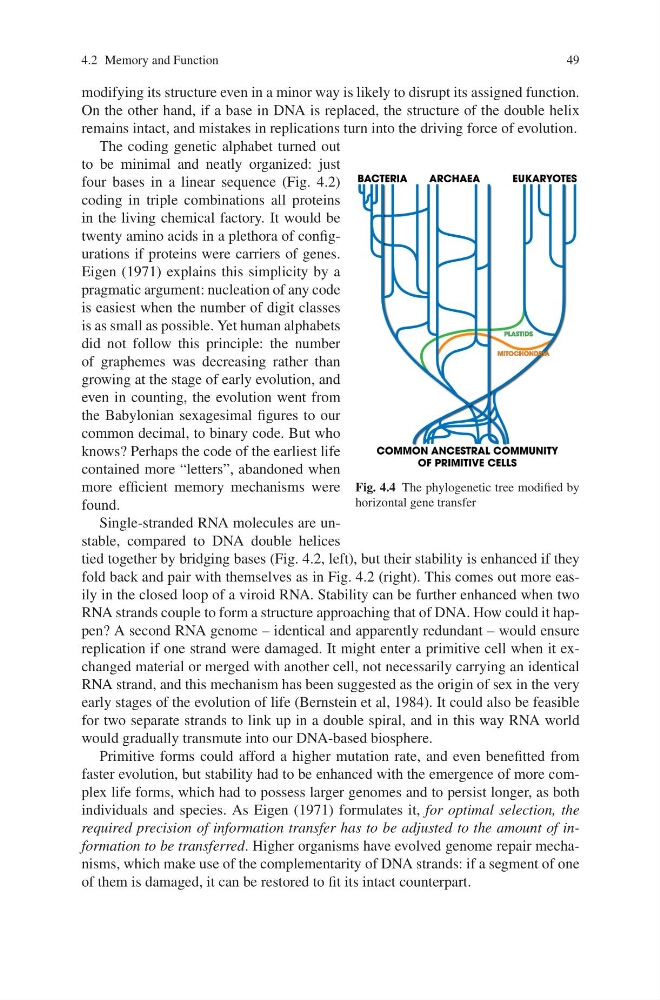
Fig. 4.4 The phylogenetic tree modified by
horizontal gene transfer
The coding genetic alphabet turned out
to be minimal and neatly organized: just
four bases in a linear sequence (Fig. 4.2)
coding in triple combinations all proteins
in the living chemical factory. It would be
twenty amino acids in a plethora of configurations if proteins were carriers of genes.
Eigen (1971) explains this simplicity by a
pragmatic argument: nucleation of any code
is easiest when the number of digit classes
is as small as possible. Yet human alphabets
did not follow this principle: the number
of graphemes was decreasing rather than
growing at the stage of early evolution, and
even in counting, the evolution went from
the Babylonian sexagesimal figures to our
common decimal, to binary code. But who
knows? Perhaps the code of the earliest life
contained more “letters”, abandoned when
more efficient memory mechanisms were
found.
Single-stranded RNA molecules are unstable, compared to DNA double helices
tied together by bridging bases (Fig. 4.2, left), but their stability is enhanced if they
fold back and pair with themselves as in Fig. 4.2 (right). This comes out more easily in the closed loop of a viroid RNA. Stability can be further enhanced when two
RNA strands couple to form a structure approaching that of DNA. How could it happen? A second RNA genome – identical and apparently redundant – would ensure
replication if one strand were damaged. It might enter a primitive cell when it exchanged material or merged with another cell, not necessarily carrying an identical
RNA strand, and this mechanism has been suggested as the origin of sex in the very
early stages of the evolution of life (Bernstein et al, 1984). It could also be feasible
for two separate strands to link up in a double spiral, and in this way RNA world
would gradually transmute into our DNA-based biosphere.
Primitive forms could afford a higher mutation rate, and even benefitted from
faster evolution, but stability had to be enhanced with the emergence of more complex life forms, which had to possess larger genomes and to persist longer, as both
individuals and species. As Eigen (1971) formulates it, for optimal selection, the
required precision of information transfer has to be adjusted to the amount of information to be transferred. Higher organisms have evolved genome repair mechanisms, which make use of the complementarity of DNA strands: if a segment of one
of them is damaged, it can be restored to fit its intact counterpart.
49
modifying its structure even in a minor way is likely to disrupt its assigned function.
On the other hand, if a base in DNA is replaced, the structure of the double helix
remains intact, and mistakes in replications turn into the driving force of evolution.
Fig. 4.4 The phylogenetic tree modified by
horizontal gene transfer
The coding genetic alphabet turned out
to be minimal and neatly organized: just
four bases in a linear sequence (Fig. 4.2)
coding in triple combinations all proteins
in the living chemical factory. It would be
twenty amino acids in a plethora of configurations if proteins were carriers of genes.
Eigen (1971) explains this simplicity by a
pragmatic argument: nucleation of any code
is easiest when the number of digit classes
is as small as possible. Yet human alphabets
did not follow this principle: the number
of graphemes was decreasing rather than
growing at the stage of early evolution, and
even in counting, the evolution went from
the Babylonian sexagesimal figures to our
common decimal, to binary code. But who
knows? Perhaps the code of the earliest life
contained more “letters”, abandoned when
more efficient memory mechanisms were
found.
Single-stranded RNA molecules are unstable, compared to DNA double helices
tied together by bridging bases (Fig. 4.2, left), but their stability is enhanced if they
fold back and pair with themselves as in Fig. 4.2 (right). This comes out more easily in the closed loop of a viroid RNA. Stability can be further enhanced when two
RNA strands couple to form a structure approaching that of DNA. How could it happen? A second RNA genome – identical and apparently redundant – would ensure
replication if one strand were damaged. It might enter a primitive cell when it exchanged material or merged with another cell, not necessarily carrying an identical
RNA strand, and this mechanism has been suggested as the origin of sex in the very
early stages of the evolution of life (Bernstein et al, 1984). It could also be feasible
for two separate strands to link up in a double spiral, and in this way RNA world
would gradually transmute into our DNA-based biosphere.
Primitive forms could afford a higher mutation rate, and even benefitted from
faster evolution, but stability had to be enhanced with the emergence of more complex life forms, which had to possess larger genomes and to persist longer, as both
individuals and species. As Eigen (1971) formulates it, for optimal selection, the
required precision of information transfer has to be adjusted to the amount of information to be transferred. Higher organisms have evolved genome repair mechanisms, which make use of the complementarity of DNA strands: if a segment of one
of them is damaged, it can be restored to fit its intact counterpart.