

the residual kinetic energy loss corresponding to the minimum outlet speed can also
be minimized.
If only the loss of nozzle, blade, and residual kinetic energy is deducted, the
wheel circumferential work of the turbine can be obtained, which corresponds to the
wheel circumferential efficiency. The formula for calculating the wheel circumference efficiency is as follows:
g u ¼ 2u
2 u
c 1
cos a 1 À
u
c 2
1 þ /
cos b 2
cos b 1
ð9:49Þ
where
u
Nozzle velocity loss coefficient;
U
Velocity loss coefficient of blade;
a 1
Nozzle outlet angle;
b 1 ; b 2 Moving blade air inlet angle;
c 1
Nozzle outlet velocity (Fig. 9.46);
c 2
Absolute velocity at moving blade outlet;
u
Circumferential speed of Cascade wheel (Blade high-middle line).
In the above equation let u=c 1 ¼ k, which is the so-called characteristic ratio,
and derive it:
@g u
@k
¼ au
2 1 þ /
cos b 2
cos b 1
cos a 1 À 2k
ð
Þ¼0
The optimum characteristic ratio can be found as k opt ¼ cos a 1 =2.
In this case, a 1 ¼ 22
, then k ¼ 0:464. However, this is only the best point of
wheel circumferential efficiency. For practical effective efficiency, its best
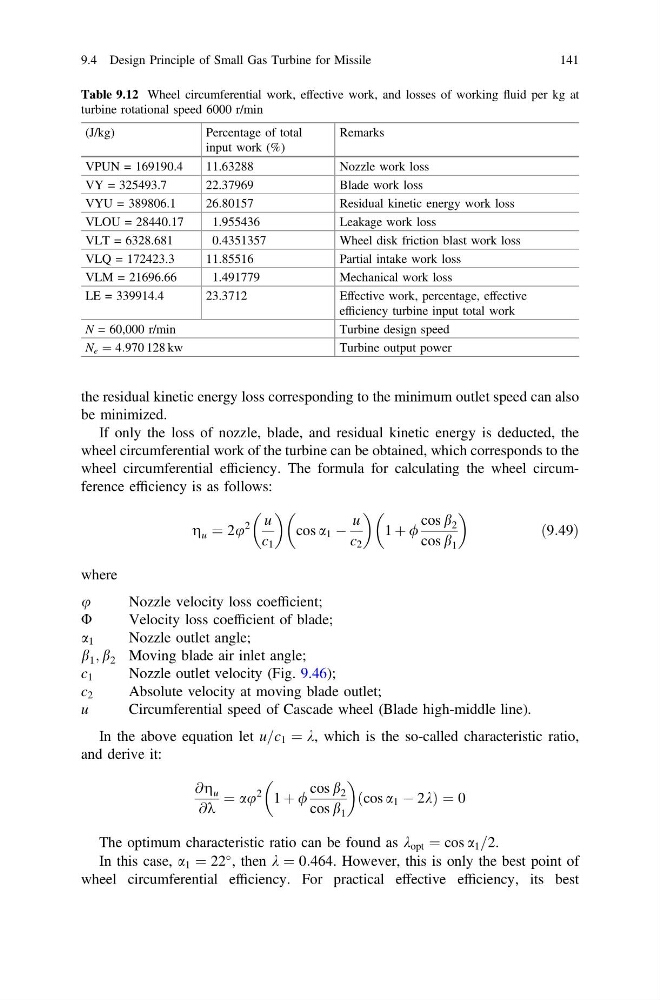
Table 9.12 Wheel circumferential work, effective work, and losses of working fluid per kg at
turbine rotational speed 6000 r/min
(J/kg)
Percentage of total
input work (%)
Remarks
VPUN = 169190.4
11.63288
Nozzle work loss
VY = 325493.7
22.37969
Blade work loss
VYU = 389806.1
26.80157
Residual kinetic energy work loss
VLOU = 28440.17
1.955436
Leakage work loss
VLT = 6328.681
0.4351357
Wheel disk friction blast work loss
VLQ = 172423.3
11.85516
Partial intake work loss
VLM = 21696.66
1.491779
Mechanical work loss
LE = 339914.4
23.3712
Effective work, percentage, effective
efficiency turbine input total work
N = 60,000 r/min
Turbine design speed
N e ¼ 4:970 128 kw
Turbine output power
9.4 Design Principle of Small Gas Turbine for Missile
141
be minimized.
If only the loss of nozzle, blade, and residual kinetic energy is deducted, the
wheel circumferential work of the turbine can be obtained, which corresponds to the
wheel circumferential efficiency. The formula for calculating the wheel circumference efficiency is as follows:
g u ¼ 2u
2 u
c 1
cos a 1 À
u
c 2
1 þ /
cos b 2
cos b 1
ð9:49Þ
where
u
Nozzle velocity loss coefficient;
U
Velocity loss coefficient of blade;
a 1
Nozzle outlet angle;
b 1 ; b 2 Moving blade air inlet angle;
c 1
Nozzle outlet velocity (Fig. 9.46);
c 2
Absolute velocity at moving blade outlet;
u
Circumferential speed of Cascade wheel (Blade high-middle line).
In the above equation let u=c 1 ¼ k, which is the so-called characteristic ratio,
and derive it:
@g u
@k
¼ au
2 1 þ /
cos b 2
cos b 1
cos a 1 À 2k
ð
Þ¼0
The optimum characteristic ratio can be found as k opt ¼ cos a 1 =2.
In this case, a 1 ¼ 22
, then k ¼ 0:464. However, this is only the best point of
wheel circumferential efficiency. For practical effective efficiency, its best
Table 9.12 Wheel circumferential work, effective work, and losses of working fluid per kg at
turbine rotational speed 6000 r/min
(J/kg)
Percentage of total
input work (%)
Remarks
VPUN = 169190.4
11.63288
Nozzle work loss
VY = 325493.7
22.37969
Blade work loss
VYU = 389806.1
26.80157
Residual kinetic energy work loss
VLOU = 28440.17
1.955436
Leakage work loss
VLT = 6328.681
0.4351357
Wheel disk friction blast work loss
VLQ = 172423.3
11.85516
Partial intake work loss
VLM = 21696.66
1.491779
Mechanical work loss
LE = 339914.4
23.3712
Effective work, percentage, effective
efficiency turbine input total work
N = 60,000 r/min
Turbine design speed
N e ¼ 4:970 128 kw
Turbine output power
9.4 Design Principle of Small Gas Turbine for Missile
141