

termed as “mutational hotspots”. The method follows the substrate-envelope
hypothesis [93–95], which states that there is a large fitness cost that needs to be paid
if one mutates an amino acid residue that is involved in substrate binding. Mutating
such amino acids could lead to impaired enzyme function resulting in the death of an
organism. This can be put to appropriate use by developing inhibitors that completely overlap in the substrate binding region, leading to a lower predisposition
towards developing drug resistance [96–99].
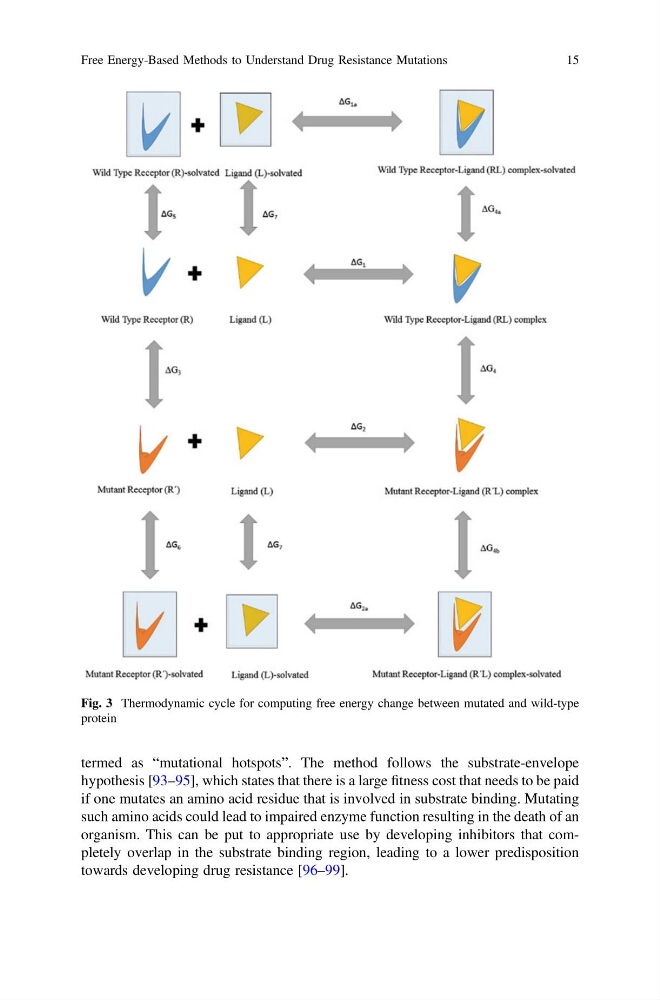
Fig. 3 Thermodynamic cycle for computing free energy change between mutated and wild-type
protein
Free Energy-Based Methods to Understand Drug Resistance Mutations
15
hypothesis [93–95], which states that there is a large fitness cost that needs to be paid
if one mutates an amino acid residue that is involved in substrate binding. Mutating
such amino acids could lead to impaired enzyme function resulting in the death of an
organism. This can be put to appropriate use by developing inhibitors that completely overlap in the substrate binding region, leading to a lower predisposition
towards developing drug resistance [96–99].
Fig. 3 Thermodynamic cycle for computing free energy change between mutated and wild-type
protein
Free Energy-Based Methods to Understand Drug Resistance Mutations
15