

candidates are able to make it to Phase III clinical trials and overall just *10% of
drugs reach to market. Unfortunately, terminating a lead molecule suffers from the
loss that increases exponentially as it moves further down the pipeline. For that
reason, it is important to adhere to conventional rules for drug-likeness and oral
bioavailability of drug candidates. These rules are defined by more than 3300
molecular descriptors [78] including physicochemical, geometrical, topological,
electropological, quantum chemical, and molecular fingerprints. Drug-likeness of a
molecule can be evaluated based on statistical rules (e.g., ‘rule of five’) or its
physicochemical properties (e.g., solubility, lipophilicity, rotatable bonds, polar
surface area). It is well established that prediction of ADMET properties at the
earliest stages prevents from depletion of scarce resources on bad leads and
expensive clinical trials. This allows allocation of drug development resources on
fewer but much promising drug leads. Various software packages including
DEREK, METEOR, Discovery Studio are available to predict the ADMET properties. Though not very accurate, these software packages may provide key insights
into a drug’s safety and efficacy profile to curtail the high cost of failures in clinical
trials. In EpiDBase, we performed ADMET analysis using FAF-Drugs2 [79], to
filter out the toxic, unstable molecules, and/or functional groups. Further, we used
ZINC property filter to assess the drug-likeness of 3737 molecules using various
physicochemical descriptors such as MW, hydrogen bond acceptor (HBA),
hydrogen bond donor (HBD), rotatable bonds, polar surface area. The filtered
molecules represent a set of epigenetic ligands that possess drug-like properties and
can be further explored by virtual screening and docking experiments to find
potential ligands for various epigenetic proteins.
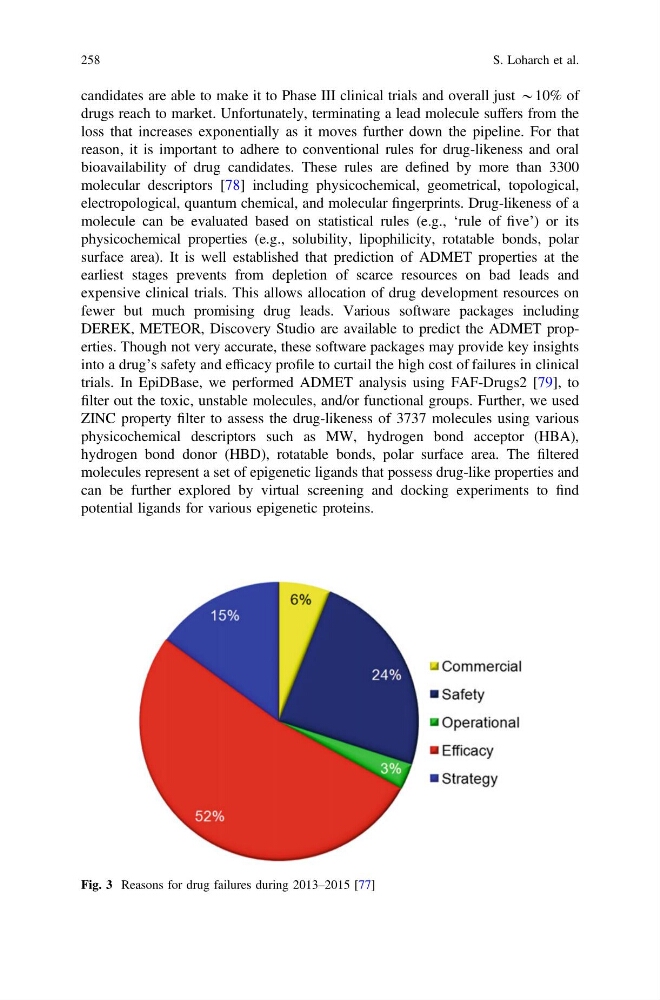
Fig. 3 Reasons for drug failures during 2013–2015 [77]
258
S. Loharch et al.
drugs reach to market. Unfortunately, terminating a lead molecule suffers from the
loss that increases exponentially as it moves further down the pipeline. For that
reason, it is important to adhere to conventional rules for drug-likeness and oral
bioavailability of drug candidates. These rules are defined by more than 3300
molecular descriptors [78] including physicochemical, geometrical, topological,
electropological, quantum chemical, and molecular fingerprints. Drug-likeness of a
molecule can be evaluated based on statistical rules (e.g., ‘rule of five’) or its
physicochemical properties (e.g., solubility, lipophilicity, rotatable bonds, polar
surface area). It is well established that prediction of ADMET properties at the
earliest stages prevents from depletion of scarce resources on bad leads and
expensive clinical trials. This allows allocation of drug development resources on
fewer but much promising drug leads. Various software packages including
DEREK, METEOR, Discovery Studio are available to predict the ADMET properties. Though not very accurate, these software packages may provide key insights
into a drug’s safety and efficacy profile to curtail the high cost of failures in clinical
trials. In EpiDBase, we performed ADMET analysis using FAF-Drugs2 [79], to
filter out the toxic, unstable molecules, and/or functional groups. Further, we used
ZINC property filter to assess the drug-likeness of 3737 molecules using various
physicochemical descriptors such as MW, hydrogen bond acceptor (HBA),
hydrogen bond donor (HBD), rotatable bonds, polar surface area. The filtered
molecules represent a set of epigenetic ligands that possess drug-like properties and
can be further explored by virtual screening and docking experiments to find
potential ligands for various epigenetic proteins.
Fig. 3 Reasons for drug failures during 2013–2015 [77]
258
S. Loharch et al.