

19 OpenTox Principles and Best Practices for Trusted Reproducible …
389
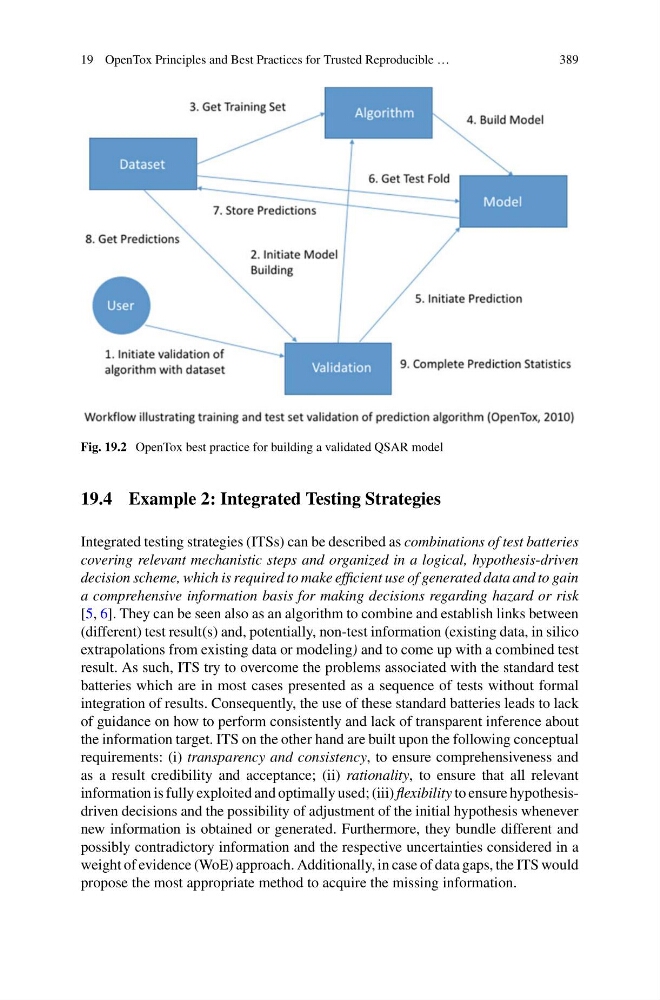
Fig. 19.2 OpenTox best practice for building a validated QSAR model
19.4 Example 2: Integrated Testing Strategies
Integrated testing strategies (ITSs) can be described as combinations of test batteries
covering relevant mechanistic steps and organized in a logical, hypothesis-driven
decision scheme, which is required to make efficient use of generated data and to gain
a comprehensive information basis for making decisions regarding hazard or risk
[5, 6]. They can be seen also as an algorithm to combine and establish links between
(different) test result(s) and, potentially, non-test information (existing data, in silico
extrapolations from existing data or modeling) and to come up with a combined test
result. As such, ITS try to overcome the problems associated with the standard test
batteries which are in most cases presented as a sequence of tests without formal
integration of results. Consequently, the use of these standard batteries leads to lack
of guidance on how to perform consistently and lack of transparent inference about
the information target. ITS on the other hand are built upon the following conceptual
requirements: (i) transparency and consistency, to ensure comprehensiveness and
as a result credibility and acceptance; (ii) rationality, to ensure that all relevant
information is fully exploited and optimally used; (iii) flexibility to ensure hypothesisdriven decisions and the possibility of adjustment of the initial hypothesis whenever
new information is obtained or generated. Furthermore, they bundle different and
possibly contradictory information and the respective uncertainties considered in a
weight of evidence (WoE) approach. Additionally, in case of data gaps, the ITS would
propose the most appropriate method to acquire the missing information.
389
Fig. 19.2 OpenTox best practice for building a validated QSAR model
19.4 Example 2: Integrated Testing Strategies
Integrated testing strategies (ITSs) can be described as combinations of test batteries
covering relevant mechanistic steps and organized in a logical, hypothesis-driven
decision scheme, which is required to make efficient use of generated data and to gain
a comprehensive information basis for making decisions regarding hazard or risk
[5, 6]. They can be seen also as an algorithm to combine and establish links between
(different) test result(s) and, potentially, non-test information (existing data, in silico
extrapolations from existing data or modeling) and to come up with a combined test
result. As such, ITS try to overcome the problems associated with the standard test
batteries which are in most cases presented as a sequence of tests without formal
integration of results. Consequently, the use of these standard batteries leads to lack
of guidance on how to perform consistently and lack of transparent inference about
the information target. ITS on the other hand are built upon the following conceptual
requirements: (i) transparency and consistency, to ensure comprehensiveness and
as a result credibility and acceptance; (ii) rationality, to ensure that all relevant
information is fully exploited and optimally used; (iii) flexibility to ensure hypothesisdriven decisions and the possibility of adjustment of the initial hypothesis whenever
new information is obtained or generated. Furthermore, they bundle different and
possibly contradictory information and the respective uncertainties considered in a
weight of evidence (WoE) approach. Additionally, in case of data gaps, the ITS would
propose the most appropriate method to acquire the missing information.