

360
Z. Fu and J. Chen
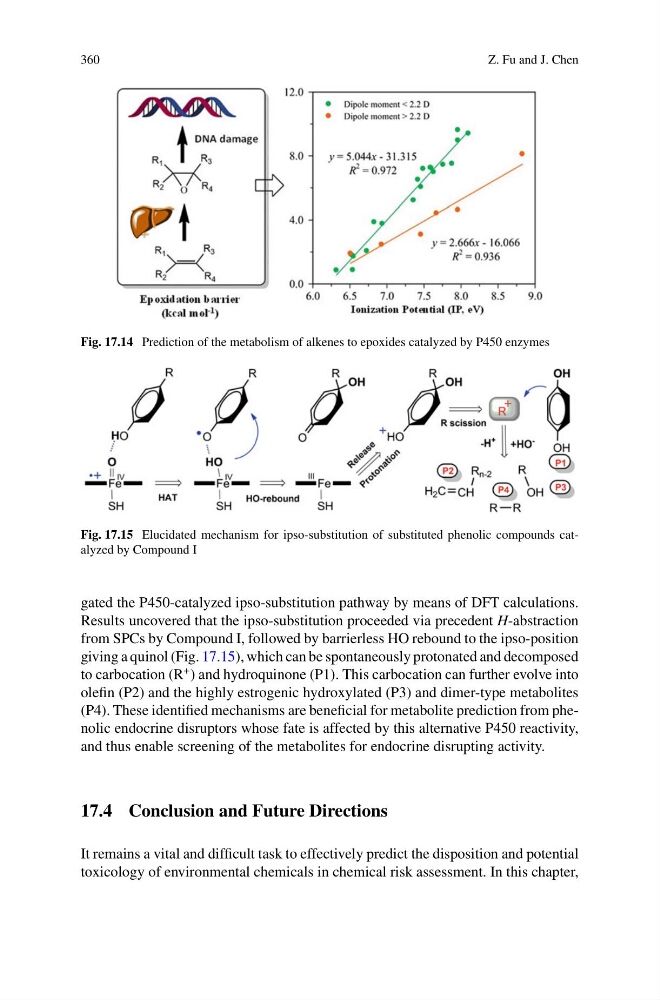
Fig. 17.14 Prediction of the metabolism of alkenes to epoxides catalyzed by P450 enzymes
Fig. 17.15 Elucidated mechanism for ipso-substitution of substituted phenolic compounds catalyzed by Compound I
gated the P450-catalyzed ipso-substitution pathway by means of DFT calculations.
Results uncovered that the ipso-substitution proceeded via precedent H-abstraction
from SPCs by Compound I, followed by barrierless HO rebound to the ipso-position
giving a quinol (Fig. 17.15), which can be spontaneously protonated and decomposed
to carbocation (R
+ ) and hydroquinone (P1). This carbocation can further evolve into
olefin (P2) and the highly estrogenic hydroxylated (P3) and dimer-type metabolites
(P4). These identified mechanisms are beneficial for metabolite prediction from phenolic endocrine disruptors whose fate is affected by this alternative P450 reactivity,
and thus enable screening of the metabolites for endocrine disrupting activity.
17.4 Conclusion and Future Directions
It remains a vital and difficult task to effectively predict the disposition and potential
toxicology of environmental chemicals in chemical risk assessment. In this chapter,
Z. Fu and J. Chen
Fig. 17.14 Prediction of the metabolism of alkenes to epoxides catalyzed by P450 enzymes
Fig. 17.15 Elucidated mechanism for ipso-substitution of substituted phenolic compounds catalyzed by Compound I
gated the P450-catalyzed ipso-substitution pathway by means of DFT calculations.
Results uncovered that the ipso-substitution proceeded via precedent H-abstraction
from SPCs by Compound I, followed by barrierless HO rebound to the ipso-position
giving a quinol (Fig. 17.15), which can be spontaneously protonated and decomposed
to carbocation (R
+ ) and hydroquinone (P1). This carbocation can further evolve into
olefin (P2) and the highly estrogenic hydroxylated (P3) and dimer-type metabolites
(P4). These identified mechanisms are beneficial for metabolite prediction from phenolic endocrine disruptors whose fate is affected by this alternative P450 reactivity,
and thus enable screening of the metabolites for endocrine disrupting activity.
17.4 Conclusion and Future Directions
It remains a vital and difficult task to effectively predict the disposition and potential
toxicology of environmental chemicals in chemical risk assessment. In this chapter,