

20
Z. Wang and J. Chen
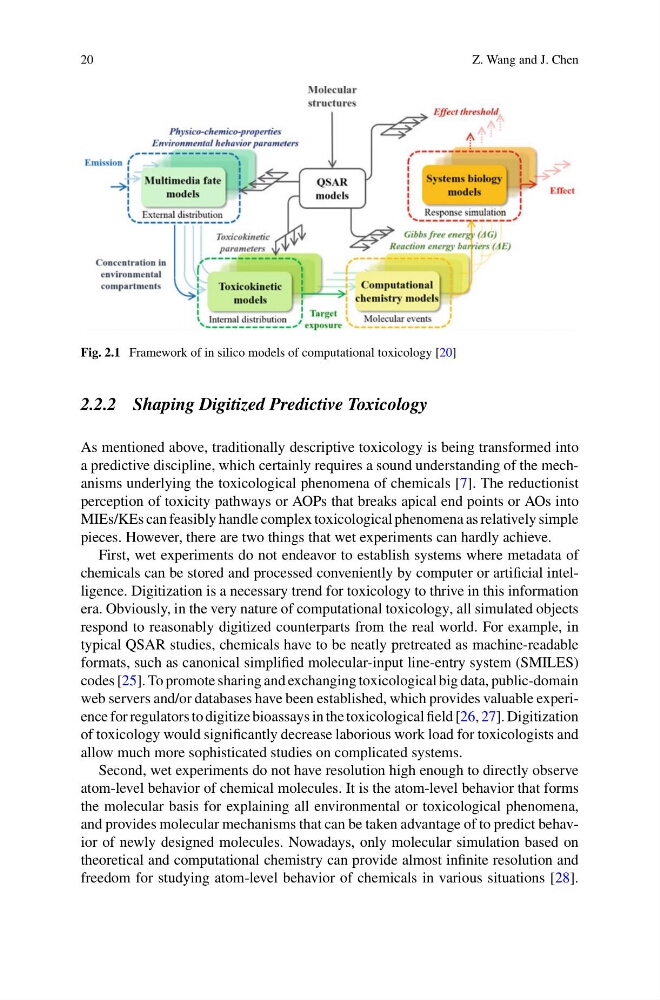
Fig. 2.1 Framework of in silico models of computational toxicology [20]
2.2.2 Shaping Digitized Predictive Toxicology
As mentioned above, traditionally descriptive toxicology is being transformed into
a predictive discipline, which certainly requires a sound understanding of the mechanisms underlying the toxicological phenomena of chemicals [7]. The reductionist
perception of toxicity pathways or AOPs that breaks apical end points or AOs into
MIEs/KEs can feasibly handle complex toxicological phenomena as relatively simple
pieces. However, there are two things that wet experiments can hardly achieve.
First, wet experiments do not endeavor to establish systems where metadata of
chemicals can be stored and processed conveniently by computer or artificial intelligence. Digitization is a necessary trend for toxicology to thrive in this information
era. Obviously, in the very nature of computational toxicology, all simulated objects
respond to reasonably digitized counterparts from the real world. For example, in
typical QSAR studies, chemicals have to be neatly pretreated as machine-readable
formats, such as canonical simplified molecular-input line-entry system (SMILES)
codes [25]. To promote sharing and exchanging toxicological big data, public-domain
web servers and/or databases have been established, which provides valuable experience for regulators to digitize bioassays in the toxicological field [26, 27]. Digitization
of toxicology would significantly decrease laborious work load for toxicologists and
allow much more sophisticated studies on complicated systems.
Second, wet experiments do not have resolution high enough to directly observe
atom-level behavior of chemical molecules. It is the atom-level behavior that forms
the molecular basis for explaining all environmental or toxicological phenomena,
and provides molecular mechanisms that can be taken advantage of to predict behavior of newly designed molecules. Nowadays, only molecular simulation based on
theoretical and computational chemistry can provide almost infinite resolution and
freedom for studying atom-level behavior of chemicals in various situations [28].
Z. Wang and J. Chen
Fig. 2.1 Framework of in silico models of computational toxicology [20]
2.2.2 Shaping Digitized Predictive Toxicology
As mentioned above, traditionally descriptive toxicology is being transformed into
a predictive discipline, which certainly requires a sound understanding of the mechanisms underlying the toxicological phenomena of chemicals [7]. The reductionist
perception of toxicity pathways or AOPs that breaks apical end points or AOs into
MIEs/KEs can feasibly handle complex toxicological phenomena as relatively simple
pieces. However, there are two things that wet experiments can hardly achieve.
First, wet experiments do not endeavor to establish systems where metadata of
chemicals can be stored and processed conveniently by computer or artificial intelligence. Digitization is a necessary trend for toxicology to thrive in this information
era. Obviously, in the very nature of computational toxicology, all simulated objects
respond to reasonably digitized counterparts from the real world. For example, in
typical QSAR studies, chemicals have to be neatly pretreated as machine-readable
formats, such as canonical simplified molecular-input line-entry system (SMILES)
codes [25]. To promote sharing and exchanging toxicological big data, public-domain
web servers and/or databases have been established, which provides valuable experience for regulators to digitize bioassays in the toxicological field [26, 27]. Digitization
of toxicology would significantly decrease laborious work load for toxicologists and
allow much more sophisticated studies on complicated systems.
Second, wet experiments do not have resolution high enough to directly observe
atom-level behavior of chemical molecules. It is the atom-level behavior that forms
the molecular basis for explaining all environmental or toxicological phenomena,
and provides molecular mechanisms that can be taken advantage of to predict behavior of newly designed molecules. Nowadays, only molecular simulation based on
theoretical and computational chemistry can provide almost infinite resolution and
freedom for studying atom-level behavior of chemicals in various situations [28].