

17 Xenobiotic Metabolism by Cytochrome P450 …
339
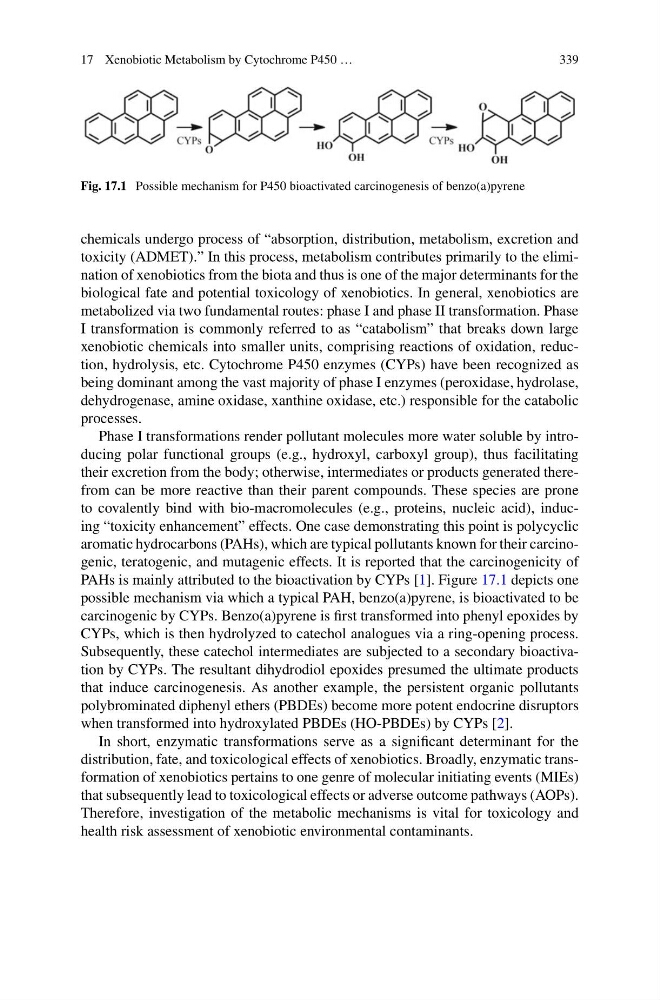
Fig. 17.1 Possible mechanism for P450 bioactivated carcinogenesis of benzo(a)pyrene
chemicals undergo process of “absorption, distribution, metabolism, excretion and
toxicity (ADMET).” In this process, metabolism contributes primarily to the elimination of xenobiotics from the biota and thus is one of the major determinants for the
biological fate and potential toxicology of xenobiotics. In general, xenobiotics are
metabolized via two fundamental routes: phase I and phase II transformation. Phase
I transformation is commonly referred to as “catabolism” that breaks down large
xenobiotic chemicals into smaller units, comprising reactions of oxidation, reduction, hydrolysis, etc. Cytochrome P450 enzymes (CYPs) have been recognized as
being dominant among the vast majority of phase I enzymes (peroxidase, hydrolase,
dehydrogenase, amine oxidase, xanthine oxidase, etc.) responsible for the catabolic
processes.
Phase I transformations render pollutant molecules more water soluble by introducing polar functional groups (e.g., hydroxyl, carboxyl group), thus facilitating
their excretion from the body; otherwise, intermediates or products generated therefrom can be more reactive than their parent compounds. These species are prone
to covalently bind with bio-macromolecules (e.g., proteins, nucleic acid), inducing “toxicity enhancement” effects. One case demonstrating this point is polycyclic
aromatic hydrocarbons (PAHs), which are typical pollutants known for their carcinogenic, teratogenic, and mutagenic effects. It is reported that the carcinogenicity of
PAHs is mainly attributed to the bioactivation by CYPs [1]. Figure 17.1 depicts one
possible mechanism via which a typical PAH, benzo(a)pyrene, is bioactivated to be
carcinogenic by CYPs. Benzo(a)pyrene is first transformed into phenyl epoxides by
CYPs, which is then hydrolyzed to catechol analogues via a ring-opening process.
Subsequently, these catechol intermediates are subjected to a secondary bioactivation by CYPs. The resultant dihydrodiol epoxides presumed the ultimate products
that induce carcinogenesis. As another example, the persistent organic pollutants
polybrominated diphenyl ethers (PBDEs) become more potent endocrine disruptors
when transformed into hydroxylated PBDEs (HO-PBDEs) by CYPs [2].
In short, enzymatic transformations serve as a significant determinant for the
distribution, fate, and toxicological effects of xenobiotics. Broadly, enzymatic transformation of xenobiotics pertains to one genre of molecular initiating events (MIEs)
that subsequently lead to toxicological effects or adverse outcome pathways (AOPs).
Therefore, investigation of the metabolic mechanisms is vital for toxicology and
health risk assessment of xenobiotic environmental contaminants.
339
Fig. 17.1 Possible mechanism for P450 bioactivated carcinogenesis of benzo(a)pyrene
chemicals undergo process of “absorption, distribution, metabolism, excretion and
toxicity (ADMET).” In this process, metabolism contributes primarily to the elimination of xenobiotics from the biota and thus is one of the major determinants for the
biological fate and potential toxicology of xenobiotics. In general, xenobiotics are
metabolized via two fundamental routes: phase I and phase II transformation. Phase
I transformation is commonly referred to as “catabolism” that breaks down large
xenobiotic chemicals into smaller units, comprising reactions of oxidation, reduction, hydrolysis, etc. Cytochrome P450 enzymes (CYPs) have been recognized as
being dominant among the vast majority of phase I enzymes (peroxidase, hydrolase,
dehydrogenase, amine oxidase, xanthine oxidase, etc.) responsible for the catabolic
processes.
Phase I transformations render pollutant molecules more water soluble by introducing polar functional groups (e.g., hydroxyl, carboxyl group), thus facilitating
their excretion from the body; otherwise, intermediates or products generated therefrom can be more reactive than their parent compounds. These species are prone
to covalently bind with bio-macromolecules (e.g., proteins, nucleic acid), inducing “toxicity enhancement” effects. One case demonstrating this point is polycyclic
aromatic hydrocarbons (PAHs), which are typical pollutants known for their carcinogenic, teratogenic, and mutagenic effects. It is reported that the carcinogenicity of
PAHs is mainly attributed to the bioactivation by CYPs [1]. Figure 17.1 depicts one
possible mechanism via which a typical PAH, benzo(a)pyrene, is bioactivated to be
carcinogenic by CYPs. Benzo(a)pyrene is first transformed into phenyl epoxides by
CYPs, which is then hydrolyzed to catechol analogues via a ring-opening process.
Subsequently, these catechol intermediates are subjected to a secondary bioactivation by CYPs. The resultant dihydrodiol epoxides presumed the ultimate products
that induce carcinogenesis. As another example, the persistent organic pollutants
polybrominated diphenyl ethers (PBDEs) become more potent endocrine disruptors
when transformed into hydroxylated PBDEs (HO-PBDEs) by CYPs [2].
In short, enzymatic transformations serve as a significant determinant for the
distribution, fate, and toxicological effects of xenobiotics. Broadly, enzymatic transformation of xenobiotics pertains to one genre of molecular initiating events (MIEs)
that subsequently lead to toxicological effects or adverse outcome pathways (AOPs).
Therefore, investigation of the metabolic mechanisms is vital for toxicology and
health risk assessment of xenobiotic environmental contaminants.