

262
M. Chen et al.
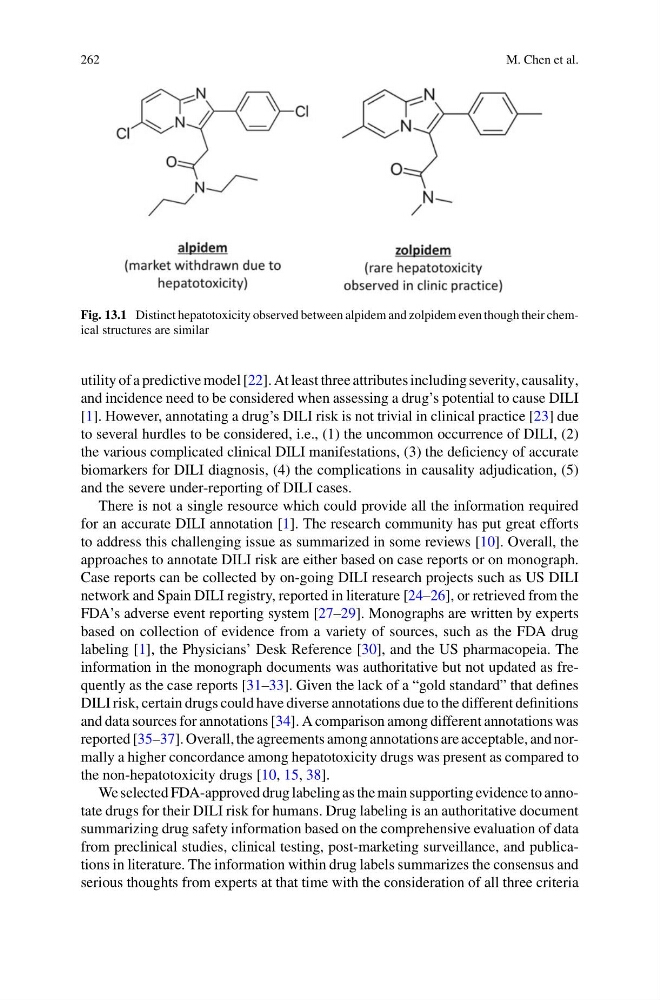
Fig. 13.1 Distinct hepatotoxicity observed between alpidem and zolpidem even though their chemical structures are similar
utility of a predictive model [22]. At least three attributes including severity, causality,
and incidence need to be considered when assessing a drug’s potential to cause DILI
[1]. However, annotating a drug’s DILI risk is not trivial in clinical practice [23] due
to several hurdles to be considered, i.e., (1) the uncommon occurrence of DILI, (2)
the various complicated clinical DILI manifestations, (3) the deficiency of accurate
biomarkers for DILI diagnosis, (4) the complications in causality adjudication, (5)
and the severe under-reporting of DILI cases.
There is not a single resource which could provide all the information required
for an accurate DILI annotation [1]. The research community has put great efforts
to address this challenging issue as summarized in some reviews [10]. Overall, the
approaches to annotate DILI risk are either based on case reports or on monograph.
Case reports can be collected by on-going DILI research projects such as US DILI
network and Spain DILI registry, reported in literature [24–26], or retrieved from the
FDA’s adverse event reporting system [27–29]. Monographs are written by experts
based on collection of evidence from a variety of sources, such as the FDA drug
labeling [1], the Physicians’ Desk Reference [30], and the US pharmacopeia. The
information in the monograph documents was authoritative but not updated as frequently as the case reports [31–33]. Given the lack of a “gold standard” that defines
DILI risk, certain drugs could have diverse annotations due to the different definitions
and data sources for annotations [34]. A comparison among different annotations was
reported [35–37]. Overall, the agreements among annotations are acceptable, and normally a higher concordance among hepatotoxicity drugs was present as compared to
the non-hepatotoxicity drugs [10, 15, 38].
We selected FDA-approved drug labeling as the main supporting evidence to annotate drugs for their DILI risk for humans. Drug labeling is an authoritative document
summarizing drug safety information based on the comprehensive evaluation of data
from preclinical studies, clinical testing, post-marketing surveillance, and publications in literature. The information within drug labels summarizes the consensus and
serious thoughts from experts at that time with the consideration of all three criteria
M. Chen et al.
Fig. 13.1 Distinct hepatotoxicity observed between alpidem and zolpidem even though their chemical structures are similar
utility of a predictive model [22]. At least three attributes including severity, causality,
and incidence need to be considered when assessing a drug’s potential to cause DILI
[1]. However, annotating a drug’s DILI risk is not trivial in clinical practice [23] due
to several hurdles to be considered, i.e., (1) the uncommon occurrence of DILI, (2)
the various complicated clinical DILI manifestations, (3) the deficiency of accurate
biomarkers for DILI diagnosis, (4) the complications in causality adjudication, (5)
and the severe under-reporting of DILI cases.
There is not a single resource which could provide all the information required
for an accurate DILI annotation [1]. The research community has put great efforts
to address this challenging issue as summarized in some reviews [10]. Overall, the
approaches to annotate DILI risk are either based on case reports or on monograph.
Case reports can be collected by on-going DILI research projects such as US DILI
network and Spain DILI registry, reported in literature [24–26], or retrieved from the
FDA’s adverse event reporting system [27–29]. Monographs are written by experts
based on collection of evidence from a variety of sources, such as the FDA drug
labeling [1], the Physicians’ Desk Reference [30], and the US pharmacopeia. The
information in the monograph documents was authoritative but not updated as frequently as the case reports [31–33]. Given the lack of a “gold standard” that defines
DILI risk, certain drugs could have diverse annotations due to the different definitions
and data sources for annotations [34]. A comparison among different annotations was
reported [35–37]. Overall, the agreements among annotations are acceptable, and normally a higher concordance among hepatotoxicity drugs was present as compared to
the non-hepatotoxicity drugs [10, 15, 38].
We selected FDA-approved drug labeling as the main supporting evidence to annotate drugs for their DILI risk for humans. Drug labeling is an authoritative document
summarizing drug safety information based on the comprehensive evaluation of data
from preclinical studies, clinical testing, post-marketing surveillance, and publications in literature. The information within drug labels summarizes the consensus and
serious thoughts from experts at that time with the consideration of all three criteria