

12 Application of Computational Methods for the Safety Assessment …
241
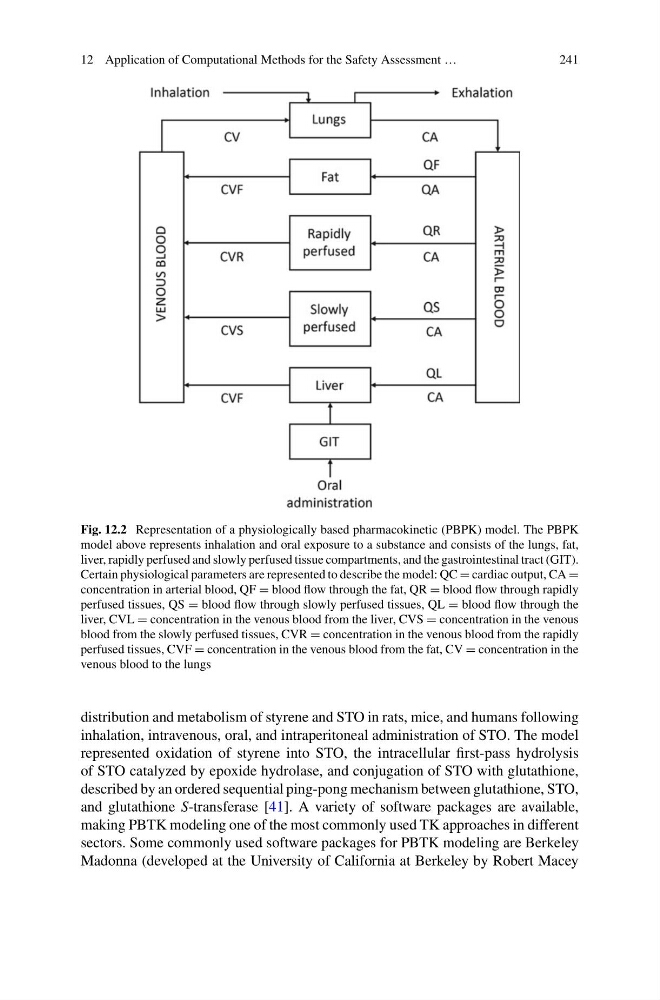
Fig. 12.2 Representation of a physiologically based pharmacokinetic (PBPK) model. The PBPK
model above represents inhalation and oral exposure to a substance and consists of the lungs, fat,
liver, rapidly perfused and slowly perfused tissue compartments, and the gastrointestinal tract (GIT).
Certain physiological parameters are represented to describe the model: QC = cardiac output, CA =
concentration in arterial blood, QF = blood flow through the fat, QR = blood flow through rapidly
perfused tissues, QS = blood flow through slowly perfused tissues, QL = blood flow through the
liver, CVL = concentration in the venous blood from the liver, CVS = concentration in the venous
blood from the slowly perfused tissues, CVR = concentration in the venous blood from the rapidly
perfused tissues, CVF = concentration in the venous blood from the fat, CV = concentration in the
venous blood to the lungs
distribution and metabolism of styrene and STO in rats, mice, and humans following
inhalation, intravenous, oral, and intraperitoneal administration of STO. The model
represented oxidation of styrene into STO, the intracellular first-pass hydrolysis
of STO catalyzed by epoxide hydrolase, and conjugation of STO with glutathione,
described by an ordered sequential ping-pong mechanism between glutathione, STO,
and glutathione S-transferase [41]. A variety of software packages are available,
making PBTK modeling one of the most commonly used TK approaches in different
sectors. Some commonly used software packages for PBTK modeling are Berkeley
Madonna (developed at the University of California at Berkeley by Robert Macey
241
Fig. 12.2 Representation of a physiologically based pharmacokinetic (PBPK) model. The PBPK
model above represents inhalation and oral exposure to a substance and consists of the lungs, fat,
liver, rapidly perfused and slowly perfused tissue compartments, and the gastrointestinal tract (GIT).
Certain physiological parameters are represented to describe the model: QC = cardiac output, CA =
concentration in arterial blood, QF = blood flow through the fat, QR = blood flow through rapidly
perfused tissues, QS = blood flow through slowly perfused tissues, QL = blood flow through the
liver, CVL = concentration in the venous blood from the liver, CVS = concentration in the venous
blood from the slowly perfused tissues, CVR = concentration in the venous blood from the rapidly
perfused tissues, CVF = concentration in the venous blood from the fat, CV = concentration in the
venous blood to the lungs
distribution and metabolism of styrene and STO in rats, mice, and humans following
inhalation, intravenous, oral, and intraperitoneal administration of STO. The model
represented oxidation of styrene into STO, the intracellular first-pass hydrolysis
of STO catalyzed by epoxide hydrolase, and conjugation of STO with glutathione,
described by an ordered sequential ping-pong mechanism between glutathione, STO,
and glutathione S-transferase [41]. A variety of software packages are available,
making PBTK modeling one of the most commonly used TK approaches in different
sectors. Some commonly used software packages for PBTK modeling are Berkeley
Madonna (developed at the University of California at Berkeley by Robert Macey