

11 Applicability Domain: Towards a More Formal …
229
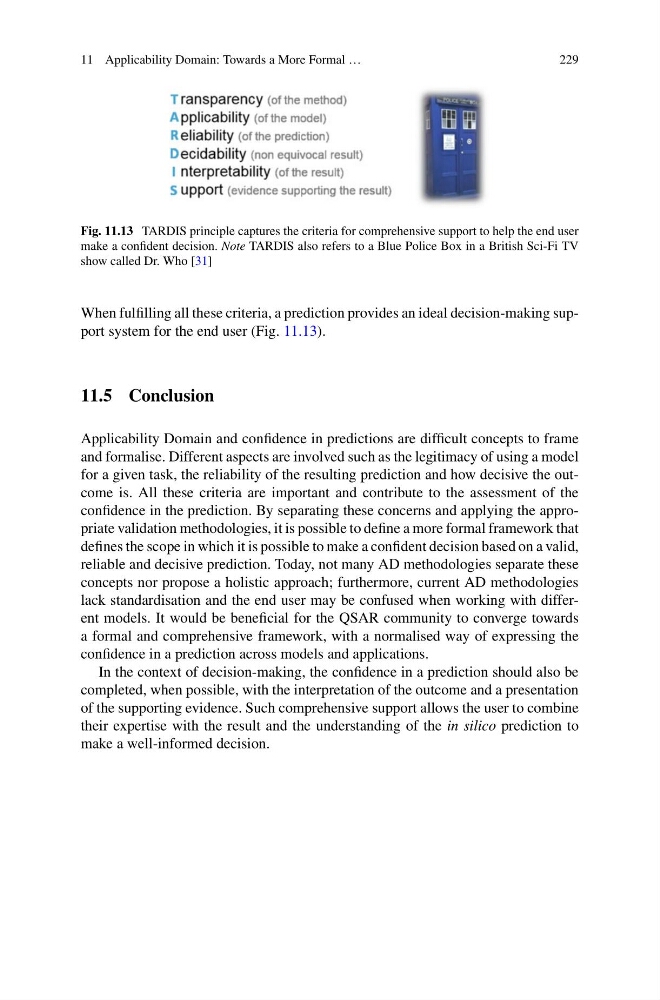
Fig. 11.13 TARDIS principle captures the criteria for comprehensive support to help the end user
make a confident decision. Note TARDIS also refers to a Blue Police Box in a British Sci-Fi TV
show called Dr. Who [31]
When fulfilling all these criteria, a prediction provides an ideal decision-making support system for the end user (Fig. 11.13).
11.5 Conclusion
Applicability Domain and confidence in predictions are difficult concepts to frame
and formalise. Different aspects are involved such as the legitimacy of using a model
for a given task, the reliability of the resulting prediction and how decisive the outcome is. All these criteria are important and contribute to the assessment of the
confidence in the prediction. By separating these concerns and applying the appropriate validation methodologies, it is possible to define a more formal framework that
defines the scope in which it is possible to make a confident decision based on a valid,
reliable and decisive prediction. Today, not many AD methodologies separate these
concepts nor propose a holistic approach; furthermore, current AD methodologies
lack standardisation and the end user may be confused when working with different models. It would be beneficial for the QSAR community to converge towards
a formal and comprehensive framework, with a normalised way of expressing the
confidence in a prediction across models and applications.
In the context of decision-making, the confidence in a prediction should also be
completed, when possible, with the interpretation of the outcome and a presentation
of the supporting evidence. Such comprehensive support allows the user to combine
their expertise with the result and the understanding of the in silico prediction to
make a well-informed decision.
229
Fig. 11.13 TARDIS principle captures the criteria for comprehensive support to help the end user
make a confident decision. Note TARDIS also refers to a Blue Police Box in a British Sci-Fi TV
show called Dr. Who [31]
When fulfilling all these criteria, a prediction provides an ideal decision-making support system for the end user (Fig. 11.13).
11.5 Conclusion
Applicability Domain and confidence in predictions are difficult concepts to frame
and formalise. Different aspects are involved such as the legitimacy of using a model
for a given task, the reliability of the resulting prediction and how decisive the outcome is. All these criteria are important and contribute to the assessment of the
confidence in the prediction. By separating these concerns and applying the appropriate validation methodologies, it is possible to define a more formal framework that
defines the scope in which it is possible to make a confident decision based on a valid,
reliable and decisive prediction. Today, not many AD methodologies separate these
concepts nor propose a holistic approach; furthermore, current AD methodologies
lack standardisation and the end user may be confused when working with different models. It would be beneficial for the QSAR community to converge towards
a formal and comprehensive framework, with a normalised way of expressing the
confidence in a prediction across models and applications.
In the context of decision-making, the confidence in a prediction should also be
completed, when possible, with the interpretation of the outcome and a presentation
of the supporting evidence. Such comprehensive support allows the user to combine
their expertise with the result and the understanding of the in silico prediction to
make a well-informed decision.