

1 Computational Toxicology Promotes Regulatory Science
3
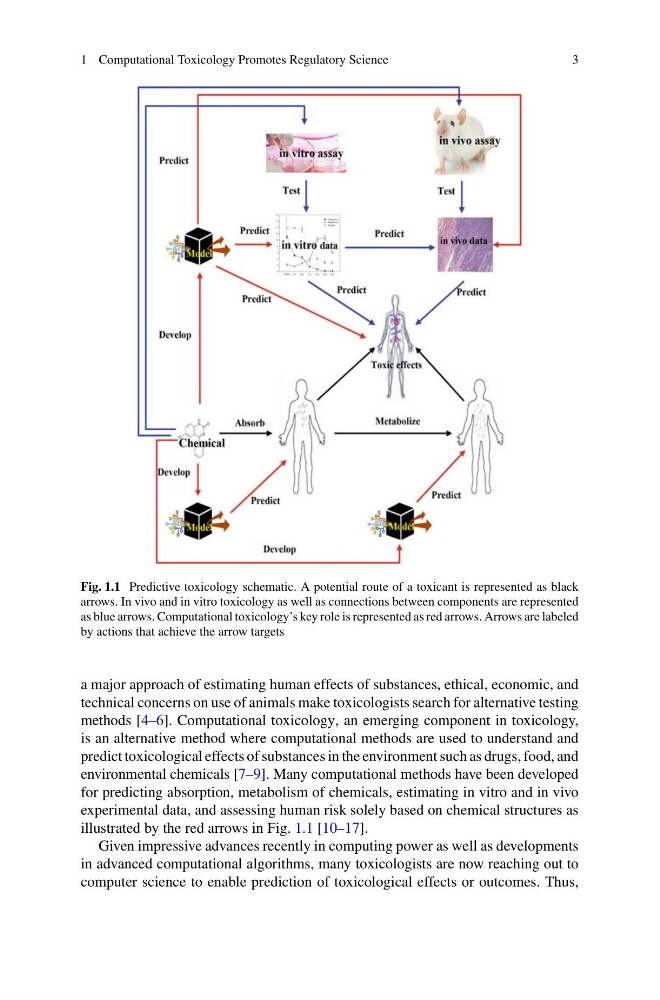
Fig. 1.1 Predictive toxicology schematic. A potential route of a toxicant is represented as black
arrows. In vivo and in vitro toxicology as well as connections between components are represented
as blue arrows. Computational toxicology’s key role is represented as red arrows. Arrows are labeled
by actions that achieve the arrow targets
a major approach of estimating human effects of substances, ethical, economic, and
technical concerns on use of animals make toxicologists search for alternative testing
methods [4–6]. Computational toxicology, an emerging component in toxicology,
is an alternative method where computational methods are used to understand and
predict toxicological effects of substances in the environment such as drugs, food, and
environmental chemicals [7–9]. Many computational methods have been developed
for predicting absorption, metabolism of chemicals, estimating in vitro and in vivo
experimental data, and assessing human risk solely based on chemical structures as
illustrated by the red arrows in Fig. 1.1 [10–17].
Given impressive advances recently in computing power as well as developments
in advanced computational algorithms, many toxicologists are now reaching out to
computer science to enable prediction of toxicological effects or outcomes. Thus,
3
Fig. 1.1 Predictive toxicology schematic. A potential route of a toxicant is represented as black
arrows. In vivo and in vitro toxicology as well as connections between components are represented
as blue arrows. Computational toxicology’s key role is represented as red arrows. Arrows are labeled
by actions that achieve the arrow targets
a major approach of estimating human effects of substances, ethical, economic, and
technical concerns on use of animals make toxicologists search for alternative testing
methods [4–6]. Computational toxicology, an emerging component in toxicology,
is an alternative method where computational methods are used to understand and
predict toxicological effects of substances in the environment such as drugs, food, and
environmental chemicals [7–9]. Many computational methods have been developed
for predicting absorption, metabolism of chemicals, estimating in vitro and in vivo
experimental data, and assessing human risk solely based on chemical structures as
illustrated by the red arrows in Fig. 1.1 [10–17].
Given impressive advances recently in computing power as well as developments
in advanced computational algorithms, many toxicologists are now reaching out to
computer science to enable prediction of toxicological effects or outcomes. Thus,