

9 A Pair Ranking (PRank) Method for Assessing Assay …
165
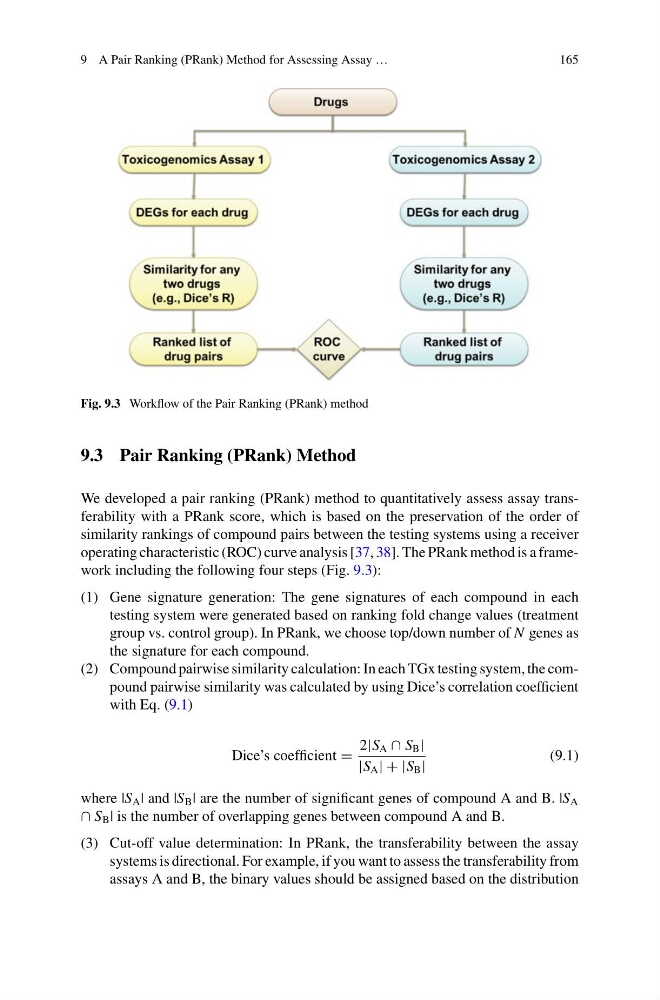
Fig. 9.3 Workflow of the Pair Ranking (PRank) method
9.3 Pair Ranking (PRank) Method
We developed a pair ranking (PRank) method to quantitatively assess assay transferability with a PRank score, which is based on the preservation of the order of
similarity rankings of compound pairs between the testing systems using a receiver
operating characteristic (ROC) curve analysis [37, 38]. The PRank method is a framework including the following four steps (Fig. 9.3):
(1) Gene signature generation: The gene signatures of each compound in each
testing system were generated based on ranking fold change values (treatment
group vs. control group). In PRank, we choose top/down number of N genes as
the signature for each compound.
(2) Compound pairwise similarity calculation: In each TGx testing system, the compound pairwise similarity was calculated by using Dice’s correlation coefficient
with Eq. (9.1)
Dice’s coefficient =
2|S A ∩ S B |
|S A | + |S B |
(9.1)
where |S A | and |S B | are the number of significant genes of compound A and B. |S A
∩ S B | is the number of overlapping genes between compound A and B.
(3) Cut-off value determination: In PRank, the transferability between the assay
systems is directional. For example, if you want to assess the transferability from
assays A and B, the binary values should be assigned based on the distribution
165
Fig. 9.3 Workflow of the Pair Ranking (PRank) method
9.3 Pair Ranking (PRank) Method
We developed a pair ranking (PRank) method to quantitatively assess assay transferability with a PRank score, which is based on the preservation of the order of
similarity rankings of compound pairs between the testing systems using a receiver
operating characteristic (ROC) curve analysis [37, 38]. The PRank method is a framework including the following four steps (Fig. 9.3):
(1) Gene signature generation: The gene signatures of each compound in each
testing system were generated based on ranking fold change values (treatment
group vs. control group). In PRank, we choose top/down number of N genes as
the signature for each compound.
(2) Compound pairwise similarity calculation: In each TGx testing system, the compound pairwise similarity was calculated by using Dice’s correlation coefficient
with Eq. (9.1)
Dice’s coefficient =
2|S A ∩ S B |
|S A | + |S B |
(9.1)
where |S A | and |S B | are the number of significant genes of compound A and B. |S A
∩ S B | is the number of overlapping genes between compound A and B.
(3) Cut-off value determination: In PRank, the transferability between the assay
systems is directional. For example, if you want to assess the transferability from
assays A and B, the binary values should be assigned based on the distribution