

8 An Overview of National Toxicology Program’s Toxicogenomic …
153
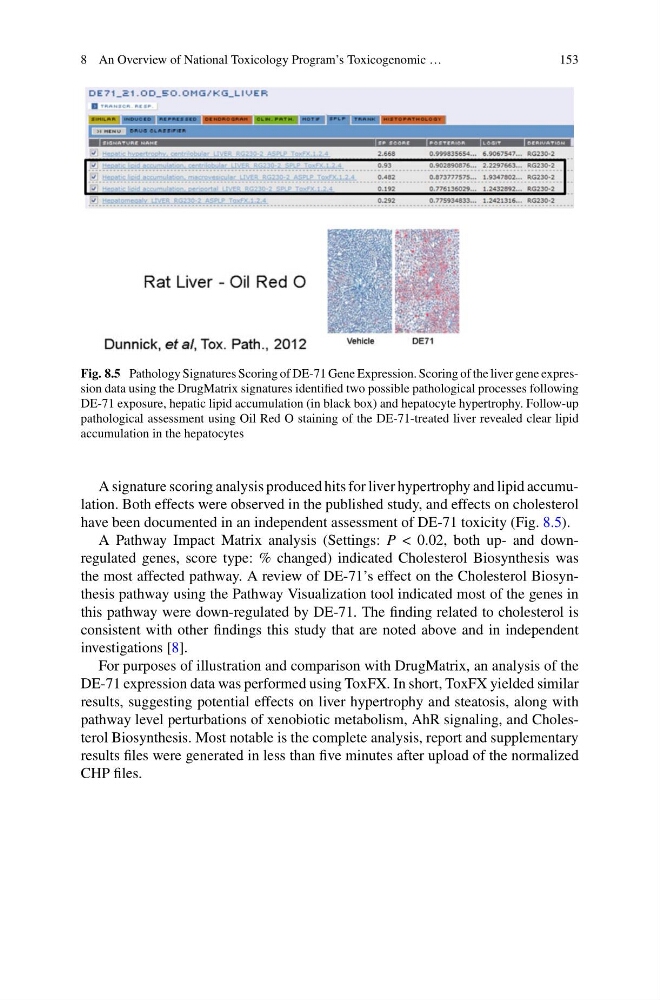
Fig. 8.5 Pathology Signatures Scoring of DE-71 Gene Expression. Scoring of the liver gene expression data using the DrugMatrix signatures identified two possible pathological processes following
DE-71 exposure, hepatic lipid accumulation (in black box) and hepatocyte hypertrophy. Follow-up
pathological assessment using Oil Red O staining of the DE-71-treated liver revealed clear lipid
accumulation in the hepatocytes
A signature scoring analysis produced hits for liver hypertrophy and lipid accumulation. Both effects were observed in the published study, and effects on cholesterol
have been documented in an independent assessment of DE-71 toxicity (Fig. 8.5).
A Pathway Impact Matrix analysis (Settings: P < 0.02, both up- and downregulated genes, score type: % changed) indicated Cholesterol Biosynthesis was
the most affected pathway. A review of DE-71’s effect on the Cholesterol Biosynthesis pathway using the Pathway Visualization tool indicated most of the genes in
this pathway were down-regulated by DE-71. The finding related to cholesterol is
consistent with other findings this study that are noted above and in independent
investigations [8].
For purposes of illustration and comparison with DrugMatrix, an analysis of the
DE-71 expression data was performed using ToxFX. In short, ToxFX yielded similar
results, suggesting potential effects on liver hypertrophy and steatosis, along with
pathway level perturbations of xenobiotic metabolism, AhR signaling, and Cholesterol Biosynthesis. Most notable is the complete analysis, report and supplementary
results files were generated in less than five minutes after upload of the normalized
CHP files.
153
Fig. 8.5 Pathology Signatures Scoring of DE-71 Gene Expression. Scoring of the liver gene expression data using the DrugMatrix signatures identified two possible pathological processes following
DE-71 exposure, hepatic lipid accumulation (in black box) and hepatocyte hypertrophy. Follow-up
pathological assessment using Oil Red O staining of the DE-71-treated liver revealed clear lipid
accumulation in the hepatocytes
A signature scoring analysis produced hits for liver hypertrophy and lipid accumulation. Both effects were observed in the published study, and effects on cholesterol
have been documented in an independent assessment of DE-71 toxicity (Fig. 8.5).
A Pathway Impact Matrix analysis (Settings: P < 0.02, both up- and downregulated genes, score type: % changed) indicated Cholesterol Biosynthesis was
the most affected pathway. A review of DE-71’s effect on the Cholesterol Biosynthesis pathway using the Pathway Visualization tool indicated most of the genes in
this pathway were down-regulated by DE-71. The finding related to cholesterol is
consistent with other findings this study that are noted above and in independent
investigations [8].
For purposes of illustration and comparison with DrugMatrix, an analysis of the
DE-71 expression data was performed using ToxFX. In short, ToxFX yielded similar
results, suggesting potential effects on liver hypertrophy and steatosis, along with
pathway level perturbations of xenobiotic metabolism, AhR signaling, and Cholesterol Biosynthesis. Most notable is the complete analysis, report and supplementary
results files were generated in less than five minutes after upload of the normalized
CHP files.