

144
D. L. Svoboda et al.
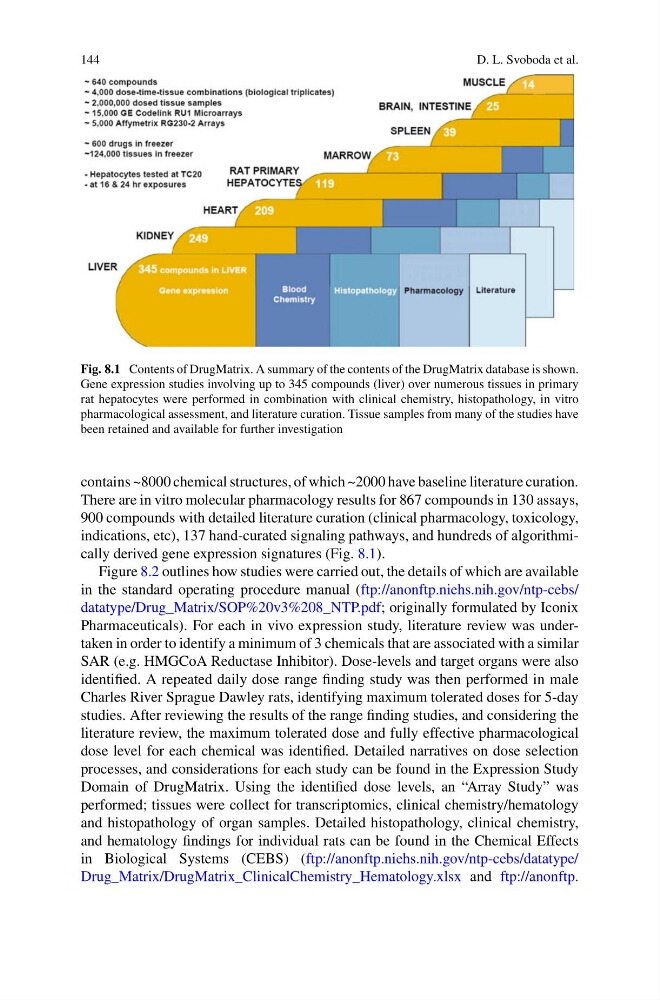
Fig. 8.1 Contents of DrugMatrix. A summary of the contents of the DrugMatrix database is shown.
Gene expression studies involving up to 345 compounds (liver) over numerous tissues in primary
rat hepatocytes were performed in combination with clinical chemistry, histopathology, in vitro
pharmacological assessment, and literature curation. Tissue samples from many of the studies have
been retained and available for further investigation
contains ~8000 chemical structures, of which ~2000 have baseline literature curation.
There are in vitro molecular pharmacology results for 867 compounds in 130 assays,
900 compounds with detailed literature curation (clinical pharmacology, toxicology,
indications, etc), 137 hand-curated signaling pathways, and hundreds of algorithmically derived gene expression signatures (Fig. 8.1).
Figure 8.2 outlines how studies were carried out, the details of which are available
in the standard operating procedure manual (ftp://anonftp.niehs.nih.gov/ntp-cebs/
datatype/Drug_Matrix/SOP%20v3%208_NTP.pdf; originally formulated by Iconix
Pharmaceuticals). For each in vivo expression study, literature review was undertaken in order to identify a minimum of 3 chemicals that are associated with a similar
SAR (e.g. HMGCoA Reductase Inhibitor). Dose-levels and target organs were also
identified. A repeated daily dose range finding study was then performed in male
Charles River Sprague Dawley rats, identifying maximum tolerated doses for 5-day
studies. After reviewing the results of the range finding studies, and considering the
literature review, the maximum tolerated dose and fully effective pharmacological
dose level for each chemical was identified. Detailed narratives on dose selection
processes, and considerations for each study can be found in the Expression Study
Domain of DrugMatrix. Using the identified dose levels, an “Array Study” was
performed; tissues were collect for transcriptomics, clinical chemistry/hematology
and histopathology of organ samples. Detailed histopathology, clinical chemistry,
and hematology findings for individual rats can be found in the Chemical Effects
in Biological Systems (CEBS) (ftp://anonftp.niehs.nih.gov/ntp-cebs/datatype/
Drug_Matrix/DrugMatrix_ClinicalChemistry_Hematology.xlsx and ftp://anonftp.
D. L. Svoboda et al.
Fig. 8.1 Contents of DrugMatrix. A summary of the contents of the DrugMatrix database is shown.
Gene expression studies involving up to 345 compounds (liver) over numerous tissues in primary
rat hepatocytes were performed in combination with clinical chemistry, histopathology, in vitro
pharmacological assessment, and literature curation. Tissue samples from many of the studies have
been retained and available for further investigation
contains ~8000 chemical structures, of which ~2000 have baseline literature curation.
There are in vitro molecular pharmacology results for 867 compounds in 130 assays,
900 compounds with detailed literature curation (clinical pharmacology, toxicology,
indications, etc), 137 hand-curated signaling pathways, and hundreds of algorithmically derived gene expression signatures (Fig. 8.1).
Figure 8.2 outlines how studies were carried out, the details of which are available
in the standard operating procedure manual (ftp://anonftp.niehs.nih.gov/ntp-cebs/
datatype/Drug_Matrix/SOP%20v3%208_NTP.pdf; originally formulated by Iconix
Pharmaceuticals). For each in vivo expression study, literature review was undertaken in order to identify a minimum of 3 chemicals that are associated with a similar
SAR (e.g. HMGCoA Reductase Inhibitor). Dose-levels and target organs were also
identified. A repeated daily dose range finding study was then performed in male
Charles River Sprague Dawley rats, identifying maximum tolerated doses for 5-day
studies. After reviewing the results of the range finding studies, and considering the
literature review, the maximum tolerated dose and fully effective pharmacological
dose level for each chemical was identified. Detailed narratives on dose selection
processes, and considerations for each study can be found in the Expression Study
Domain of DrugMatrix. Using the identified dose levels, an “Array Study” was
performed; tissues were collect for transcriptomics, clinical chemistry/hematology
and histopathology of organ samples. Detailed histopathology, clinical chemistry,
and hematology findings for individual rats can be found in the Chemical Effects
in Biological Systems (CEBS) (ftp://anonftp.niehs.nih.gov/ntp-cebs/datatype/
Drug_Matrix/DrugMatrix_ClinicalChemistry_Hematology.xlsx and ftp://anonftp.