

106
P. Gong et al.
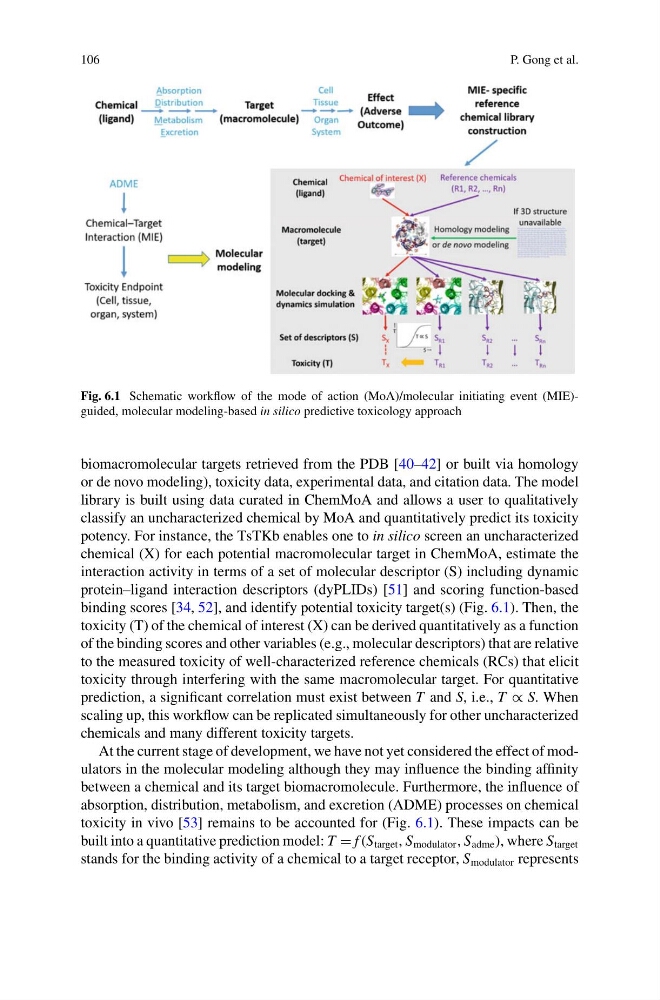
Fig. 6.1 Schematic workflow of the mode of action (MoA)/molecular initiating event (MIE)guided, molecular modeling-based in silico predictive toxicology approach
biomacromolecular targets retrieved from the PDB [40–42] or built via homology
or de novo modeling), toxicity data, experimental data, and citation data. The model
library is built using data curated in ChemMoA and allows a user to qualitatively
classify an uncharacterized chemical by MoA and quantitatively predict its toxicity
potency. For instance, the TsTKb enables one to in silico screen an uncharacterized
chemical (X) for each potential macromolecular target in ChemMoA, estimate the
interaction activity in terms of a set of molecular descriptor (S) including dynamic
protein–ligand interaction descriptors (dyPLIDs) [51] and scoring function-based
binding scores [34, 52], and identify potential toxicity target(s) (Fig. 6.1). Then, the
toxicity (T) of the chemical of interest (X) can be derived quantitatively as a function
of the binding scores and other variables (e.g., molecular descriptors) that are relative
to the measured toxicity of well-characterized reference chemicals (RCs) that elicit
toxicity through interfering with the same macromolecular target. For quantitative
prediction, a significant correlation must exist between T and S, i.e., T ∝ S. When
scaling up, this workflow can be replicated simultaneously for other uncharacterized
chemicals and many different toxicity targets.
At the current stage of development, we have not yet considered the effect of modulators in the molecular modeling although they may influence the binding affinity
between a chemical and its target biomacromolecule. Furthermore, the influence of
absorption, distribution, metabolism, and excretion (ADME) processes on chemical
toxicity in vivo [53] remains to be accounted for (Fig. 6.1). These impacts can be
built into a quantitative prediction model: T = f (S target , S modulator , S adme ), where S target
stands for the binding activity of a chemical to a target receptor, S modulator represents
P. Gong et al.
Fig. 6.1 Schematic workflow of the mode of action (MoA)/molecular initiating event (MIE)guided, molecular modeling-based in silico predictive toxicology approach
biomacromolecular targets retrieved from the PDB [40–42] or built via homology
or de novo modeling), toxicity data, experimental data, and citation data. The model
library is built using data curated in ChemMoA and allows a user to qualitatively
classify an uncharacterized chemical by MoA and quantitatively predict its toxicity
potency. For instance, the TsTKb enables one to in silico screen an uncharacterized
chemical (X) for each potential macromolecular target in ChemMoA, estimate the
interaction activity in terms of a set of molecular descriptor (S) including dynamic
protein–ligand interaction descriptors (dyPLIDs) [51] and scoring function-based
binding scores [34, 52], and identify potential toxicity target(s) (Fig. 6.1). Then, the
toxicity (T) of the chemical of interest (X) can be derived quantitatively as a function
of the binding scores and other variables (e.g., molecular descriptors) that are relative
to the measured toxicity of well-characterized reference chemicals (RCs) that elicit
toxicity through interfering with the same macromolecular target. For quantitative
prediction, a significant correlation must exist between T and S, i.e., T ∝ S. When
scaling up, this workflow can be replicated simultaneously for other uncharacterized
chemicals and many different toxicity targets.
At the current stage of development, we have not yet considered the effect of modulators in the molecular modeling although they may influence the binding affinity
between a chemical and its target biomacromolecule. Furthermore, the influence of
absorption, distribution, metabolism, and excretion (ADME) processes on chemical
toxicity in vivo [53] remains to be accounted for (Fig. 6.1). These impacts can be
built into a quantitative prediction model: T = f (S target , S modulator , S adme ), where S target
stands for the binding activity of a chemical to a target receptor, S modulator represents