

5 Cardio-oncology: Network-Based Prediction …
89
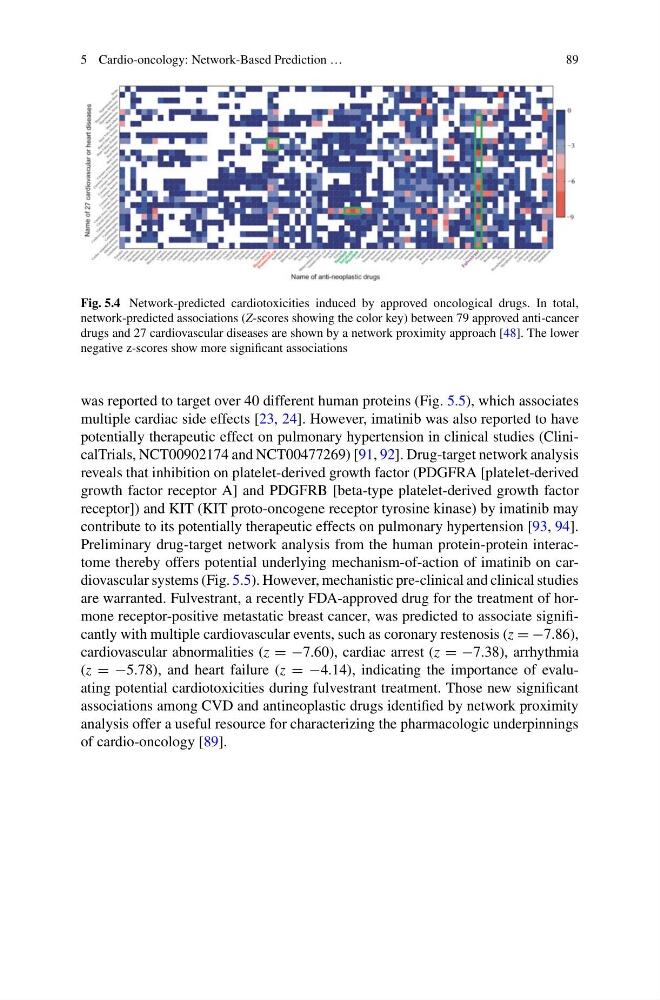
Fig. 5.4 Network-predicted cardiotoxicities induced by approved oncological drugs. In total,
network-predicted associations (Z-scores showing the color key) between 79 approved anti-cancer
drugs and 27 cardiovascular diseases are shown by a network proximity approach [48]. The lower
negative z-scores show more significant associations
was reported to target over 40 different human proteins (Fig. 5.5), which associates
multiple cardiac side effects [23, 24]. However, imatinib was also reported to have
potentially therapeutic effect on pulmonary hypertension in clinical studies (ClinicalTrials, NCT00902174 and NCT00477269) [91, 92]. Drug-target network analysis
reveals that inhibition on platelet-derived growth factor (PDGFRA [platelet-derived
growth factor receptor A] and PDGFRB [beta-type platelet-derived growth factor
receptor]) and KIT (KIT proto-oncogene receptor tyrosine kinase) by imatinib may
contribute to its potentially therapeutic effects on pulmonary hypertension [93, 94].
Preliminary drug-target network analysis from the human protein-protein interactome thereby offers potential underlying mechanism-of-action of imatinib on cardiovascular systems (Fig. 5.5). However, mechanistic pre-clinical and clinical studies
are warranted. Fulvestrant, a recently FDA-approved drug for the treatment of hormone receptor-positive metastatic breast cancer, was predicted to associate significantly with multiple cardiovascular events, such as coronary restenosis (z = −7.86),
cardiovascular abnormalities (z = −7.60), cardiac arrest (z = −7.38), arrhythmia
(z = −5.78), and heart failure (z = −4.14), indicating the importance of evaluating potential cardiotoxicities during fulvestrant treatment. Those new significant
associations among CVD and antineoplastic drugs identified by network proximity
analysis offer a useful resource for characterizing the pharmacologic underpinnings
of cardio-oncology [89].
89
Fig. 5.4 Network-predicted cardiotoxicities induced by approved oncological drugs. In total,
network-predicted associations (Z-scores showing the color key) between 79 approved anti-cancer
drugs and 27 cardiovascular diseases are shown by a network proximity approach [48]. The lower
negative z-scores show more significant associations
was reported to target over 40 different human proteins (Fig. 5.5), which associates
multiple cardiac side effects [23, 24]. However, imatinib was also reported to have
potentially therapeutic effect on pulmonary hypertension in clinical studies (ClinicalTrials, NCT00902174 and NCT00477269) [91, 92]. Drug-target network analysis
reveals that inhibition on platelet-derived growth factor (PDGFRA [platelet-derived
growth factor receptor A] and PDGFRB [beta-type platelet-derived growth factor
receptor]) and KIT (KIT proto-oncogene receptor tyrosine kinase) by imatinib may
contribute to its potentially therapeutic effects on pulmonary hypertension [93, 94].
Preliminary drug-target network analysis from the human protein-protein interactome thereby offers potential underlying mechanism-of-action of imatinib on cardiovascular systems (Fig. 5.5). However, mechanistic pre-clinical and clinical studies
are warranted. Fulvestrant, a recently FDA-approved drug for the treatment of hormone receptor-positive metastatic breast cancer, was predicted to associate significantly with multiple cardiovascular events, such as coronary restenosis (z = −7.86),
cardiovascular abnormalities (z = −7.60), cardiac arrest (z = −7.38), arrhythmia
(z = −5.78), and heart failure (z = −4.14), indicating the importance of evaluating potential cardiotoxicities during fulvestrant treatment. Those new significant
associations among CVD and antineoplastic drugs identified by network proximity
analysis offer a useful resource for characterizing the pharmacologic underpinnings
of cardio-oncology [89].