

5 Cardio-oncology: Network-Based Prediction …
87
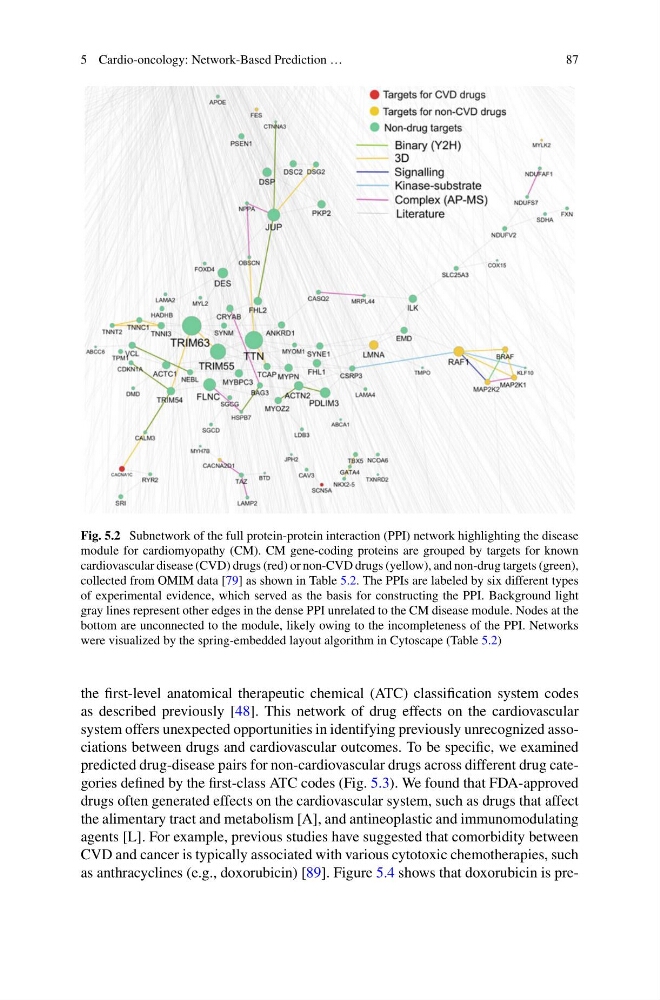
Fig. 5.2 Subnetwork of the full protein-protein interaction (PPI) network highlighting the disease
module for cardiomyopathy (CM). CM gene-coding proteins are grouped by targets for known
cardiovascular disease (CVD) drugs (red) or non-CVD drugs (yellow), and non-drug targets (green),
collected from OMIM data [79] as shown in Table 5.2. The PPIs are labeled by six different types
of experimental evidence, which served as the basis for constructing the PPI. Background light
gray lines represent other edges in the dense PPI unrelated to the CM disease module. Nodes at the
bottom are unconnected to the module, likely owing to the incompleteness of the PPI. Networks
were visualized by the spring-embedded layout algorithm in Cytoscape (Table 5.2)
the first-level anatomical therapeutic chemical (ATC) classification system codes
as described previously [48]. This network of drug effects on the cardiovascular
system offers unexpected opportunities in identifying previously unrecognized associations between drugs and cardiovascular outcomes. To be specific, we examined
predicted drug-disease pairs for non-cardiovascular drugs across different drug categories defined by the first-class ATC codes (Fig. 5.3). We found that FDA-approved
drugs often generated effects on the cardiovascular system, such as drugs that affect
the alimentary tract and metabolism [A], and antineoplastic and immunomodulating
agents [L]. For example, previous studies have suggested that comorbidity between
CVD and cancer is typically associated with various cytotoxic chemotherapies, such
as anthracyclines (e.g., doxorubicin) [89]. Figure 5.4 shows that doxorubicin is pre-
87
Fig. 5.2 Subnetwork of the full protein-protein interaction (PPI) network highlighting the disease
module for cardiomyopathy (CM). CM gene-coding proteins are grouped by targets for known
cardiovascular disease (CVD) drugs (red) or non-CVD drugs (yellow), and non-drug targets (green),
collected from OMIM data [79] as shown in Table 5.2. The PPIs are labeled by six different types
of experimental evidence, which served as the basis for constructing the PPI. Background light
gray lines represent other edges in the dense PPI unrelated to the CM disease module. Nodes at the
bottom are unconnected to the module, likely owing to the incompleteness of the PPI. Networks
were visualized by the spring-embedded layout algorithm in Cytoscape (Table 5.2)
the first-level anatomical therapeutic chemical (ATC) classification system codes
as described previously [48]. This network of drug effects on the cardiovascular
system offers unexpected opportunities in identifying previously unrecognized associations between drugs and cardiovascular outcomes. To be specific, we examined
predicted drug-disease pairs for non-cardiovascular drugs across different drug categories defined by the first-class ATC codes (Fig. 5.3). We found that FDA-approved
drugs often generated effects on the cardiovascular system, such as drugs that affect
the alimentary tract and metabolism [A], and antineoplastic and immunomodulating
agents [L]. For example, previous studies have suggested that comorbidity between
CVD and cancer is typically associated with various cytotoxic chemotherapies, such
as anthracyclines (e.g., doxorubicin) [89]. Figure 5.4 shows that doxorubicin is pre-