

became more reactionary with age, but not Robert. Indeed, Robert—still an
avid reader of New Scientist for example—thought that so much was better
now; for the young, for morality, for social conditions etc., and that ‘the best
was yet to be’. But Chirnside’s visit that day was not simply a social call on an
old friend—but a visit on behalf of the Royal Institute of Chemistry (RIC),
Chirnside being a Committee member. The Institute was to celebrate its
Centenary the following year (1977) and there was a feeling throughout the
Committee that it would be an appropriate occasion to refer to the contribution(s) that had been made by some of its oldest and most distinguished
members. Chirnside informed the Committee that he would invite Robert’s
agreement and co-operation with this endeavour in an attempt to put on
record the part Robert played in the production of synthetic ammonia.
Chirnside had been given an ‘impressive list’ of members who were several
years older than Robert, but none that he could recognise whose achievements were a match. Even so, he continued, ‘very few British chemists today
seem to know this’. Chirnside went on to recount his personal experience of
contemporary references to Robert’s work with Haber. About the time of the
Haber Centenary (1968) there was a reference to the ‘mellifluously named
joint inventor of the Haber process’ in an Editorial of Chemistry and Industry
he tells us, and later, in the 9th Dunn Memorial Lecture in Newcastle, Lord
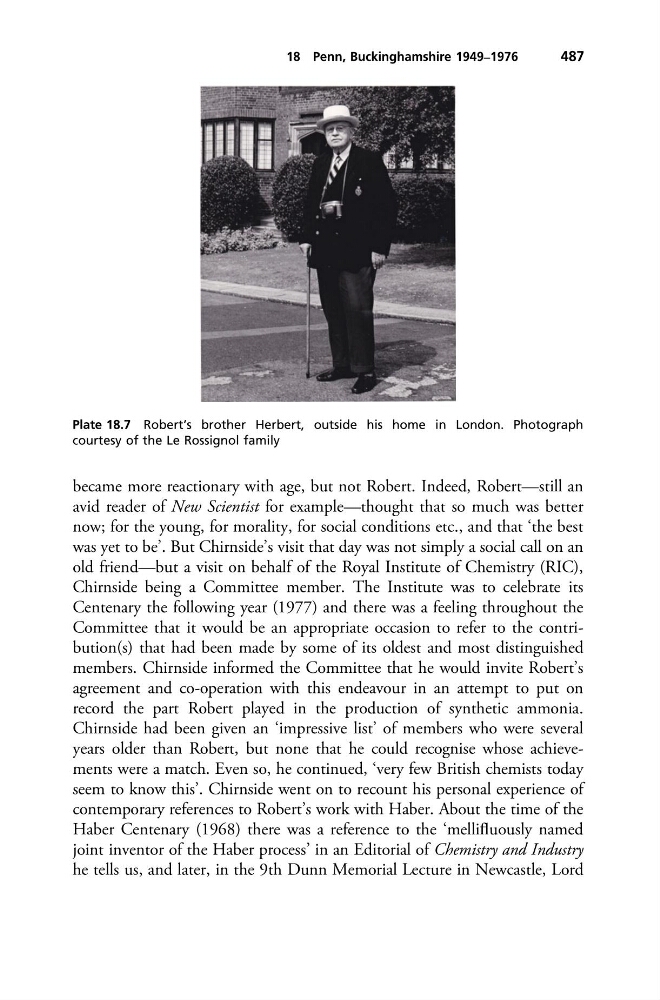
Plate 18.7 Robert’s brother Herbert, outside his home in London. Photograph
courtesy of the Le Rossignol family
18 Penn, Buckinghamshire 1949–1976
487
avid reader of New Scientist for example—thought that so much was better
now; for the young, for morality, for social conditions etc., and that ‘the best
was yet to be’. But Chirnside’s visit that day was not simply a social call on an
old friend—but a visit on behalf of the Royal Institute of Chemistry (RIC),
Chirnside being a Committee member. The Institute was to celebrate its
Centenary the following year (1977) and there was a feeling throughout the
Committee that it would be an appropriate occasion to refer to the contribution(s) that had been made by some of its oldest and most distinguished
members. Chirnside informed the Committee that he would invite Robert’s
agreement and co-operation with this endeavour in an attempt to put on
record the part Robert played in the production of synthetic ammonia.
Chirnside had been given an ‘impressive list’ of members who were several
years older than Robert, but none that he could recognise whose achievements were a match. Even so, he continued, ‘very few British chemists today
seem to know this’. Chirnside went on to recount his personal experience of
contemporary references to Robert’s work with Haber. About the time of the
Haber Centenary (1968) there was a reference to the ‘mellifluously named
joint inventor of the Haber process’ in an Editorial of Chemistry and Industry
he tells us, and later, in the 9th Dunn Memorial Lecture in Newcastle, Lord
Plate 18.7 Robert’s brother Herbert, outside his home in London. Photograph
courtesy of the Le Rossignol family
18 Penn, Buckinghamshire 1949–1976
487