

13.5.3 Early Allied Understanding of the German Fixed
Nitrogen Industry
The exchange of scientists between Germany and the principal Allied nations
in the years prior to the war was extensive. Even so, the Allies have often been
accused of misreading
24 the state of the German chemical industry in 1914,
and by implication underestimating its ability to support her armed forces in
their prosecution of the war. But is that a fair assessment? Put another way,
should Germany’s ability to sustain her fixed nitrogen needs have been
obvious to the Allies at the start of the war? As far as ‘conventional’ fixation
was concerned they should have been ‘on the ball’. As early as 1915 publications such as ‘Manuals of Chemical Technology’ (Manuals of Chemical
Technology III, Industrial Nitrogen Compounds and Explosives. Crosby
Lockwood and Son, LONDON, (1915)). devoted a complete issue to a
thorough exposition of the European nitrogen compounds and explosives
industries—including German production methods, requirements, annual
tonnages and issues of patent protection (Plate 13.2).
Allied munitions experts would have realised the extent to which Germany
had progressed the well-known by-product and cyanamide processes, but they
would have been relaxed about these for both were energy intensive, complex,
multi-stage processes and neither was easily capable of a rapid sustained
expansion. Even in peace-time they only provided about one half of what
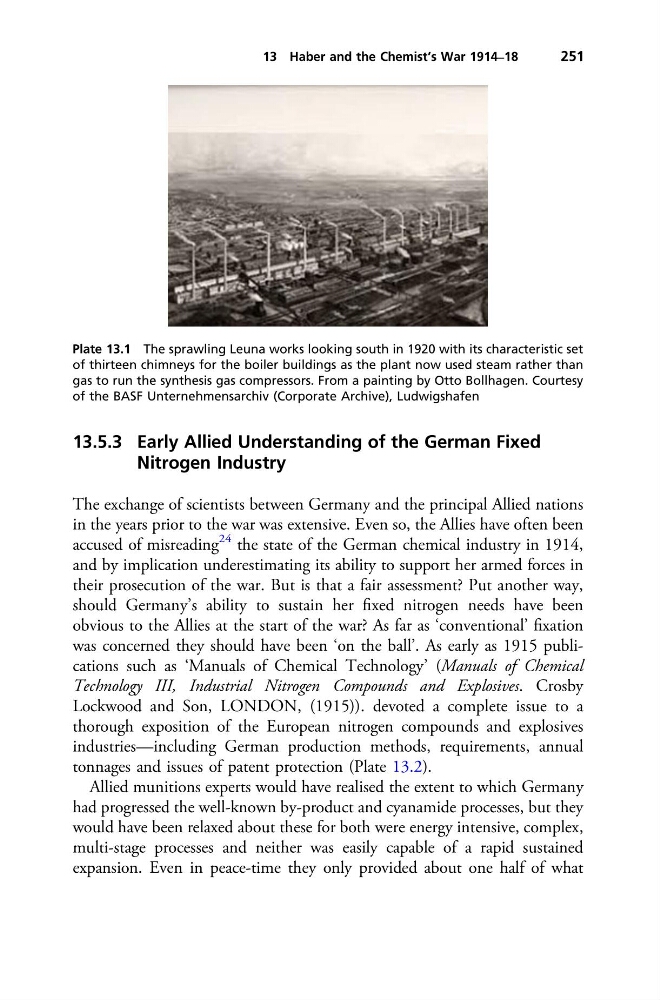
Plate 13.1 The sprawling Leuna works looking south in 1920 with its characteristic set
of thirteen chimneys for the boiler buildings as the plant now used steam rather than
gas to run the synthesis gas compressors. From a painting by Otto Bollhagen. Courtesy
of the BASF Unternehmensarchiv (Corporate Archive), Ludwigshafen
13 Haber and the Chemist’s War 1914–18
251
Nitrogen Industry
The exchange of scientists between Germany and the principal Allied nations
in the years prior to the war was extensive. Even so, the Allies have often been
accused of misreading
24 the state of the German chemical industry in 1914,
and by implication underestimating its ability to support her armed forces in
their prosecution of the war. But is that a fair assessment? Put another way,
should Germany’s ability to sustain her fixed nitrogen needs have been
obvious to the Allies at the start of the war? As far as ‘conventional’ fixation
was concerned they should have been ‘on the ball’. As early as 1915 publications such as ‘Manuals of Chemical Technology’ (Manuals of Chemical
Technology III, Industrial Nitrogen Compounds and Explosives. Crosby
Lockwood and Son, LONDON, (1915)). devoted a complete issue to a
thorough exposition of the European nitrogen compounds and explosives
industries—including German production methods, requirements, annual
tonnages and issues of patent protection (Plate 13.2).
Allied munitions experts would have realised the extent to which Germany
had progressed the well-known by-product and cyanamide processes, but they
would have been relaxed about these for both were energy intensive, complex,
multi-stage processes and neither was easily capable of a rapid sustained
expansion. Even in peace-time they only provided about one half of what
Plate 13.1 The sprawling Leuna works looking south in 1920 with its characteristic set
of thirteen chimneys for the boiler buildings as the plant now used steam rather than
gas to run the synthesis gas compressors. From a painting by Otto Bollhagen. Courtesy
of the BASF Unternehmensarchiv (Corporate Archive), Ludwigshafen
13 Haber and the Chemist’s War 1914–18
251