

212
7 Nanomaterials for Supercapacitors
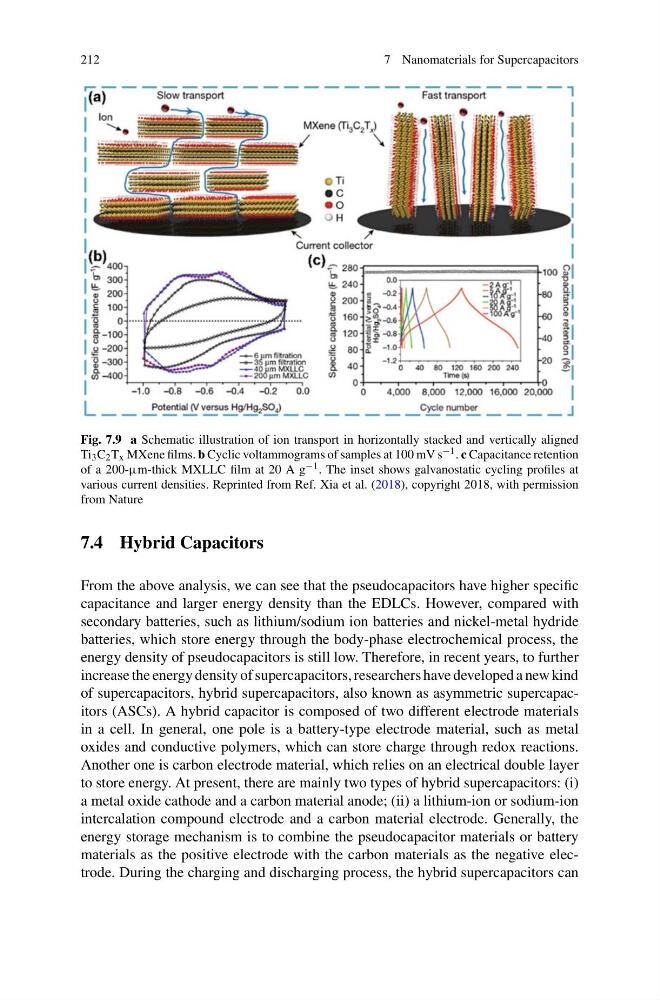
Fig. 7.9 a Schematic illustration of ion transport in horizontally stacked and vertically aligned
Ti 3 C 2 T x MXene films. b Cyclic voltammograms of samples at 100 mV s −1 . c Capacitance retention
of a 200-μm-thick MXLLC film at 20 A g −1 . The inset shows galvanostatic cycling profiles at
various current densities. Reprinted from Ref. Xia et al. (2018), copyright 2018, with permission
from Nature
7.4 Hybrid Capacitors
From the above analysis, we can see that the pseudocapacitors have higher specific
capacitance and larger energy density than the EDLCs. However, compared with
secondary batteries, such as lithium/sodium ion batteries and nickel-metal hydride
batteries, which store energy through the body-phase electrochemical process, the
energy density of pseudocapacitors is still low. Therefore, in recent years, to further
increase the energy density of supercapacitors, researchers have developed a new kind
of supercapacitors, hybrid supercapacitors, also known as asymmetric supercapacitors (ASCs). A hybrid capacitor is composed of two different electrode materials
in a cell. In general, one pole is a battery-type electrode material, such as metal
oxides and conductive polymers, which can store charge through redox reactions.
Another one is carbon electrode material, which relies on an electrical double layer
to store energy. At present, there are mainly two types of hybrid supercapacitors: (i)
a metal oxide cathode and a carbon material anode; (ii) a lithium-ion or sodium-ion
intercalation compound electrode and a carbon material electrode. Generally, the
energy storage mechanism is to combine the pseudocapacitor materials or battery
materials as the positive electrode with the carbon materials as the negative electrode. During the charging and discharging process, the hybrid supercapacitors can
7 Nanomaterials for Supercapacitors
Fig. 7.9 a Schematic illustration of ion transport in horizontally stacked and vertically aligned
Ti 3 C 2 T x MXene films. b Cyclic voltammograms of samples at 100 mV s −1 . c Capacitance retention
of a 200-μm-thick MXLLC film at 20 A g −1 . The inset shows galvanostatic cycling profiles at
various current densities. Reprinted from Ref. Xia et al. (2018), copyright 2018, with permission
from Nature
7.4 Hybrid Capacitors
From the above analysis, we can see that the pseudocapacitors have higher specific
capacitance and larger energy density than the EDLCs. However, compared with
secondary batteries, such as lithium/sodium ion batteries and nickel-metal hydride
batteries, which store energy through the body-phase electrochemical process, the
energy density of pseudocapacitors is still low. Therefore, in recent years, to further
increase the energy density of supercapacitors, researchers have developed a new kind
of supercapacitors, hybrid supercapacitors, also known as asymmetric supercapacitors (ASCs). A hybrid capacitor is composed of two different electrode materials
in a cell. In general, one pole is a battery-type electrode material, such as metal
oxides and conductive polymers, which can store charge through redox reactions.
Another one is carbon electrode material, which relies on an electrical double layer
to store energy. At present, there are mainly two types of hybrid supercapacitors: (i)
a metal oxide cathode and a carbon material anode; (ii) a lithium-ion or sodium-ion
intercalation compound electrode and a carbon material electrode. Generally, the
energy storage mechanism is to combine the pseudocapacitor materials or battery
materials as the positive electrode with the carbon materials as the negative electrode. During the charging and discharging process, the hybrid supercapacitors can