

7.2 Double-Layer Capacitor
201
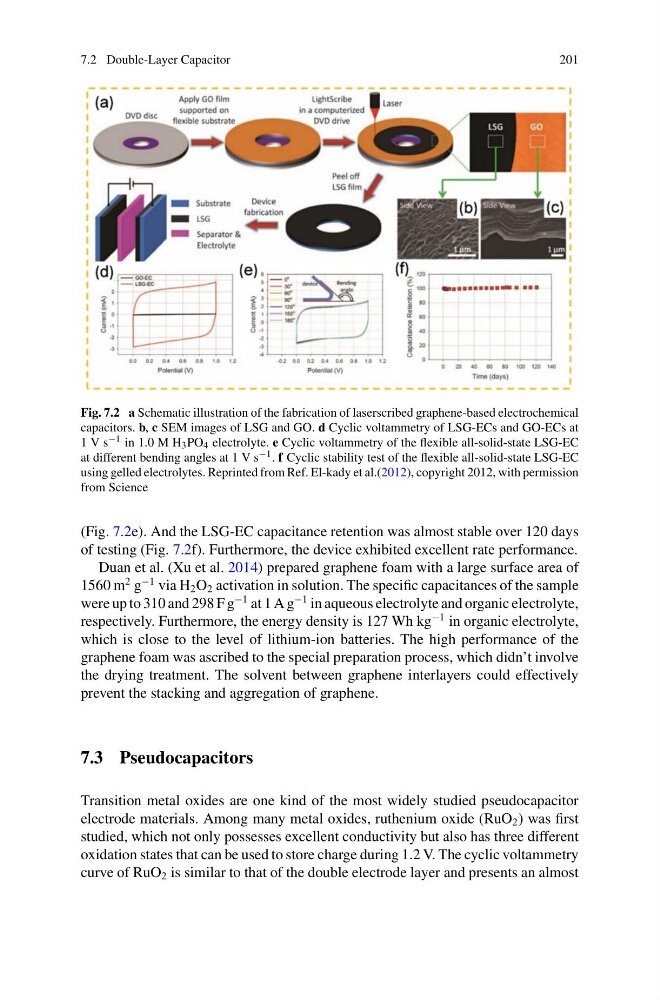
Fig. 7.2 a Schematic illustration of the fabrication of laserscribed graphene-based electrochemical
capacitors. b, c SEM images of LSG and GO. d Cyclic voltammetry of LSG-ECs and GO-ECs at
1 V s −1 in 1.0 M H 3 PO 4 electrolyte. e Cyclic voltammetry of the flexible all-solid-state LSG-EC
at different bending angles at 1 V s −1 . f Cyclic stability test of the flexible all-solid-state LSG-EC
using gelled electrolytes. Reprinted from Ref. El-kady et al.(2012), copyright 2012, with permission
from Science
(Fig. 7.2e). And the LSG-EC capacitance retention was almost stable over 120 days
of testing (Fig. 7.2f). Furthermore, the device exhibited excellent rate performance.
Duan et al. (Xu et al. 2014) prepared graphene foam with a large surface area of
1560 m
2 g
−1 via H 2 O 2 activation in solution. The specific capacitances of the sample
were up to 310 and 298 F g
−1 at 1 A g
−1 in aqueous electrolyte and organic electrolyte,
respectively. Furthermore, the energy density is 127 Wh kg
−1 in organic electrolyte,
which is close to the level of lithium-ion batteries. The high performance of the
graphene foam was ascribed to the special preparation process, which didn’t involve
the drying treatment. The solvent between graphene interlayers could effectively
prevent the stacking and aggregation of graphene.
7.3 Pseudocapacitors
Transition metal oxides are one kind of the most widely studied pseudocapacitor
electrode materials. Among many metal oxides, ruthenium oxide (RuO 2 ) was first
studied, which not only possesses excellent conductivity but also has three different
oxidation states that can be used to store charge during 1.2 V. The cyclic voltammetry
curve of RuO 2 is similar to that of the double electrode layer and presents an almost
201
Fig. 7.2 a Schematic illustration of the fabrication of laserscribed graphene-based electrochemical
capacitors. b, c SEM images of LSG and GO. d Cyclic voltammetry of LSG-ECs and GO-ECs at
1 V s −1 in 1.0 M H 3 PO 4 electrolyte. e Cyclic voltammetry of the flexible all-solid-state LSG-EC
at different bending angles at 1 V s −1 . f Cyclic stability test of the flexible all-solid-state LSG-EC
using gelled electrolytes. Reprinted from Ref. El-kady et al.(2012), copyright 2012, with permission
from Science
(Fig. 7.2e). And the LSG-EC capacitance retention was almost stable over 120 days
of testing (Fig. 7.2f). Furthermore, the device exhibited excellent rate performance.
Duan et al. (Xu et al. 2014) prepared graphene foam with a large surface area of
1560 m
2 g
−1 via H 2 O 2 activation in solution. The specific capacitances of the sample
were up to 310 and 298 F g
−1 at 1 A g
−1 in aqueous electrolyte and organic electrolyte,
respectively. Furthermore, the energy density is 127 Wh kg
−1 in organic electrolyte,
which is close to the level of lithium-ion batteries. The high performance of the
graphene foam was ascribed to the special preparation process, which didn’t involve
the drying treatment. The solvent between graphene interlayers could effectively
prevent the stacking and aggregation of graphene.
7.3 Pseudocapacitors
Transition metal oxides are one kind of the most widely studied pseudocapacitor
electrode materials. Among many metal oxides, ruthenium oxide (RuO 2 ) was first
studied, which not only possesses excellent conductivity but also has three different
oxidation states that can be used to store charge during 1.2 V. The cyclic voltammetry
curve of RuO 2 is similar to that of the double electrode layer and presents an almost